



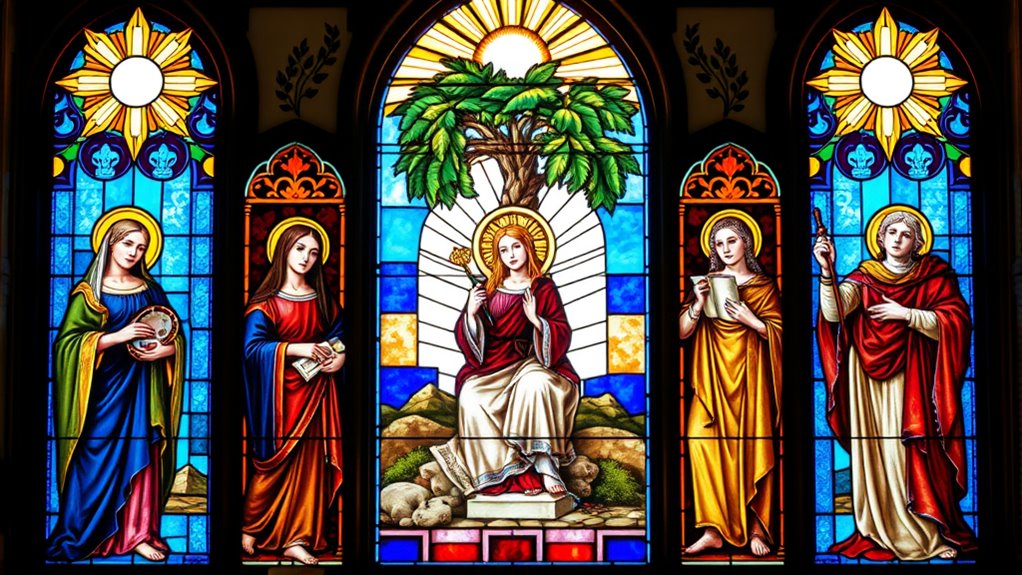
The Bible contains passages that restrict women’s speaking in church, particularly 1 Corinthians 14:34-35 and 1 Timothy 2:11-12, which command silence and prohibit teaching men. However, Scripture also presents women who prophesied and led, including Miriam, Deborah, Huldah, Anna, and Philip’s four daughters. Galatians 3:28 declares no male-female distinction in Christ, while Joel’s prophecy describes the Spirit enabling both genders to prophesy. Scholars debate whether restrictive passages reflect cultural context or universal norms, with interpretations influenced by broader theological frameworks and historical examples of female leadership throughout Scripture.
Key Takeaways
- Some passages like 1 Timothy 2:12 and 1 Corinthians 14:34-35 prohibit women from teaching or speaking in church settings.
- Galatians 3:28 declares no male-female distinction in Christ, suggesting spiritual equality that some interpret as supporting female ministry.
- The Bible records numerous female prophets including Deborah, Miriam, Huldah, Anna, and Philip’s daughters who proclaimed God’s messages.
- Scholars debate whether restrictive passages reflect first-century cultural context or establish universal, timeless commands for all churches.
- Interpretations vary based on theological frameworks, with ongoing disagreement about whether women can hold teaching and preaching roles.
What the Bible Says About Women Preaching
The question of what the Bible says about women preaching has produced centuries of scholarly debate, with interpreters examining several key passages that appear to restrict women’s roles in teaching and church leadership.
First Corinthians 14:34-35 commands women to keep silent in churches and remain submissive, while 1 Timothy 2:11-12 prohibits women from teaching or exercising authority over men. These restrictions are grounded in creation order, noting that Adam was formed before Eve.
However, counterarguments point to Galatians 3:28, which declares no male-female distinction in Christ, and Joel’s prophecy at Pentecost, when the Spirit enabled both men and women to prophesy.
Scholars continue wrestling with whether these commands were culturally specific or universally binding, making this an ongoing theological discussion. The broader theological context of the Trinity and distinctions between persons within one divine essence also informs how some interpret passages about authority and teaching Trinitarian doctrine.
Women Who Taught, Prophesied, and Led in Scripture

Throughout biblical history, women occupied prominent roles as prophets, judges, and teachers despite cultural norms that often restricted female leadership.
Miriam, identified as a prophetess in Exodus 15:20, led women in worship after the Red Sea crossing and received direct communication from God in Numbers 12. Deborah served as both prophetess and judge in Judges 4:4, commanding military strategy and earning the title “mother in Israel” after freeing the kingdom from foreign rule.
Biblical women like Miriam and Deborah wielded prophetic authority and national leadership, demonstrating God’s empowerment transcended cultural gender restrictions.
Prophetess Huldah advised King Josiah in 2 Kings 22:14, delivering prophecies that shaped national reform.
In the New Testament, Anna proclaimed Jesus’ identity at the temple in Luke 2:36-38, while Philip’s four daughters prophesied in Acts 21:8-9, demonstrating continuity of female prophetic ministry across both covenants.
Jesus himself was ethnically Jewish and operated within Jewish religious traditions, which shaped the context for women’s roles in ministry and prophecy Jewish religious traditions.