
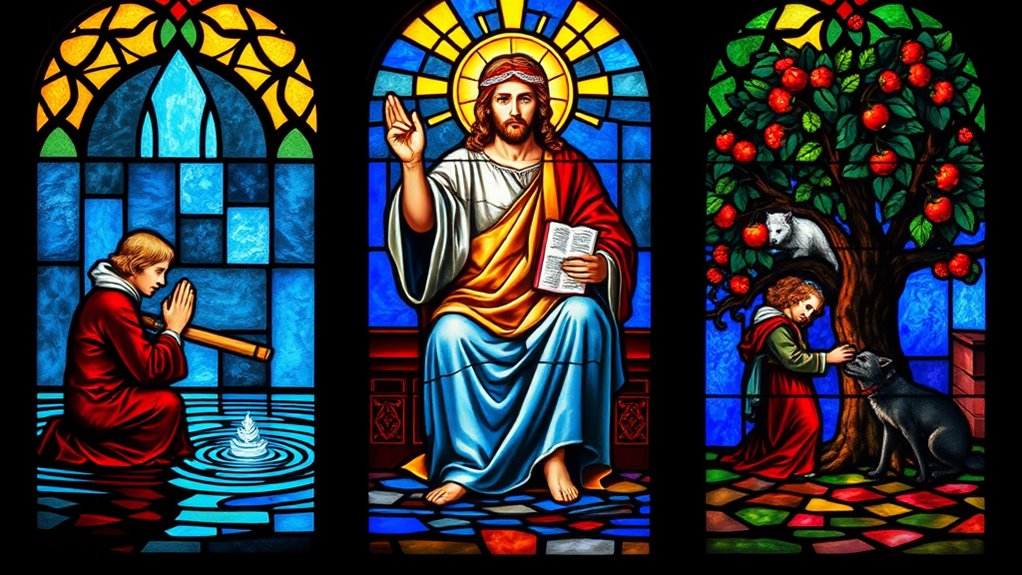





The Bible commands forgiveness not as an option but as a requirement that protects believers from bitterness while reflecting Christ’s character. Jesus instructed Peter to forgive seventy-seven times, emphasizing unlimited forgiveness regardless of whether the offender repents. Matthew 6:14-15 warns that withholding forgiveness blocks reception of God’s own forgiveness. Biblical forgiveness does not require forgetting the offense, immediate emotional healing, or automatic trust restoration, though it does release the right to revenge. The sections ahead clarify what forgiveness truly involves and what it doesn’t demand.
Key Takeaways
- Jesus commands unlimited forgiveness, instructing Peter to forgive seventy-seven times to reflect God’s boundless mercy toward believers.
- Forgiveness protects believers from bitterness and resentment, promoting spiritual health and reflecting Christ’s character through gracious actions.
- Biblical forgiveness does not require the offender’s repentance first, as Jesus demonstrated by forgiving while on the cross.
- Forgiving others does not mean forgetting offenses, automatically restoring trust, or removing consequences for harmful actions.
- Forgiveness is a Spirit-guided process beginning with prayer, often requiring time for emotional healing to follow the decision.
Why God Commands Us to Forgive Others

According to Scripture, God commands forgiveness primarily because it frees believers from the corrosive effects of bitterness and resentment. King Solomon observes that a calm mind promotes bodily health, while wrath causes bones to rot. The Apostle Paul instructs believers in Ephesians 4:31-32 to rid themselves of bitterness and anger, replacing these with kindness and compassion.
Additionally, God commands forgiveness because it reflects His own character, as demonstrated through Christ. Matthew 6:14-15 establishes that withholding forgiveness blocks receiving God’s forgiveness, creating separation from Him.
The command also promotes unlimited forgiveness, with Jesus telling Peter to forgive seventy-seven times. Ultimately, forgiveness demonstrates the love and mercy that motivated God to send His Son as payment for humanity’s sin.
What Biblical Forgiveness Doesn’t Require

In Christian discussions about forgiveness, misunderstandings often arise about what the biblical concept actually requires. Scripture indicates that forgiveness does not demand the offender’s repentance, as Jesus forgave His crucifiers without their asking (Luke 23:34).
Biblical forgiveness doesn’t require the offender to repent first—Jesus demonstrated this by forgiving those who crucified Him.
Reconciliation also remains separate from the act of forgiving, since extension of forgiveness is mandated regardless of reception (Matthew 18:22).
Biblical forgiveness does not require forgetting the offense—1 Peter 4:8 describes covering sins while retaining awareness of harm.
Trust restoration is not automatic either, as forgiveness releases the right to revenge without necessarily rebuilding relationship.
Finally, emotional healing often follows gradually rather than instantly, with prayer serving as the essential first step in a process guided by the Holy Spirit (Ephesians 4:32).
Regular practice of prayer and honest expression help forgiveness grow as a natural process, supported by the Holy Spirit.