

Vandals struck the Medjugorje shrine in southern Bosnia-Herzegovina around 4:30 a.m. on July 28, 2026, defacing Marian statues with black spray paint and setting fire to an outdoor altar near St. James Church. Graffiti including “Devil in a skirt” was left near statue pedestals. Surveillance footage helped police arrest a Polish national later that day. Despite the attacks, the shrine remained open and pilgrim programs continued uninterrupted, with more details on each incident waiting ahead.
What Happened at Medjugorje Overnight
In the early hours of the morning, police in the nearby town of Čitluk received a report of vandalism at the Shrine of Our Lady in Medjugorje, a major Catholic pilgrimage site in southern Bosnia-Herzegovina. The first call came around 4:30 a.m.
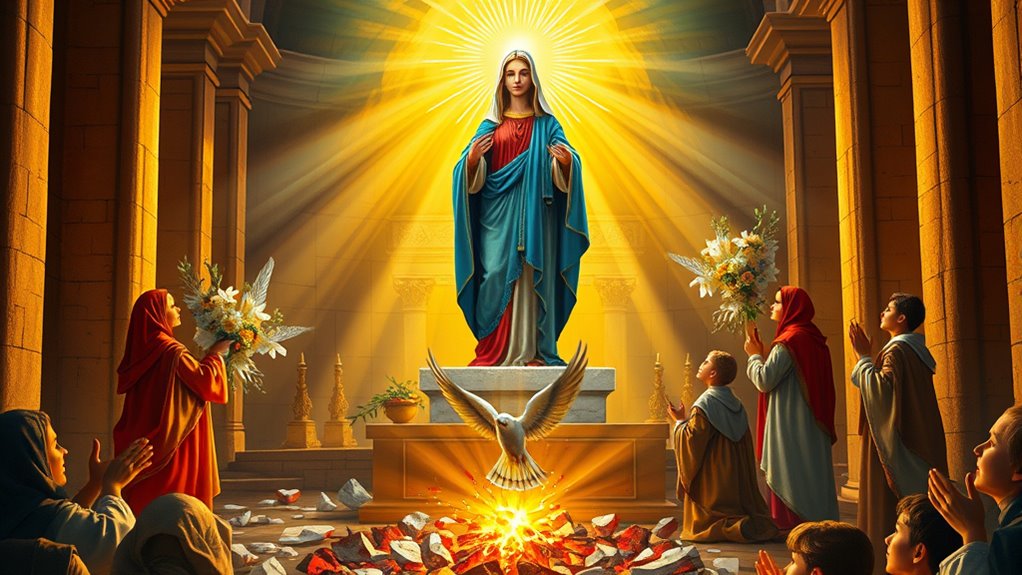
Investigators found multiple acts of desecration across the site, including damage at Apparition Hill and an outdoor altar near St. James Church. Surveillance footage reportedly showed a man pouring flammable liquid around the altar before setting it on fire. The fire was extinguished. Local media published pictures showing the statue of Our Lady with face and hands painted black and the inscription “Devil in a skirt” written on the pedestal.
Bosnian police arrested a suspect, though his identity was not immediately released while the investigation continued. The incidents occurred just days before a youth prayer festival expected to draw more than 50,000 pilgrims to the shrine. Church leaders emphasized the need for pastoral care and discernment in responding to acts of sacrilege.
Which Marian Statues Were Targeted and How They Were Defaced?
Beyond the fire set near the outdoor altar, investigators also documented deliberate damage to several Marian statues positioned at key prayer sites across the shrine complex. The statues at Apparition Hill and the Blue Cross area were among those affected. The incident has prompted local clergy to emphasize the need for distinguishing cultural uses of charged language when addressing acts of sacrilege.
Investigators documented deliberate damage to Marian statues at Apparition Hill and the Blue Cross area throughout the shrine complex.
Key details from reports include:
- Faces and hands were painted black using spray paint.
- Graffiti reading “Devil in a skirt” was written near pedestals.
- Polish text translated as “They are fraudsters, I have evidence” appeared on surfaces.
- The word “EVIL” was marked on a nearby stone.
Parish officials described the defacement as deliberately anti-Marian. A banner was also found at the scene bearing the first names of six alleged visionaries alongside the Polish message. The suspect was identified as a Polish national who had previously made a 1,300-kilometer pilgrimage from Warsaw to Medjugorje on foot in 2017.
How the Outdoor Altar at St. James Church Was Set on Fire?
Surveillance footage recorded a man approaching the outdoor altar behind St. James Church at approximately 4:46 a.m. on July 28, 2026. The suspect poured flammable liquid directly over the altar surface before manually igniting it. Flames engulfed the recently renovated structure quickly, though firefighters extinguished the blaze before it reached the church building. Parish leaders urged patience and a measured response grounded in peacemaking principles drawn from Scripture and tradition.
Police received the fire report around 5:00 a.m. and confirmed the footage showed clear evidence of intentional arson. A suspect was arrested the same day. Prior to the arson, the statue of Our Lady on Podbrdo had also been defaced, with black paint applied to the figure’s face and hands alongside a vandalized pedestal.
Parish officials began cleanup immediately and kept the shrine open to pilgrims, calling for prayer rather than retaliation. The attacks occurred just days before Mladifest youth festival, which was expected to draw between 50,000 and 60,000 pilgrims to the shrine.
What Led Police to Arrest a Suspect at Medjugorje?
The arrest stemmed from a combination of surveillance footage, quick civilian action, and coordinated police work across the region. CCTV captured a man pouring flammable liquid and igniting the outdoor altar. Police received the first report around 4:30 a.m. Officers then tracked the suspect to the Cerno area near Ljubuški. The search involved police from two cantons, firefighters, and the Mountain Rescue Service. The detained suspect was a Polish national, whose personal acquaintances later urged the public to withhold judgment. Those responding also emphasized the need for compassionate pastoral care alongside investigation and legal process.
Key factors leading to the arrest:
- Surveillance footage identified the suspect’s actions at the shrine.
- A young pilgrim noticed the man and attempted to intervene.
- Residents in Cerno reportedly detained him until police arrived.
- Coordinated regional police response led to his capture the same day.
Is Medjugorje Still Open to Pilgrims After the Attack?
While police moved swiftly to apprehend the suspect, another question emerged for the thousands of pilgrims who travel to Medjugorje each year: would the shrine still be accessible after the attack?
As authorities pursued the suspect, pilgrims worldwide anxiously wondered whether Medjugorje’s sacred grounds would remain open.
St. James Parish confirmed the site remained open, and the regular prayer program continued without interruption.
Staff and volunteers began cleanup immediately, focusing on restoring the damaged outdoor altar and statue areas for devotional use.
Authorities investigated the desecration while normal operations carried on.
The Vatican’s standing approval for organized Catholic pilgrimages to Medjugorje also remained in effect.
The parish response prioritized restoration, not closure, offering pilgrims reassurance that the shrine endured. The faithful were also called to respond with prayer, fasting, and forgiveness, in keeping with the spiritual teachings associated with Medjugorje.
The attack took place just days before Mladifest, the annual youth festival, which draws tens of thousands of young pilgrims to the site each year.
Many pilgrims were encouraged to deepen their visit through trust in God as they continued their devotional practices despite the incident.