Catholic book clubs give parishes a structured way to connect literature with faith, fellowship, and ongoing reflection. Groups typically meet monthly with 5 to 15 members, opening sessions with prayer before discussing theology, spirituality, or biography. The Goodreads group “The Catholic Book Club” lists over 2,500 members, reflecting broad interest. Some Catholic leaders describe the format as quiet catechesis that forms disciples without pressure. What follows explores how these groups form, grow, and choose books with purpose.
What Is a Catholic Book Club and Why Parishes Are Launching Them
At a time when many parishes are looking for practical ways to deepen adult faith formation, Catholic book clubs have emerged as a straightforward and flexible option.
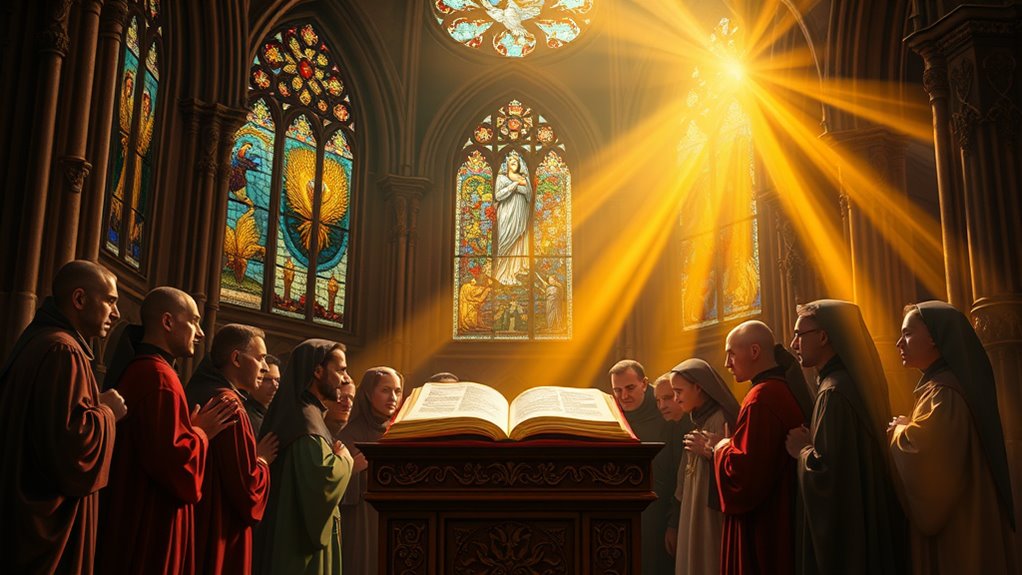
These reading groups gather people to discuss books through the lens of Catholic faith, drawing on literature, theology, spirituality, and biography. They often foster mutual encouragement that mirrors the biblical emphasis on believers gathering to strengthen one another.
Meetings typically happen monthly, either in person at a parish site or online.
Parishes are drawn to the format because it extends formation beyond Sunday Mass, creates low-pressure entry points for community life, and adapts easily to small groups or seasonal schedules.
The goal is simple: connect reading with faith, fellowship, and ongoing reflection. Online resources like Great Catholic Book Club offer free monthly study guides that parishes and individuals can use to structure their discussions.
Topics span a wide range of Catholic life, from ethics and family to specialized subjects like deaf culture and ecology.
Who’s Joining Catholic Book Clubs Today?
Who is actually showing up to Catholic book clubs, and in what numbers? The Goodreads group The Catholic Book Club lists between 2,464 and 2,553 members, suggesting steady online participation.
Parish-based clubs draw adults through faith enrichment programs, often welcoming newcomers explicitly.
Four participant types appear consistently:
- Adult parishioners seeking structured faith engagement
- Online Catholic readers gathered through Goodreads communities
- Faith-seeking readers drawn to spirituality and Catholic fiction
- Community-focused readers pairing books with group discussion
Groups range from 2 to 13 members in intimate settings to thousands online, reflecting broad but accessible participation across formats. Some parish-based clubs meet on two Thursday evenings each month, offering a consistent and recurring rhythm for committed readers. Readers drawn to Catholic fiction often encounter titles like *Brideshead Revisited*, where conversion through relationships forms the heart of the story. Many members also feel called to care for their bodies and communities, reflecting stewardship of health as part of their faith practice.
Why Catholic Book Clubs Build Community and Deepen Faith
Understanding who joins Catholic book clubs raises a further question: what keeps them coming back?
The answer appears to involve both community and faith formation working together.
Repeated gatherings create consistent contact, allowing friendships to develop beyond formal meetings.
Showing up consistently turns acquaintances into friends, building bonds that extend well past any scheduled meeting.
A shared book reduces social awkwardness and gives participants a natural starting point for conversation.
Discussion also moves beyond the text itself, encouraging members to connect ideas to daily life and personal belief.
Some Catholic leaders describe this format as a quiet form of catechesis, one that helps form disciples without pressure, drawing people gradually deeper into reflection and relationship.
Many groups also begin with prayer, entrusting the project to God before the first meeting ever takes place.
Guest speakers such as authors, theologians, or experts are sometimes invited to enrich the conversation by offering perspectives tied to the themes of the selected book.
Scholarly studies on religious reading groups show they often foster sustained spiritual growth.
How to Start a Catholic Book Club at Your Parish
Starting a Catholic book club at a parish requires a few foundational steps that, taken in order, make the process manageable. The pastor’s approval comes first, securing both a meeting space and bulletin access for publicity. Church leaders can also help clarify how the group’s mission aligns with parish priorities and biblical giving practices.
From there, organizing the group becomes straightforward:
- Limit membership to 5–15 participants for productive discussion
- Establish a consistent monthly meeting day and location
- Open each session with prayer and simple introductions
- Rotate hosting duties to distribute responsibility fairly
These practical details create a structure members can rely on, making long-term participation more realistic and the group itself more likely to endure. A simple shared meal, such as pizza and sodas, helps build community and gives participants a chance to get to know one another before the discussion begins. Meetings are generally recommended to occur every four to eight weeks, giving members enough time to read while maintaining consistent momentum.
How to Choose Books for Your Catholic Book Club
Choosing the right books shapes whether a Catholic book club thrives or quietly fades.
Catholic orthodoxy serves as the first filter, ensuring selections align with Church teaching on faith, morals, and human dignity.
Strong choices also provoke meaningful discussion, offering questions or tensions worth exploring together.
Length matters too.
Books around 200 pages or fewer tend to see higher completion rates, especially when meetings are monthly.
Print availability reduces barriers, since members need accessible copies.
Finally, matching content to the group’s spiritual maturity and age keeps engagement steady, turning each meeting into a focused, faith-driven conversation rather than a missed opportunity.
classics like The Screwtape Letters consistently draw strong reader interest, as evidenced by its nearly 548,000 ratings on Goodreads.
Themed selections also add cohesion, with categories like classic books, Christian classics, non-fiction, and contemporary fiction offering natural groupings that help a club build a varied and purposeful reading list over time.
The Bible presents itself as inspired Scripture, intended for teaching, correction, guidance, and spiritual transformation.