







The Bible does not use the phrase “emotional abuse,” but its teachings clearly address the behavior it describes. Scripture condemns harmful speech, cruelty, and control as sin. Ephesians 5:25 calls husbands to love sacrificially, while Colossians 3:19 directly forbids harshness toward a wife. Proverbs 18:21 warns that words carry the weight of life and death. These passages together form a consistent biblical standard that emotionally abusive behavior directly violates — and there is much more the Bible addresses on this topic.
Key Takeaways
- The Bible treats emotional abuse as sin, not a personality flaw, as it violates the command to love God and neighbor.
- Colossians 3:19 directly forbids husbands from being harsh toward their wives, making emotional cruelty a clear biblical violation.
- Ephesians 5:25 calls husbands to sacrificial, Christlike love, the opposite of controlling or emotionally destructive behavior.
- Proverbs 12:18 warns that harmful words wound like sword thrusts, affirming that verbal and emotional harm carries serious moral weight.
- Scripture does not require anyone to remain in a dangerous situation, acknowledging separation as a legitimate option in 1 Corinthians 7:11.
Why the Bible Calls Emotional Abuse a Sin

The Bible does not treat emotional abuse as a personality flaw or a communication problem. Christian counseling sources consistently classify it as sin because it directly violates the command to love God and neighbor, which Scripture presents as the foundation of the entire law. Koine Greek was the language of the New Testament writings and helped shape how early Christians articulated moral teaching, including prohibitions against harming others with words and actions Koine Greek.
When a husband uses words, threats, or manipulation to harm rather than care for his wife, he breaks that standard plainly.
Scripture also evaluates behavior by its fruit. Emotional abuse produces fear, isolation, and spiritual damage, outcomes the Bible associates with destructive sin rather than relational imperfection.
Passages condemning bitterness, harmful speech, and deliberate harm to others made in God’s image reinforce this conclusion. Emotional abuse is identified as a sinful distortion of biblical headship and is never justified under any circumstances.
Proverbs 12:18 warns that rash words are like sword thrusts, making clear that verbal and emotional harm carries a weight Scripture never dismisses as trivial.
Repentance and genuine change, biblical sources indicate, remain both necessary and possible.
What Does the Bible Say a Husband Should Actually Be Like?

While emotional abuse reveals what a husband should not be, Scripture also describes at length what a husband should be.
Ephesians 5:25 sets the standard: a husband should love his wife as Christ loved the church, meaning sacrificially and at personal cost.
Ephesians 5:26-27 extends this further, connecting husbandly love with helping a wife grow spiritually.
First Peter 3:7 instructs husbands to live with wives in an understanding way, honoring them as co-heirs of grace.
Colossians 3:19 directly forbids harshness, pairing affection with restraint.
Ephesians 5:28-33 compares loving a wife to caring for one’s own body, emphasizing nourishment and tenderness.
Across these passages, the biblical husband emerges as someone who builds safety, consistency, and dignity into the relationship. The biblical portrait also reflects the Trinity’s model of distinct persons united in love, showing how relational unity and self-giving can coexist in marriage united in essence. Cross references such as John 15:13 reinforce this portrait, where Christ defines love’s highest measure as laying down one’s life for another. Ephesians 5:25 is accessible through Bible Gateway, where the verse appears in the New International Version alongside interlinear tools connecting English to the original Greek text.
Which Bible Verses Condemn Controlling and Cruel Behavior?
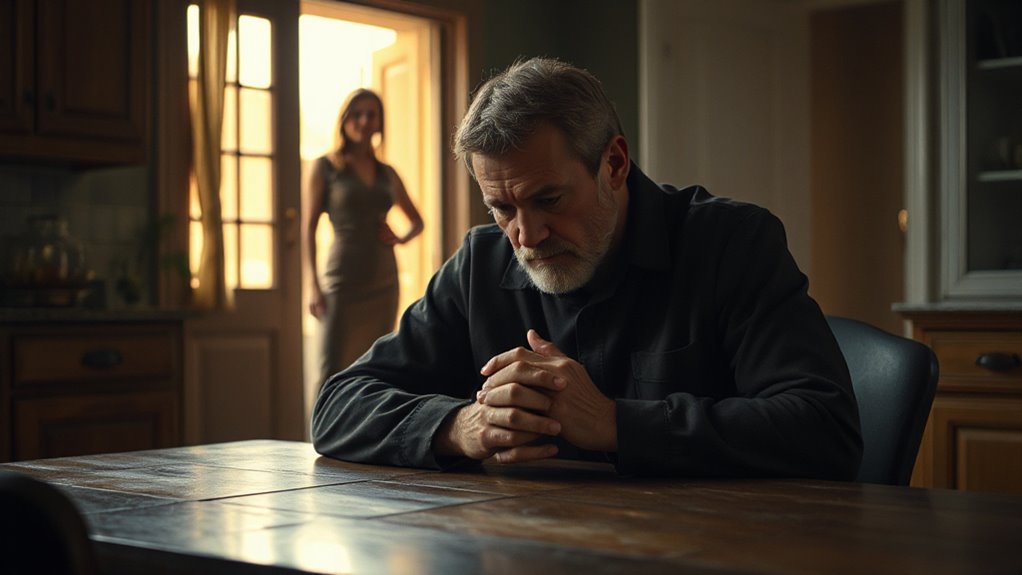
Scripture does not stop at describing what a good husband looks like. It also names specific behaviors that God considers sinful and harmful.
Colossians 3:19 directly forbids harshness toward a wife. Psalm 11:5 states that God hates those who love violence.
Proverbs 6:16–19 lists a lying tongue, false witness, and someone who stirs up conflict as things the Lord despises.
Ephesians 4:31 forbids bitterness, wrath, and slander.
Proverbs 29:22 warns that an angry person increases strife, while Proverbs 18:21 reminds readers that words carry the weight of life and death.
Isaiah 1:17 commands correcting oppression.
Second Timothy 3:1–8 describes abusive and brutal behavior as a mark of spiritual corruption, warning believers to avoid such people.
Together, these verses show that controlling and cruel behavior is not a private matter. Scripture treats it as a moral failure with clear consequences. Headship is described as a sacred trust, not a license for domination. The place where Jesus was crucified, known as Golgotha, was outside the city walls, which underscores themes of separation and public consequence in biblical justice.
Can a Wife Biblically Leave an Abusive Husband?

One of the most pressing questions a Christian woman in an abusive marriage faces is whether leaving is biblically permitted. Many Christian teachers and ministries say yes, pointing to 1 Corinthians 7:11, which acknowledges separation as a real possibility even when reconciliation remains the stated goal. Scripture does not require anyone to remain in a dangerous situation, and several ministries place moral responsibility squarely on the abuser, not the spouse who leaves. The name Jesus itself, meaning “Yahweh saves,” underscores the biblical emphasis on divine concern for the vulnerable.
Some traditions recommend separation first, treating it as distinct from divorce. Others argue that ongoing, unrepentant abuse functions as covenant-breaking, placing it closer to abandonment. Abuse is widely considered worse than abandonment, as it involves leveraging the marriage covenant itself as a means of harm.
While interpretations differ on whether divorce is ultimately permitted, the permission to physically leave for safety is broadly supported across many Christian traditions. Proverbs 14:7 instructs believers to leave the presence of a fool, a principle many apply directly to abusive relationships as biblical grounding for separation.
Where Christians Can Turn for Help in an Emotionally Abusive Marriage

For a Christian woman handling emotional abuse in her marriage, the question of where to turn can feel as difficult as recognizing the abuse itself. The Catholic tradition’s use of the Septuagint in early Christianity illustrates how historical texts shaped community care and teaching.
Trusted pastors, church elders, or women’s ministry leaders can offer an initial point of contact.
Abuse-informed Christian counselors can help clarify what is happening and build a safety plan.
Church leaders may also be called to address the abusive husband directly and hold him accountable.
The National Domestic Violence Hotline and local domestic violence centers provide crisis resources, safety planning, and practical next steps.
Supportive friends and family can reduce isolation and help document patterns.
Because emotional abuse can escalate, early action matters. Statistically, emotional abuse has been shown to escalate to physical violence, making it critical to understand that abuse rarely stays emotional.
Each situation differs, but no woman facing this should have to navigate it alone. Organizations like Focus on the Family encourage a paradigm shift in how Christian communities respond to emotionally abused spouses, moving toward healthier and more Christ-like support.