


The Bible gives no direct command requiring or forbidding visits to graves. Scripture does, however, record multiple accounts of people returning to burial sites as part of mourning and remembrance. The women who visited Jesus’ tomb in all four Gospels brought spices and came out of devotion. Biblical prohibitions address necromancy and spirit contact, not physical location. For those seeking fuller context on what Scripture actually permits and reflects, more awaits below.
Key Takeaways
- The Bible gives no specific command requiring or directly prohibiting visits to graves.
- Scripture prohibits necromancy and spirit contact, but distinguishes these from visiting graves to mourn or remember.
- Gospel accounts show women visiting Jesus’ tomb after the Sabbath, framing grave visitation as faithful devotion.
- Jesus wept at Lazarus’ tomb, showing grave visits connected to grief and compassionate remembrance are appropriate.
- First Thessalonians 4:13–18 frames mourning with resurrection hope, giving grave visits meaning beyond finality.
What the Bible Says About Visiting Graves
The Bible does not offer a specific command requiring visits to graves, nor does it give a direct prohibition against them. Scripture addresses burial, mourning, and remembrance frequently, but never establishes a standalone rule about grave visits.
Instead, biblical writers focus on grief, honor, and the hope of resurrection rather than the act of visiting itself. The placement of many significant events, such as Jesus’ death outside the city walls at Golgotha, shaped early Christian understandings of burial and remembrance.
Ancient Israelite culture included mourning at or near tombs following death, treating such visits as expressions of respect.
Burial sites often carried family and covenant significance, suggesting that remembering the dead held real meaning.
The New Testament shifts attention away from the tomb and toward resurrection hope.
Graves, in biblical terms, are not final endpoints. The Greek terms used for grave and tomb, such as μνηεῖον and μνῆμα, derive from words meaning memory and memorial to the dead, reflecting a culture that understood burial places as tied to remembrance rather than finality.
Christian reflection on visiting them is shaped more by faith and remembrance than by ritual obligation. [Paid Bible Gateway Plus subscribers are eligible to receive a refund no later than September 15, 2025.
Biblical Examples of Grave Visits in Scripture
Scripture records several examples of people visiting graves, and the most repeated scene involves the women who went to Jesus’ tomb after the Sabbath ended.
Matthew names Mary Magdalene and the other Mary, Mark adds Salome, and Luke includes Joanna.
Each account connects the visit to spices brought for burial care.
John places Mary Magdalene arriving while it was still dark.
In every account, the women discovered the stone already removed.
The Gospels also record Jesus visiting the tomb of Lazarus in John 11, where mourning, a sealed entrance, and a command to remove the stone precede the raising of Lazarus.
Both scenes present grave visits as purposeful acts carrying grief, devotion, and ultimately, unexpected divine revelation rather than routine obligation.
The St Albans Psalter, produced between 1123 and 1143, depicts the three Marys at the tomb in a left-to-right narrative sequence, with an angel seated on a rectangular stone pointing beyond the composition to signal that Christ has risen.
The Church of the Holy Sepulchre, located in Jerusalem’s Christian Quarter of the Old City, has been traditionally linked since the fourth century to both the crucifixion site and the tomb where Jesus was buried and raised.
Bethlehem’s association with early Christian pilgrimage underscores the broader pattern of venerating sacred sites, including tombs and birthplaces, across Christian history, and thus highlights the enduring practice of visiting pilgrimage sites.
Why the Bible’s Mourning Culture Included the Tomb
Among ancient Israelites, mourning and burial formed a single connected process rather than two separate events, which meant the tomb became a natural center of grief almost by design.
Lamentation began at the moment of death, continued at home, and then moved with the procession to the grave itself.
Mourners wept, fasted, tore garments, and wore sackcloth as public expressions of loss that the whole community could recognize.
Family tombs, like the cave of Machpelah, reinforced this further by making burial a matter of kinship and covenant identity.
Mourning periods also extended well beyond the burial day, lasting seven, thirty, or even seventy days in significant cases.
This extended cultural pattern made returning to the tomb a natural expression of loyalty, memory, and continuing grief. Processions to the grave were often led by lamenting female mourners, sometimes hired professionals whose weeping gave formal shape to the community’s sorrow.
When Jesus arrived at the tomb of Lazarus, he did not redirect the mourners away from the grave but instead wept alongside them, demonstrating that visiting the place of burial was a deeply human and spiritually recognized act of grief.
Regular communal practices like prayer and shared mourning helped sustain ongoing connection and spiritual growth among bereaved families.
Does the Bible Permit or Prohibit This Practice?
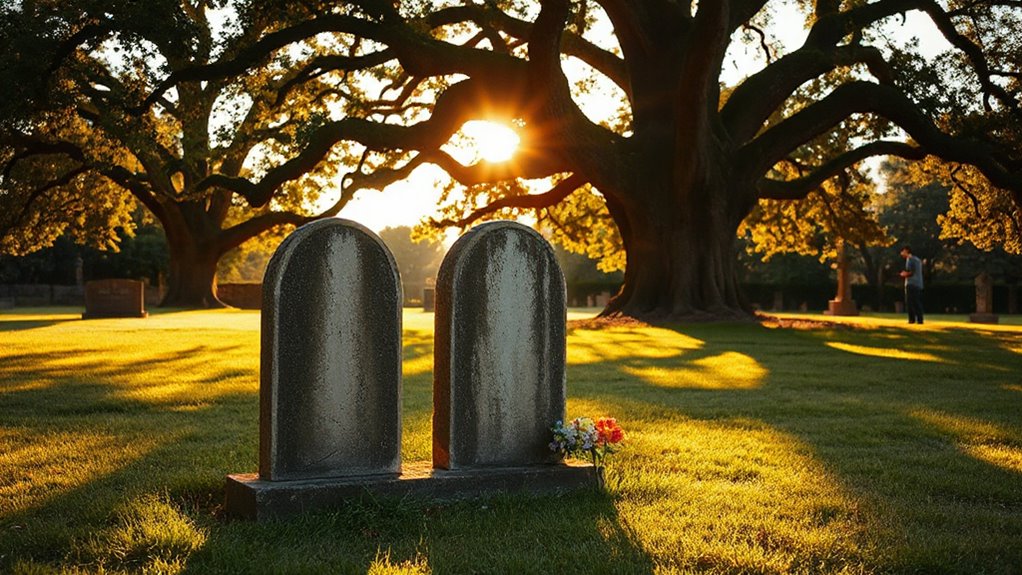
When someone asks whether the Bible directly forbids visiting a grave, the honest answer is that it does not. Scripture contains no passage commanding believers to avoid cemeteries as a matter of obedience.
The Bible contains no passage commanding believers to avoid cemeteries as a matter of obedience.
Women visited Jesus’ tomb, and the Gospel writers recorded those visits without moral criticism.
What Scripture does prohibit is clearly defined: necromancy, spirit contact, and occult rituals tied to the dead. Those boundaries address motive and practice, not physical location.
A person visiting a grave to mourn, remember, or reflect on resurrection hope stands on different ground entirely than one seeking communication with the dead.
The Bible’s concern centers on worship and holiness, leaving ordinary grave visitation as a matter of personal conscience rather than explicit command. In first-century Jewish practice, the body was washed, anointed, and taken to burial within hours of death, reflecting a deep reverence for the deceased that was considered a family responsibility.
Early Islamic teaching similarly encouraged grave visits not as rituals of veneration but as occasions for reflection, with the Prophet noting that visiting graves serves to remind of the Hereafter, drawing a careful line between remembrance and the prohibited practices of supplicating to or seeking help from the dead.
Jesus likely spoke Aramaic in daily life, which shaped how first-century people would have discussed death and burial.
Visiting a Grave as an Act of Faith, Not Fear

Grief draws people to gravesites for reasons that have little to do with superstition and much to do with faith. Scripture consistently frames burial sites as places of remembrance and hope rather than dread. When Mary Magdalene visited Jesus’ tomb, she came out of devotion, not fear. Jacob marked Rachel’s tomb with a pillar, treating the site as worthy of intentional honor.
These examples suggest that visiting a grave can be a quiet, faith-centered act. First Thessalonians 4:13–18 describes deceased believers as those who will rise again, giving mourning a hopeful horizon rather than a final one. A grave visit, approached this way, reinforces trust in God’s authority over death. People who make regular visits often find that short daily readings help sustain that trust and perspective.
The focus shifts from anxiety about the dead to gratitude for the life once lived. Scripture describes the dead as conscious of nothing, resting in a condition of complete unawareness until resurrection brings them back to life. The women who came to Jesus’ tomb brought prepared spices for anointing, demonstrating that grave visitation was woven into faithful devotion and reverent care for the dead.