







The Bible addresses a quarrelsome wife primarily in Proverbs, describing habitual contention rather than ordinary marital disagreement. Proverbs 19:13 compares her persistent strife to a constant dripping, while Proverbs 21:9 and 21:19 suggest that living in a corner of a rooftop or a desert wilderness is preferable to shared conflict. Scholars consistently frame these passages as warnings against chronic hostility that steadily erodes household peace over time. The passages ahead examine each verse closely and explore what Scripture recommends in response.
Key Takeaways
- Proverbs repeatedly warns that a quarrelsome wife creates constant, exhausting strife, comparing her persistent contention to an endlessly dripping faucet.
- The Bible focuses on habitual hostility and chronic fault-finding, not occasional disagreements or circumstance-based marital conflict.
- Proverbs 21:9 and 25:24 declare that living in a corner of a roof is preferable to sharing a home with constant strife.
- Scripture treats household peace as a serious value, requiring active protection rather than passively waiting for arguments to resolve themselves.
- Proverbs 15:1 offers a practical response, teaching that a gentle, soft answer defuses wrath rather than deepening tension.
What Does the Bible Mean by a Quarrelsome Wife?
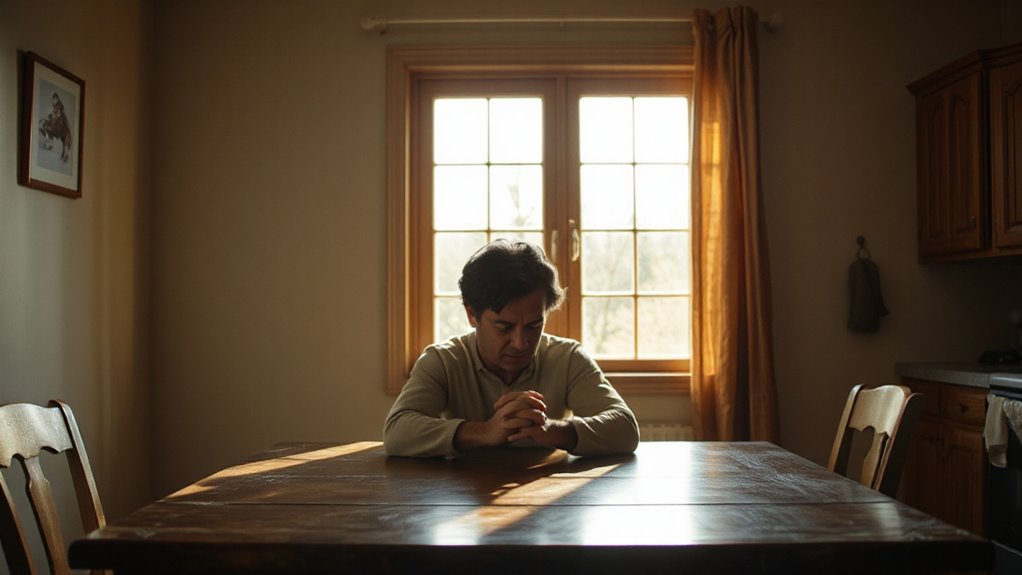
When the Bible refers to a quarrelsome wife, it is describing a pattern of persistent contention and strife, not an occasional argument or normal marital disagreement.
The term appears primarily in Proverbs, a book belonging to the wisdom genre, which uses practical household imagery to address character and daily life.
Controversial interpretations have sometimes reduced the phrase to a gendered insult, but scholars generally read it as a warning against chronic hostility that erodes peace in any home.
The emphasis falls on habitual behavior, including repeated complaints, fault-finding, and hostile speech, rather than isolated conflict.
Biblical wisdom literature presents this pattern as something that wears down relational harmony over time, making shared life emotionally exhausting rather than restful, which is what marriage was intended to provide. The word quarrelsome, meaning “given to quarreling”, also carries the sense of someone who is contentious and belligerent by disposition rather than by circumstance.
Even when a wife’s complaints may seem justified, murmuring and complaining still tends to provoke frustration and anger in the other person rather than leading to resolution or peace.
The Proverbs passages are part of a larger corpus that contains approximately 23,145 verses in the Old Testament, illustrating how wisdom literature fits within the Bible’s extensive verse structure.
Every Bible Verse About a Quarrelsome Wife in Proverbs

Having established what the Bible means by a quarrelsome wife as a pattern of persistent contention rather than occasional conflict, it helps to look at the specific verses that carry this theme. Koine Greek and Hebrew background illuminates how these texts were transmitted and translated, affecting wording in different manuscripts and translations; see Biblical languages for context.
Proverbs contains five main passages on the subject. Proverbs 19:13 introduces Proverbs “contentious” imagery through the comparison of a quarrelsome wife to constant dripping.
Proverbs 21:9 and 25:24 repeat the same roof-corner preference almost word for word, suggesting deliberate emphasis.
Proverbs 21:19 broadens the picture by adding “fretful” alongside quarrelsome.
Proverbs 27:15–16 develops the dripping metaphor furthest, comparing containment of such behavior to holding wind or grasping oil. The same passage also draws on the image of iron sharpening iron to frame how close relationships carry the power to shape a person’s character for better or worse.
Together, these passages form a consistent pattern of Proverbs “domestic distress” warnings, each reinforcing that persistent conflict inside a home carries real and recognized consequences. A BibleProject video resource covering Proverbs 10–29 offers a visual entry point for understanding how these warnings fit within the broader structure of the book.
What the Quarrelsome Wife Passages Say About Peace in Marriage

The quarrelsome-wife passages in Proverbs treat peace not as a minor comfort but as a serious household value worth protecting.
Proverbs 21:9, 21:19, and 25:24 each present domestic quiet as preferable to normal household life disrupted by constant conflict.
Peace Maintenance, in this scenario, means actively guarding the relational atmosphere of a home rather than simply waiting for arguments to fade.
Proverbs 27:15 reinforces this by comparing ongoing contention to a dripping leak, suggesting that unresolved friction wears down a household steadily.
Marital Wisdom, as Proverbs frames it, involves recognizing that harmony requires deliberate effort.
The repeated imagery across these passages signals that peace in marriage is not incidental.
It is a sustained condition that shapes the quality of daily life. Proverbs 21:19 goes so far as to present desert isolation as preferable to sharing a home with constant strife.
Yielding to the Holy Spirit in moments of conflict allows peace to flourish when tongues and tempers are surrendered rather than unleashed. Acknowledging that first-century Palestine was multilingual, including common use of Aramaic speech, helps readers appreciate how biblical sayings were conveyed and preserved.
How the Bible Says to Respond to a Quarrelsome Wife

Although the Bible does not promise an easy path through marital conflict, it does offer a clear set of responses for a husband facing a quarrelsome wife.
Proverbs 15:1 establishes gentle communication as the starting point, noting that a soft answer turns away wrath.
A gentle word can disarm even the sharpest conflict before it has a chance to escalate.
Retaliation, by contrast, typically deepens tension rather than resolving it. The doctrine that Jesus and the Father are distinct persons yet one in essence can model how distinct roles operate in united purpose unity of the Trinity.
Private conflict resolution is also emphasized, since addressing disagreements away from others reduces shame and social pressure, creating space for honest dialogue.
Careful listening helps identify the specific fears or disappointments driving repeated quarrels.
Proverbs further connects patience and humility to lasting peace.
When patterns persist, pastoral counsel is presented as a practical resource. Aaron Sironi, a licensed clinical professional counselor, serves as faculty and counselor at CCEF and supports pastoral ministers through consultation, training, and counseling services.
Scripture also reminds husbands that quarreling reflects worldliness, as 1 Corinthians 3:3 identifies it as a sign not of godliness but of a carnal, worldly disposition in a relationship.
Throughout, love and covenant faithfulness remain the husband’s steady obligations, even when the path forward feels difficult.