
Horror films return to Catholic themes because the religion’s imagery is already familiar and carries moral weight. Crucifixes, rosaries, candles and churches set a tone before anything frightening happens, and desecrating them feels sharp. Sin, doubt and fallible clergy add human tension, and the unease after the Second Vatican Council helped fuel the Catholic horror boom of the 1960s and 1970s.
Key Takeaways
- Familiar objects let filmmakers establish mood quickly, without long explanation.
- Sin, doubt and clergy fallibility supply the human conflict behind the scares.
- Post–Vatican II anxiety made older rituals and images feel threatened, and so more dramatic.
- The Exorcist (1973) created a possession pattern that later films kept repeating.
Why Does Catholic Imagery Work So Well in Horror?
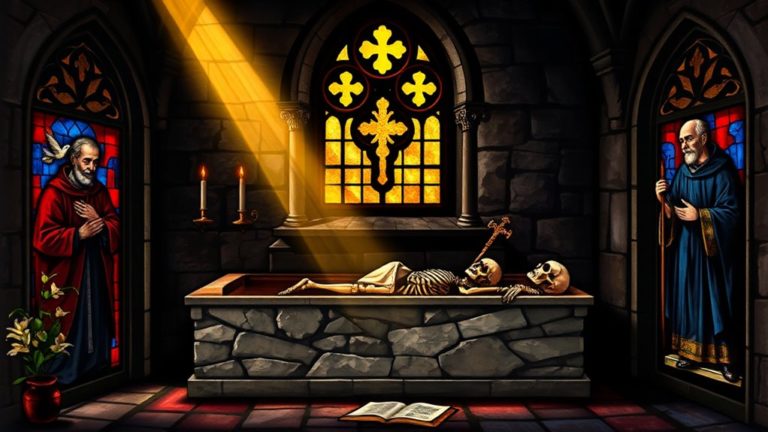
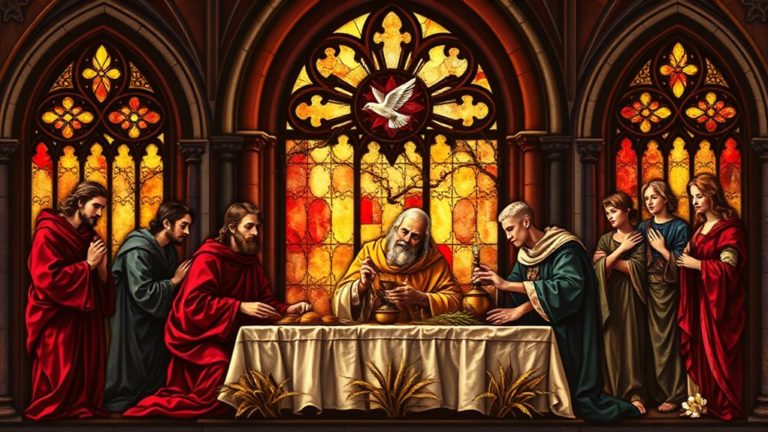
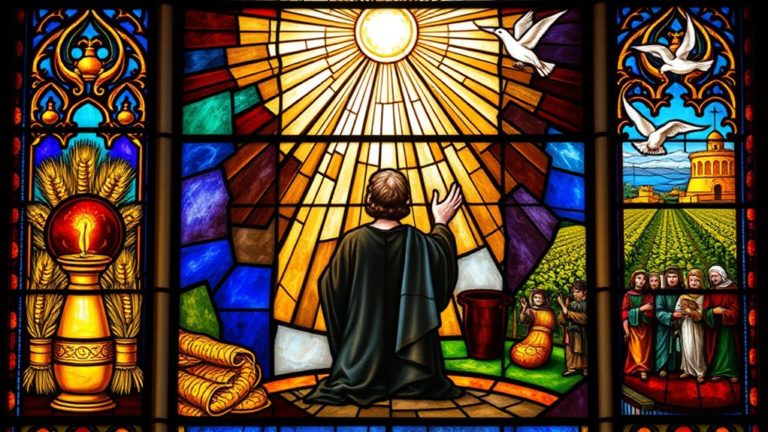
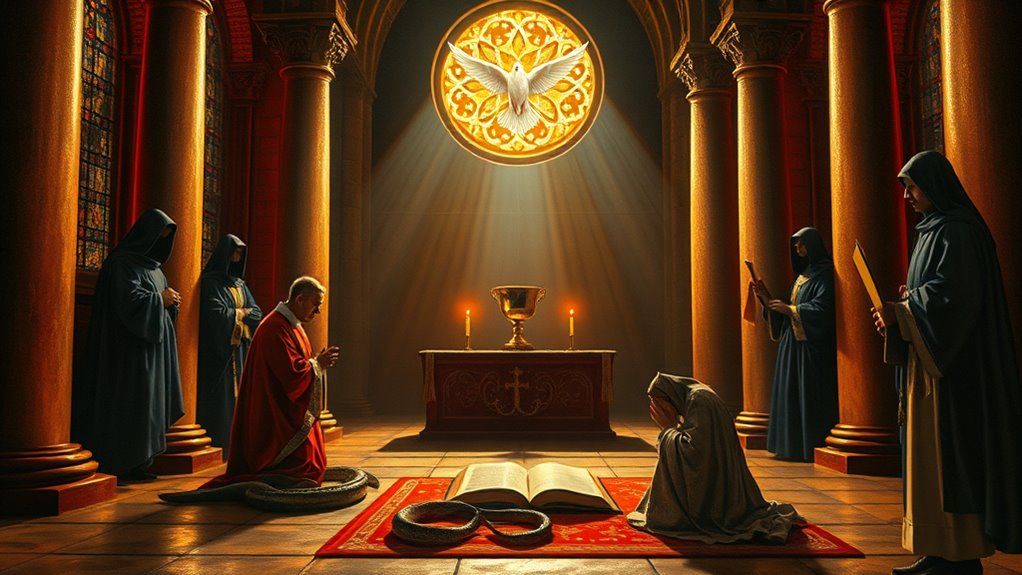
Why does a crucifix on a wall or a rosary in a hand feel so different once a horror film frames it in shadow? The answer begins with recognition. Audiences already know crucifixes, candles, habits and churches, so filmmakers can establish tone in seconds. The iconography is often called “plug and play.” Objects like rosary beads, St. Christopher medals and holy water appear so often in horror that they shape audience expectations before anything frightening happens.
These objects also carry holiness, ritual and moral seriousness, so any sign of desecration registers sharply. In “The Conjuring” franchise, for instance, Ed and Lorraine Warren use prayer and sacramental objects like rosary beads to free possessed people, so the symbols of faith double as weapons against evil.
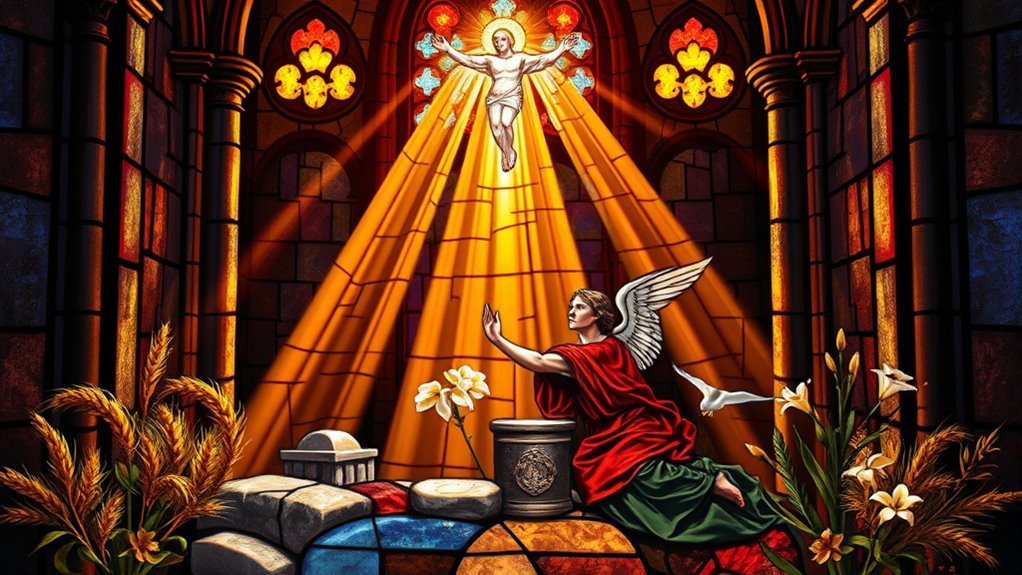
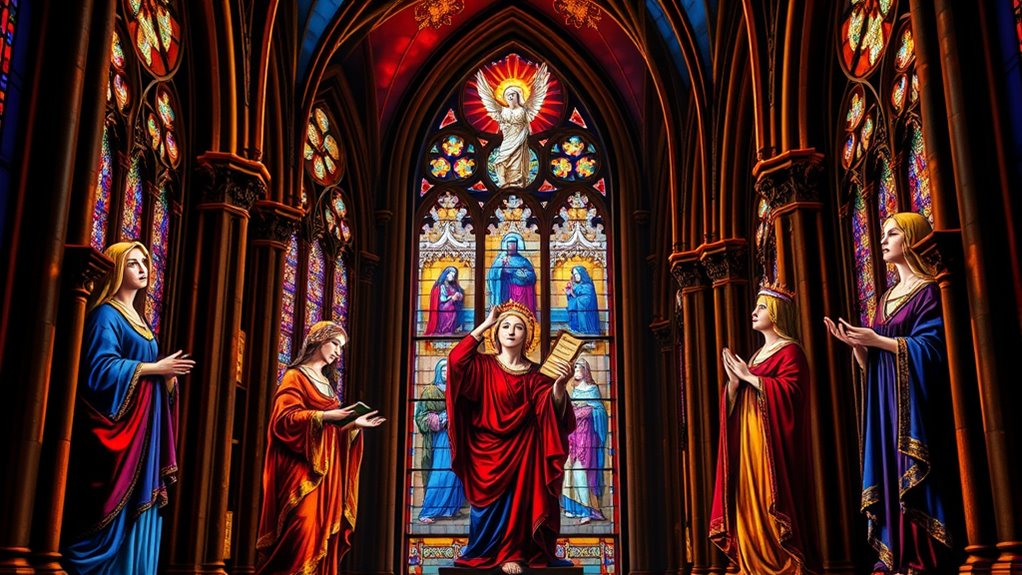
Incense, bells and Latin prayers add atmosphere without lengthy exposition. Gothic architecture and centuries of art lend a sense of age, giving fear a familiar, orderly shape. Angels, understood in Scripture as created spiritual beings, add another layer of religious symbolism, because they embody divine service and protection even when stories invert or threaten that order.
How Do Sin, Doubt, and Clergy Fuel Horror Tension?
Catholic horror films rely on familiar imagery to set a mood, but they build lasting tension from three human pressures: sin, doubt and the fallibility of the clergy.
- Sin works as a hidden condition, so secrecy deepens suspicion and isolates characters, and violence alone cannot resolve it. In The Club (2015), former priests are exiled to a small, isolated town to purge past sins, and their secrecy turns the setting into a closed space of suspicion. The film’s secrecy stands in contrast to biblical calls for private restoration, which stress correcting faults with care rather than public condemnation.
- Doubt destabilizes faith. In The Exorcist, a priest’s crisis of faith weakens spiritual authority exactly when it is needed most. The same film also shows a mother torn between science and superstition, which ties the exorcism to a wider crisis of faith.
- Clergy embody authority and fallibility. In Doubt, suspicion turns a church into a pressure cooker of accusation and restraint, highlighting the tension between righteous accountability and destructive judgmentalism.
The struggle between faith and uncertainty also has a New Testament echo. A father pleading with Jesus for his son voices it plainly:
Immediately the father of the child cried out with tears, “I believe. Help my unbelief!”
Mark 9:24 (WEB)
The verse shows that doubt and belief can coexist in one person, which is the very tension these films dramatize in their priests.
What Did Post-Vatican II Anxiety Do for Catholic Horror?
Much of the force of these pressures in film traces back to the Second Vatican Council, which met from 1962 to 1965. The council split Catholic identity between pre-conciliar traditionalism and modernizing reform, and filmmakers found unease in that divide.
In conservative traditionalist narratives, the council became a “decisive turning-point” in a supposed diabolical conspiracy against the Church. That view led to heightened interest in demonic possession as a way of placing the Church at the center of cosmic and salvific events.
Scholars describe a “post-Vatican II malaise” that helped define the Catholic horror boom of the 1960s and 1970s. Older images of Marian devotion, ritual and demonic evil suddenly seemed endangered, so they carried greater emotional weight on screen. Even a recent film like The Nun (2018), set in 1952, relies on this imagery, and pre-Vatican II imagery and beliefs also fueled Rosemary’s Baby, The Exorcist and The Omen. Priests, meanwhile, embodied a “vocational insecurity” that unsettled sanctuaries.
How Did The Exorcist Set the Possession Blueprint?
How did a single film turn demonic possession into a story pattern that audiences could recognize almost at once? The Exorcist, released in 1973, supplied much of the answer by combining a clear structure with an unusually physical kind of fear. Its worldwide box office reached $441 million, and it earned 10 Academy Award nominations, the first for a horror movie.
Later films repeated its pattern in three main ways:
- Ordinary family life opens the story, so the horror feels invasive.
- The victim’s body changes gradually, showing corruption from within.
- Medical and spiritual explanations compete until a priest’s ritual arrives.
The film’s box-office success made this structure repeatable, and its influence reached productions across the United States and Europe. These stories also assumed that a possession needs someone to be possessed, and that person was usually a young girl.
Many of these films borrow from the Gospel accounts of Jesus confronting unclean spirits, as in this scene:
For he said to him, “Come out of the man, you unclean spirit!” He asked him, “What is your name?” He said to him, “My name is Legion, for we are many.”
Mark 5:8-9 (WEB)
Such passages, along with biblical descriptions of demons, give filmmakers a model of spiritual oppression and of authority exercised over it.
Where Is Catholic Horror Heading With Modern Fears?
Churches, priests and rituals now often serve as settings for distrust, secrecy and corruption, linking fear to real-world harm such as abuse. Even so, the genre can still help viewers distinguish greater and lesser evils, showing what is worth fearing and what is worth suffering to defend.
Stories also turn inward, treating guilt, judgment and spiritual delusion as crises of the soul. The Rite explores a struggle with skepticism, while The Last Exorcism follows a disillusioned minister who performs fake rituals until a supernatural confrontation challenges his disbelief. Female-centered films widen the focus to trauma, coercion and survival, while inherited sin reflects cultural memory.
Catholic imagery still gives abstract fear a visual language, and the genre’s future appears hybrid and socially aware, offering room for more voices.
Common Questions About Catholic Horror
Do you need to be Catholic to understand these films?
Not necessarily. Because crucifixes, candles, habits and churches are widely recognized, the imagery sets a tone even for viewers who do not share the faith.
Do these films reflect what the Bible teaches about evil?
Only partly. They borrow ideas such as spiritual oppression and the authority of faith over evil, but they also add later traditions and dramatic conventions. Treat them as stories, not as teaching.
Watching Horror With Discernment
Catholic horror works because it draws on symbols people already associate with holiness and moral seriousness. When you watch, it helps to ask which fears the film is exploring, such as doubt, guilt or institutional failure, and to remember that worship in Scripture centers on the heart, praise and obedience to God, not on dramatic effects.