

Near-death experiences — reported by an estimated 20 million people worldwide — commonly involve leaving the body, moving through a tunnel toward light, and encountering deceased relatives. Researcher Janice Holden found 92% of reviewed out-of-body observation cases completely accurate. Neurological explanations account for many features, yet some cases resist easy dismissal. Most analysts conclude the evidence remains compelling but unproven. The full picture of what science and firsthand accounts actually reveal is worth exploring further.
What Actually Happens During a Near-Death Experience?
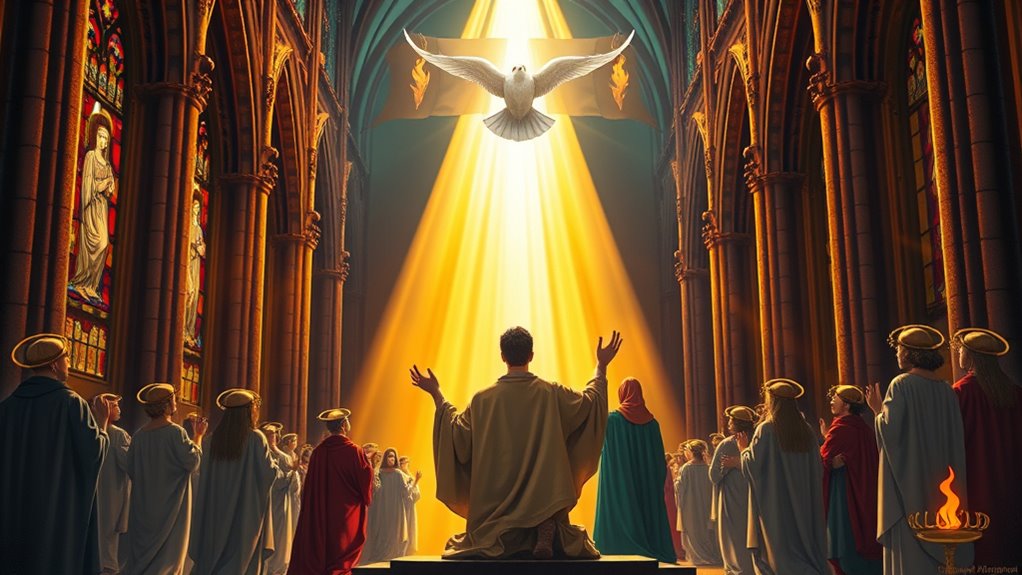
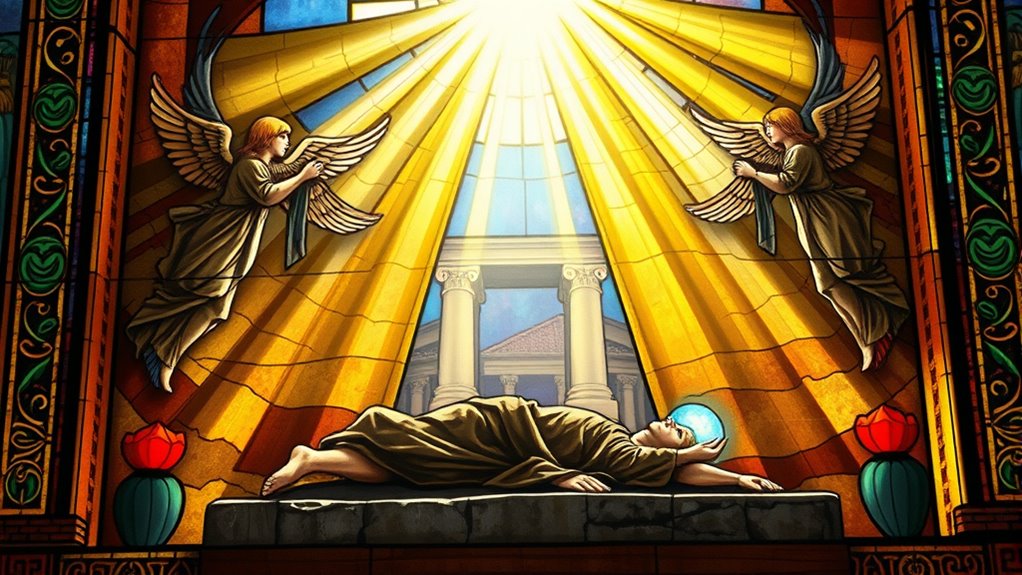
Near-death experiences, or NDEs, tend to follow a recognizable pattern regardless of where or how they occur. Survivors commonly report leaving their bodies, observing themselves from above, and moving through a tunnel toward an intensely bright light. Many describe heightened awareness, a deep sense of peace, and encounters with deceased relatives or luminous figures. Some experience a panoramic review of their life’s major events.
These episodes typically begin when the body enters crisis — cardiac arrest, trauma, or oxygen deprivation. Remarkably, roughly one in ten hospital cardiac arrest patients later report experiencing something during the period they were clinically unresponsive. Some survivors also report veridical NDEs, in which they acquire verifiable information about distant locations or events that could not have been obtained through normal means.
These experiences are not confined to any particular belief system. NDEs occur with similar frequency across religious and secular individuals, suggesting that faith or prior spiritual commitment does not predispose a person to having one. Many accounts parallel biblical dream patterns of vivid imagery and perceived divine contact reported throughout scripture.
The NDE Evidence That Makes Heaven Hard to Dismiss
Among the most compelling aspects of near-death experience research is the accumulating body of corroborated evidence that resists easy dismissal. Dr. Janice Holden reviewed 89 published cases involving out-of-body observations and found 92% completely accurate upon investigation. One notable example involved a patient accurately describing a red shoe on a hospital rooftop, later confirmed by staff.
Researcher Gary Habermas documented over 100 evidenced cases by 2018. Meanwhile, John Burke interviewed more than 1,500 experiencers and found consistent descriptions of encountering Jesus Christ across varied religious backgrounds, suggesting patterns too specific and too frequent to explain away comfortably.
Across cultures, religions, and belief systems, over 20 million people have reported near-death experiences, with approximately 90% expressing certainty that life continues after death. This widespread testimony aligns with the biblical concept of hope as a confident expectation rooted in God’s character rather than mere wishful thinking.
Hospice nurse and best-selling author Trudy Harris, who documented accounts in her books Glimpses of Heaven and More Glimpses of Heaven, observed that the language and imagery reported by experiencers was strikingly similar across accounts, pointing to a consistency that many researchers and caregivers find difficult to attribute to coincidence alone.
Why Skeptics Say the Brain Explains It All
Skeptics push back firmly against supernatural interpretations of near-death experiences, arguing that the brain itself is capable of generating every feature that NDE researchers find compelling. Oxygen deprivation, excess carbon dioxide, and metabolic stress can produce tunnels, lights, and feelings of detachment. Hallucination models suggest vivid experiences form during recovery, not verified death, meaning timing remains ambiguous. Memory reconstruction may then shape raw fragments into coherent, meaningful narratives. Many Christians point out that biblical teachings generally warn against relying on non‑divine sources for spiritual knowledge, which complicates supernatural readings of such experiences and encourages caution about their theological interpretation (divination prohibitions).
Prospective studies hiding visual targets near resuscitation sites have largely failed to produce confirmed out-of-body identifications. Skeptics conclude that subjective intensity, however genuine it feels, does not independently confirm consciousness existing outside the brain. Skeptics also note that hypoxia and hypercarbia typically produce distress and disorientation rather than the calm, structured experiences NDE researchers describe as evidence against a purely physiological explanation.
Critics further argue that the professional credibility of respondents, including CEOs, surgeons, and pilots, does not validate supernatural claims, since high-status witnesses are no less susceptible to the psychological and neurological processes that researchers propose underlie these experiences.
Can Science Ever Prove Near-Death Experiences Are Real?
The skeptical case leaves a reasonable question standing: if the brain cannot be ruled out, can science at least test whether near-death experiences reflect something real beyond it? Researchers say yes, cautiously.
Even if the brain cannot be ruled out, science can still test whether near-death experiences point beyond it.
Key scientific standards applied to NDE research:
- Veridical details — Accounts containing independently confirmed facts carry more weight than subjective feelings alone.
- Prospective studies — Details recorded before patient recall reduce hindsight bias markedly.
- Verified unconsciousness — Reports occurring during confirmed clinical instability matter most.
- Control comparisons — Michael Sabom’s research showed NDE patients outperformed controls describing resuscitation accurately.
Strong evidence supports “unexplained,” not yet “proven.” A retrospective review by Janice Holden of 89 published out-of-body experience case reports found 92% completely accurate, lending substantial credibility to the claim that perceptions during near-death states reflect genuine external reality.
Prospective studies have followed selected groups such as emergency room patients to identify NDEs occurring in real time, with approximately 270 individuals identified across such studies, making them a more rigorous but costlier research design than retrospective approaches relying solely on self-reported past events.
Such findings intersect with broader conversations about healing and care in Scripture and the compassionate attention Scripture gives to suffering, illness, and restoration.
The Honest Verdict on NDEs and the Afterlife Question
After decades of research, interviews, and debate, near-death experiences remain one of the most carefully studied and persistently unresolved questions in consciousness science.
Researchers generally describe NDEs as suggestive rather than conclusive evidence for an afterlife. The experiences are real to those who have them, often vivid and life-changing, but objective verification remains difficult.
Neurological explanations account for many reported features, yet some cases resist easy dismissal.
Cultural variation weakens universal claims, while consistent core patterns keep the question open.
Most honest analysts land in the same place: intriguing, worth continued study, but not yet proven evidence for heaven. Gallup estimated that eight million Americans had already reported near-death episodes as far back as the 1980s.
Ancient writings from Egypt, India, Greece, Rome, China, and the Americas describe journeys out of the body, with core narrative elements appearing strikingly consistent across disconnected cultures and throughout history. Many religious traditions also interpret such accounts through frameworks involving spirits, angels, or the soul’s destiny, which shapes how these experiences are reported and received in different communities and highlights debates about spiritual interpretations.