

When Pope Leo XIV was diagnosed with pulmonary adenocarcinoma in October 2026, many Catholics turned to St. Bernardine of Siena, the recognized patron saint of lung and respiratory illness. A 14th-century Franciscan priest, Bernardine suffered chronic throat and respiratory problems throughout his own life before becoming a powerful preacher. Physicians confirmed the cancer was localized, and no further treatment was deemed necessary after surgery. Those seeking an intercessor for Pope Leo’s recovery have a compelling figure worth knowing more about.
Pope Leo XIV’s Lung Cancer Diagnosis Has Catholics Turning to This Saint
When Pope Leo XIV underwent surgery at Rome’s Gemelli Hospital on October 13, 2026, doctors removed the lower lobe of his right lung and confirmed a diagnosis of pulmonary adenocarcinoma, the most common form of lung cancer. Many Catholics also reflected on biblical teachings about caring for the body as God’s temple while offering prayers for his recovery.
The Vatican stated the diagnosis had been suspected before the operation and confirmed during it.
Follow-up tests showed the disease remained localized, and physicians determined no further treatment was necessary.
The 71-year-old pontiff’s prognosis appeared encouraging. The nodule had been discovered by chance during routine abdominal examinations, allowing early surgical intervention to be sufficient.
As news spread, Catholic communities responded with prayer, many turning to St. Peregrine Laziosi, the widely recognized patron saint of cancer patients, for intercessory support. Peregrine, a 14th-century Servite priest, is venerated in Catholic tradition after reportedly experiencing a miraculous healing from a serious cancerous wound on his foot the night before a scheduled amputation.
Who Is St. Bernardine of Siena, Patron of Lung Disease?
While St. Bernardine of Siena may not be widely recognized today, his story is rooted in both personal suffering and remarkable public ministry.
Born in 1380 in Massa Marittima, in Sienese territory, he was orphaned early and later studied theology, philosophy, and law.
Orphaned young, Bernardine of Siena pursued studies in theology, philosophy, and law before entering religious life.
He contracted plague after serving the sick in 1400, survived, and entered the Franciscan Observants around 1402.
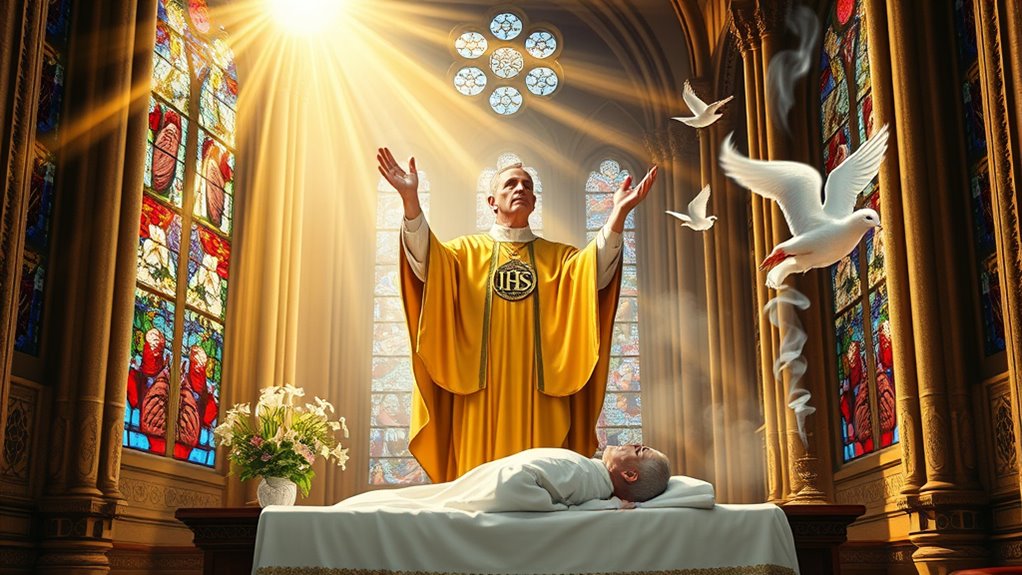
Known across Italy for powerful preaching, he promoted devotion to the Holy Name of Jesus. He created the now-famous “IHS” symbol, depicting Gothic letters on a blazing sun, as a visual expression of that devotion.
As Vicar-General of the Observants, he helped grow the order from roughly 130 friars to over 4,000 members before his death.
Canonized in 1450, just six years after his death, he remains a recognized patron for those suffering respiratory and lung-related illnesses. His emphasis on living in truth and pastoral care connected his preaching to moral and spiritual renewal for communities.
The Lung and Throat Illness That Defined His Early Life
From early in his life, Bernardine of Siena struggled with a weak voice and persistent respiratory and throat problems that seemed to mark him as an unlikely candidate for public ministry.
Sources describe chronic hoarseness and difficulty speaking clearly, conditions that followed him long before he ever preached publicly.
After his parents died during his childhood, he pursued education and religious formation despite fragile health.
His throat condition never fully resolved, yet it became part of his story rather than the end of it — a quiet reminder that significant work sometimes begins in unexpected weakness. He would later spend years serving the sick at a hospital in Scala, ministering to the dying even as his own health remained uncertain.
He is now recognized as the patron of lung diseases and respiratory ailments, an acknowledgment rooted in the very suffering he endured from his earliest years. Many Christians today see such patronages as reminders of faith that encourage prayer and compassionate care rather than reliance on objects alone.
How Catholics Pray to St. Bernardine for Respiratory Illness?
Catholics who turn to St. Bernardine for help with respiratory illness typically follow one of several devotional forms:
Catholics seeking healing from respiratory illness through St. Bernardine follow several time-honored devotional forms rooted in intercessory prayer.
- Short petitions asking God for healing “through” his intercession, often including Mary alongside him.
- Novena prayers spread across nine days, usually ending with “St. Bernardine of Siena, pray for us.”
- Feast-day prayers shared around May 20, emphasizing lung ailments and intercessory remembrance.
- Prayers for perseverance, asking not only for physical healing but for strength to endure suffering with hope.
All forms frame healing as conditional on God’s will, uniting illness with redemptive purpose. His patronage of lung diseases carries particular weight given that he himself overcame severe respiratory issues in his early life before becoming a renowned preacher. He was canonized in 1450 by Pope Nicholas V, just six years after his death, a remarkably swift recognition of his holiness and the miracles attributed to his intercession. A key theme in Christian practice is the emphasis on incarnation and salvation as central to understanding suffering and hope.
Why St. Bernardine Is the Right Intercessor for Pope Leo’s Recovery?
Knowing how Catholics pray to St. Bernardine makes his role as intercessor for Pope Leo feel less symbolic and more deliberate. His patronage of lung and respiratory illness connects directly to the pope’s pulmonary treatment, offering a specific rather than general saintly match.
Bernardine himself endured early respiratory weakness before becoming one of Italy’s most prolific preachers. That personal history gives his intercession added weight.
Catholics seeking a saint whose suffering mirrors a current illness often find Bernardine a natural choice. His life experience, devotional history, and established patronage make him a fitting intercessor for Pope Leo’s recovery. He earned the title “Apostle of Italy” for his relentless efforts to revive the Catholic faith across the country during the 1400s. He was canonized in 1450 by Pope Nicholas V, just six years after his death in 1444. The choice also reflects broader Christian practices that emphasize repentance and restoration as central to pastoral care.