





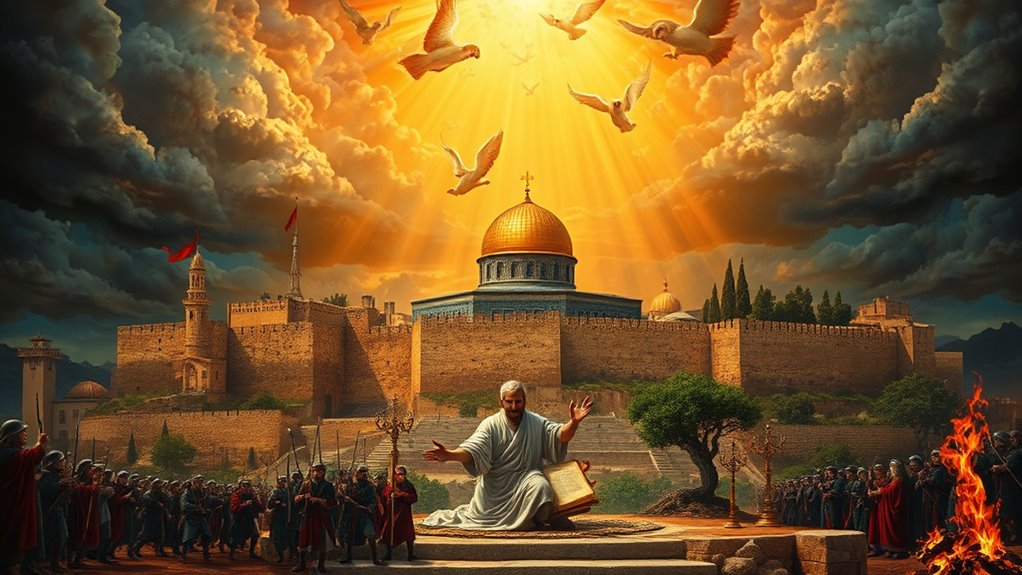
The Bible mentions ancient Iran by its historical name Persia in at least 25 verses across five Old Testament books, including Ezra, Daniel, Esther, Nehemiah, and 2 Chronicles. The most discussed passage regarding Israel and Persia appears in Ezekiel 38, a prophecy describing a future coalition attack on a regathered Israel that names Persia as a military participant alongside forces from “the far north.” The passage emphasizes supernatural deliverance rather than conventional military victory, and current geopolitical tensions involving Russia, Iran, and Israel have prompted renewed interpretive attention to this ancient scripture.
Key Takeaways
- Ancient Persia, identified with modern Iran, appears in at least 25 Old Testament verses across five books.
- Ezekiel 38:5 names Persia as part of a future military coalition attacking Israel “in the latter years.”
- Biblical references to Persia span the sixth to fourth centuries BCE during Israel’s post-exilic period.
- The Persian Empire stretched from Egypt to India, encompassing 127 provinces including biblical Israel’s region.
- Current Russian-Iranian military positioning near Israel has renewed attention to Ezekiel 38’s prophecy of northern coalition forces.
Where the Bible Mentions Persia and Ancient Iran

The ancient Persian Empire, which modern scholars identify with present-day Iran, appears throughout the Old Testament in at least 25 verses across five books. These references span Ezra, Daniel, Esther, Nehemiah, and 2 Chronicles, documenting interactions between Jewish communities and Persian rulers from the sixth to fourth centuries BCE. The empire stretched from Egypt to India, encompassing 127 provinces that included territories from the Indus Valley to Cush. Earlier mentions reference Elam, a southwestern region of ancient Iran, appearing as far back as Genesis 14:1. The prophet Ezekiel provides the first explicit mention of Persians around the early sixth century BCE. Archaeological records confirm Persian presence through ninth-century BCE Assyrian annals mentioning “Parsa,” predating most biblical references by several centuries. The biblical references are primarily in Hebrew and Aramaic, while later dissemination and study were greatly aided by translations into Koine Greek.
Does Ezekiel 38 Predict a Russia-Iran Attack on Israel?

How do ancient prophecies align with contemporary geopolitical tensions between major powers and the modern state of Israel? Ezekiel 38 describes a future coalition attack led by forces from “the far north,” which many interpreters identify as Russia, alongside Persia—modern Iran. Written 2,500 years ago, the prophecy places this invasion “in the latter years” when Israel has been regathered from many nations.
The text specifically names Persia in Ezekiel 38:5 as an active military participant. Current positioning of Russian and Iranian forces near Israel has prompted renewed attention to this passage.
The prophecy describes supernatural intervention rather than conventional military victory, with divine deliverance through earthquakes, plagues, and other phenomena that vindicate God’s name among the nations. The prediction is often considered in light of the Bible’s long composition timeline and historical context, including events from the post-exilic period around 530–440 BC that shaped prophetic literature.