The Bible describes Judgment Day as a future event where God evaluates every person without partiality. Revelation 20:11 pictures a great white throne before which all the dead stand. Matthew 12:36–37 notes that even careless words factor into the verdict. Ecclesiastes 12:14 adds that hidden deeds also come under review. Matthew 25:46 identifies two permanent destinations: eternal life or eternal punishment. The details behind each outcome are worth examining closely.
Key Takeaways
- Scripture portrays Judgment Day as a universal gathering before God’s throne, where every person—great and small—faces divine evaluation.
- God judges with perfect fairness and impartiality, basing verdicts on how people lived, spoke, and treated others.
- Every idle word and deed performed during life will be accounted for and weighed on Judgment Day.
- Hidden motives and secret actions will be fully exposed, as God reviews both outward conduct and inner intentions.
- Judgment produces exactly two permanent outcomes: eternal life for the righteous and eternal punishment for the unrighteous.
How Scripture Describes the Final Judgment
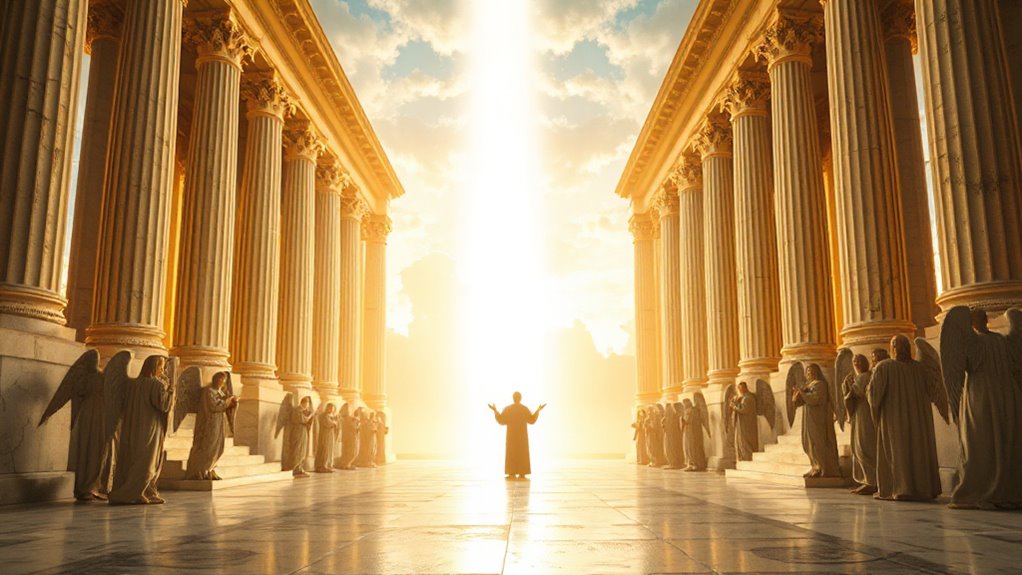
Scripture presents the final judgment not as a vague reckoning but as a structured, documented event with a clear Judge, a gathered humanity, and two distinct outcomes.
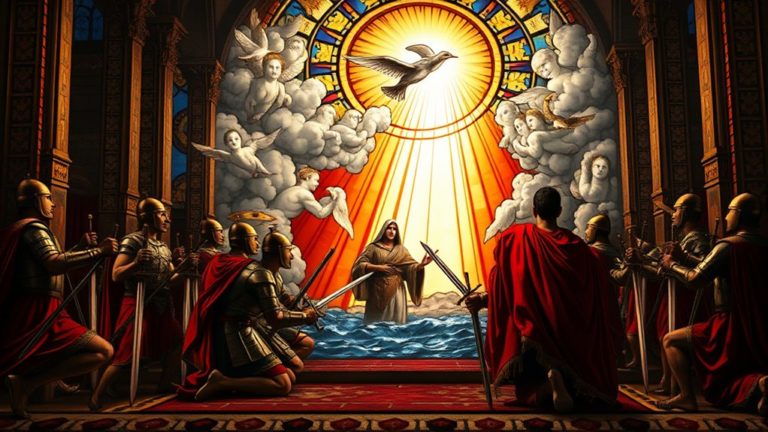
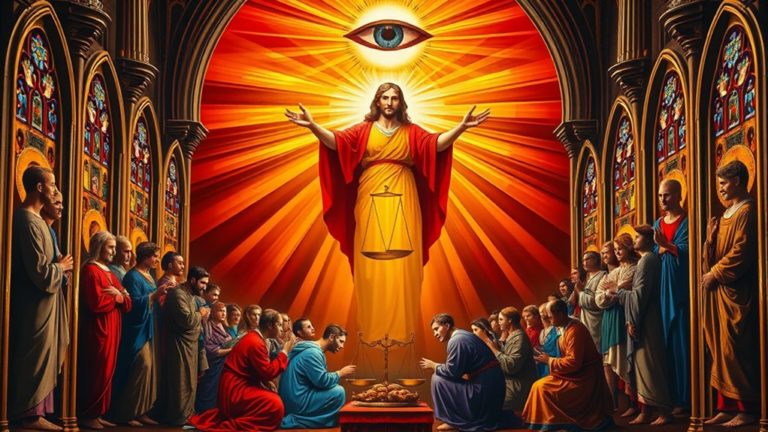
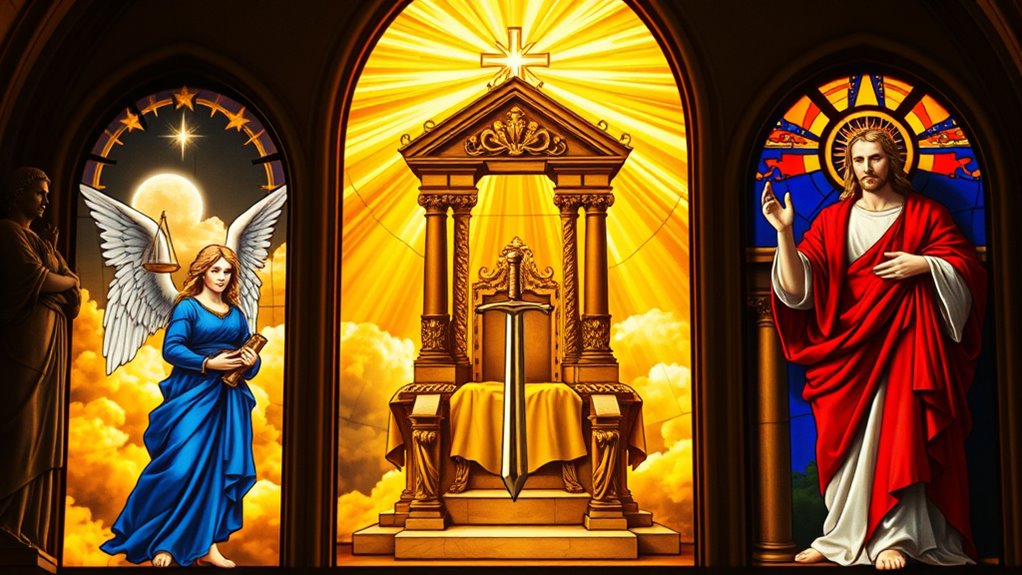
Matthew 25:31–33 places Jesus on a throne of glory, with all nations assembled before Him and angels present.
Revelation 20:11 adds the image of a great white throne, its whiteness signaling purity and righteousness.
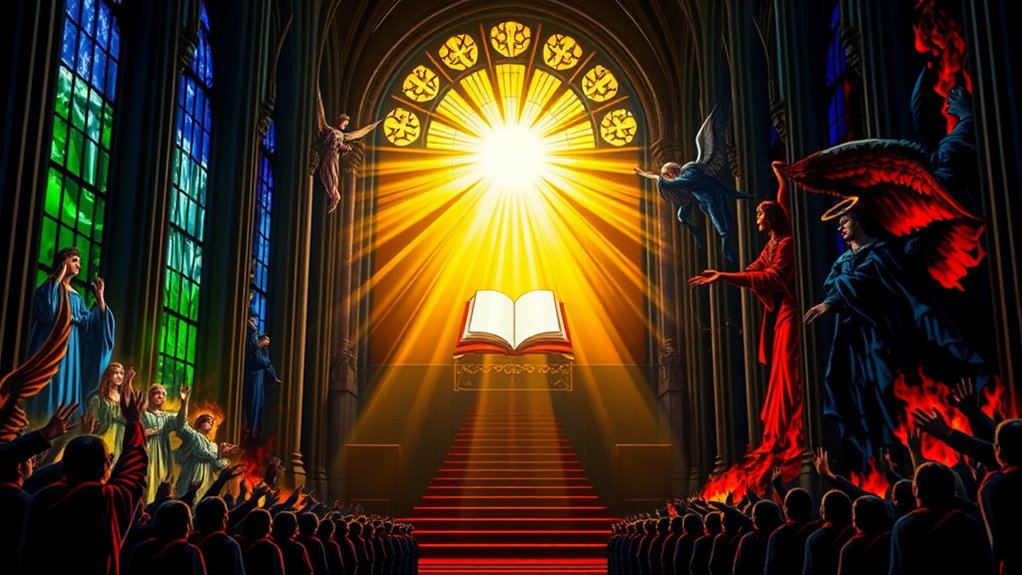
The dead, described as great and small, stand before the throne after the sea, death, and Hades surrender their occupants.
Books recording human deeds are opened alongside the book of life, making judgment exact and transparent.
The scene closes with two destinations: eternal life for some, eternal punishment for others, as Matthew 25:46 plainly states. God is perfectly just and fair in this judgment, showing no partiality toward any person who stands before the throne.
In Matthew 25, the separation of people is depicted through shepherd imagery, with sheep placed on the right and goats placed on the left, each group receiving a verdict based on how they treated those in need.
Scholarship on chronology also notes that biblical accounts were written decades after events, which affects how we interpret historical context and timing.
The Deeds and Words God Will Judge on Judgment Day
When the Bible speaks of judgment day, it addresses not only the broad sweep of human history but the specific details of individual lives, down to the words people speak and the deeds they perform.
Matthew 12:36–37 states that every idle or careless word will be accounted for, and that words will factor into whether a person is justified or condemned. Across multiple Bible translations, the same verse renders this unguarded speech as idle, careless, useless, empty, or worthless words. The Catholic canon of Scripture, which includes deuterocanonical books, reflects the broader textual tradition that informed many early Christian teachings about judgment.
Beyond speech, 2 Corinthians 5:10 teaches that all deeds done in the body will receive appropriate recompense.
Ecclesiastes 12:14 extends this further, stating that God will bring every hidden thing, whether good or evil, into judgment.
Hidden motives are equally subject to review, as 1 Corinthians 4:5 indicates the Lord will reveal what is concealed and expose the heart’s intentions. Jesus also taught that out of the heart the mouth speaks, meaning the words a person utters reflect the inner condition of the heart itself.
The Two Outcomes Judgment Day Brings

Having established that God will judge every word and deed, including what is hidden, the Bible also makes clear what judgment day ultimately produces.
Matthew 25:46 describes two distinct outcomes: eternal life for the righteous and eternal punishment for the unrighteous. The same Greek term for duration applies to both, suggesting equal permanence in each destiny.
Revelation 20:11–15 reinforces this division, connecting the lake of fire with final condemnation and the book of life with salvation. The traditional site of Jesus’ birth in Bethlehem highlights the continuity of biblical fulfillment and historical claims.
Christian teaching consistently presents these as the only two outcomes — no third path appears in the cited passages.
The judgment is portrayed as irreversible, not corrective or temporary.
One group receives everlasting joy; the other faces everlasting separation.
The contrast is deliberate, final, and grounded in the biblical text itself. Daniel 12:2 similarly anticipates this division, describing a resurrection of both the righteous and the wicked leading to either eternal life or eternal shame and contempt.
Second Peter 3:9 reveals that God is patient, wanting none to perish, but that those who ultimately refuse his mercy face the full weight of this condemnation.