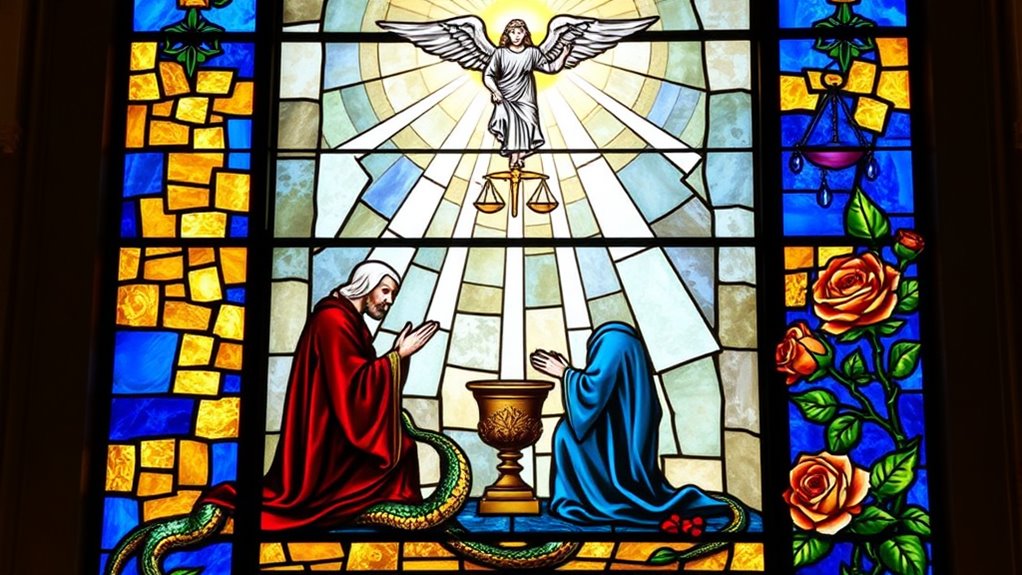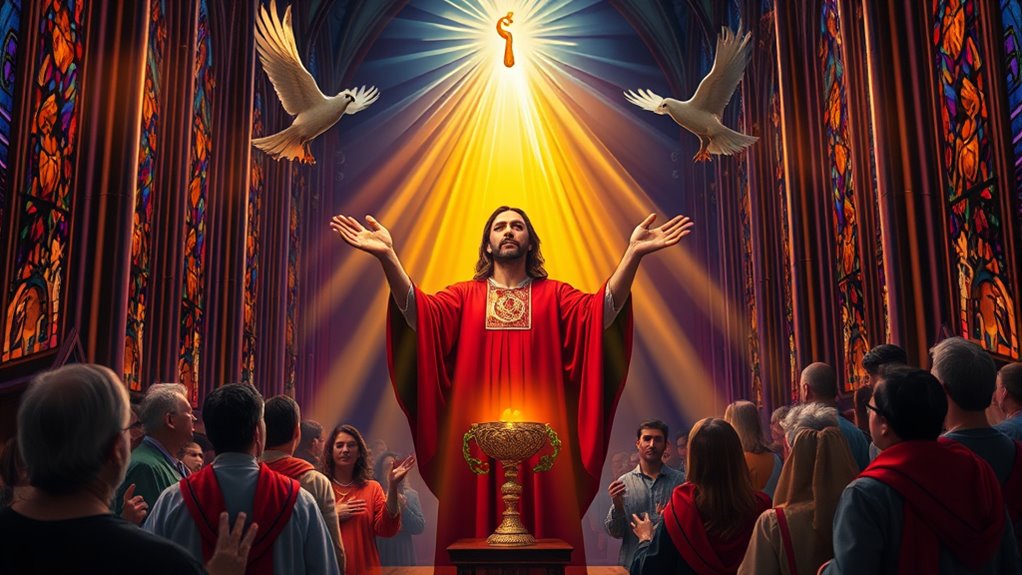

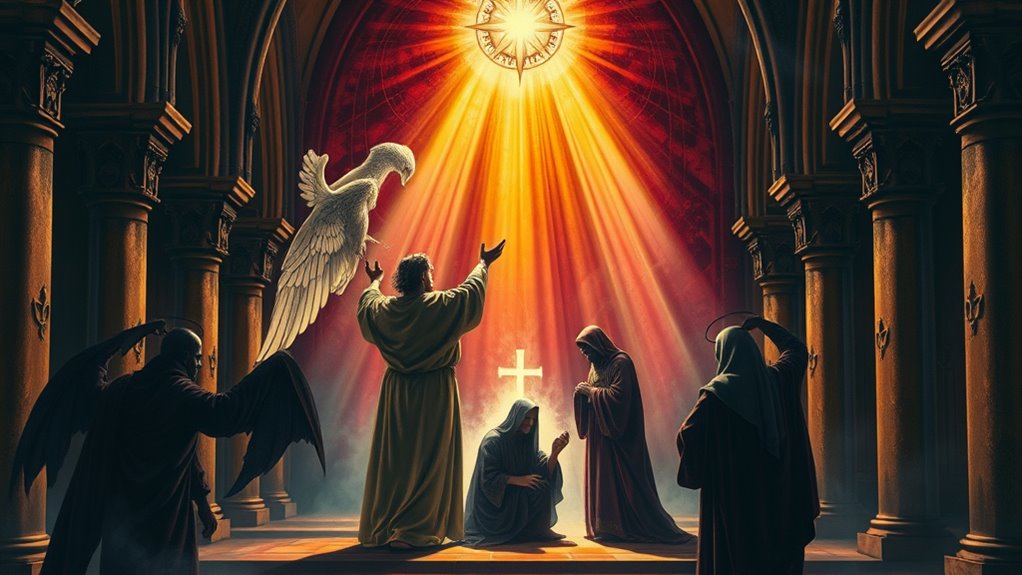
The Bible describes several distinct kinds of spirits: the Holy Spirit, identified as one Person of the Trinity; the human spirit, connected to conscience and worship; evil spirits, portrayed as powers opposing God; and angelic beings. Scripture instructs believers to test spirits rather than accept every spiritual claim, with 1 John offering doctrinal confession as one reliable marker. Those curious about how the Bible draws these distinctions further will find more specific guidance ahead.
Key Takeaways
- The Holy Spirit is God’s own Spirit, a divine Person of the Trinity active in creation, empowerment, and human transformation.
- Evil spirits and demons are hostile powers opposing God, frequently appearing in the Gospels and expelled by Jesus’ authority.
- Christians are instructed to “try the spirits,” using doctrinal confession and moral outcomes to distinguish good from evil influences.
- The Bible restricts consulting the dead, with passages in Leviticus and Deuteronomy explicitly prohibiting mediums and necromancy.
- Supernatural appearances in Scripture are framed as angelic, demonic, or divinely permitted, not departed souls haunting the living.
Types of Spirits the Bible Describes

The Holy Spirit is presented as God’s own Spirit, active in creation, empowerment, and sanctification. Catholics and many other Christians recognize the Holy Spirit as one Person of the Trinity and central to Christian life, as taught in Catholic doctrine.
The Holy Spirit is not an impersonal force but God’s own Spirit, present in creation and active in human transformation.
The human spirit refers to the inward, nonphysical aspect of a person, connected with conscience, worship, and understanding.
Unclean spirits appear frequently in the Gospels, often linked to possession and expelled by Jesus as evidence of his authority.
Evil spirits and demons are portrayed as hostile powers opposing God’s work.
Scripture also references named or descriptive spirits, such as a spirit of divination, a spirit of infirmity, and a spirit of fear, each appearing in specific biblical contexts. Scripture also identifies Leviathan as a figure of destructive spiritual opposition, described in Job 41:34 as king over all the children of pride.
How Does the Bible Distinguish Good Spirits From Evil Ones?
Recognizing that Scripture describes multiple kinds of spirits naturally raises a further question: how does the Bible suggest telling them apart?
The answer centers on discernment, testing, and observable evidence.
John’s first epistle instructs readers to “try the spirits” rather than accept every spiritual claim at face value.
Paul lists “discerning of spirits” among the gifts of the Holy Spirit, suggesting that evaluating spiritual influence is an expected part of faithful life.
One scriptural test involves doctrinal confession: spirits acknowledging Jesus Christ in the flesh are identified as being from God, while denial marks the opposite.
Moral outcomes matter too.
Influences leading toward truth, freedom, and righteousness point toward God, while those producing darkness, deception, and bondage carry different markers entirely.
Scripture presents perfect discernment as dependent on divine revelation. The devil himself may appear as an angel of light, making God’s direct revelation the only reliable means of determining whether a spiritual manifestation is truly from Him.
Notably, the Bible records instances where God sovereignly used evil spirits as instruments of His purpose, such as the evil spirit troubling Saul described in 1 Samuel 16:14–15 as coming directly from the LORD.
Throughout Scripture, encounters with spirits are framed by God’s transcendence and theophanic manifestations, which help believers interpret spiritual activity.
What Does the Bible Say About Ghosts and Mediums?
Among the questions people bring to the Bible, few are more persistent than whether the dead can return and whether humans can communicate with them.
Scripture does not present ghosts as departed souls haunting the living.
Hebrews 9:27 states that people die once and then face judgment, leaving little room for wandering spirits.
Supernatural appearances in biblical accounts are typically identified as angelic, demonic, or divinely permitted events.
Regarding mediums, the Old Testament is direct.
Leviticus 19:31, Leviticus 20:6, and Deuteronomy 18:9–12 consistently prohibit consulting the dead, classifying such practices as spiritually dangerous and unfaithful to God.
The account of Saul visiting the medium at Endor in 1 Samuel 28 illustrates the practice without endorsing it.
Biblical teaching points toward seeking God rather than hidden intermediaries.
Scripture warns that Satan disguises himself as an angel of light, suggesting that seemingly supernatural encounters may reflect demonic deception rather than genuine contact with the dead.
The Old Testament penalty for consulting a medium was severe, as those who sought them out were cut off from the community, and the medium herself was subject to death by stoning.
The translation of the Hebrew scriptures into Greek in the Septuagint translation helped spread these teachings across the Graeco-Roman world.