


The Bible describes the Antichrist as a future figure empowered by Satan who will actively oppose Christ and deceive many through false signs and wonders. The term appears five times in 1 and 2 John, defining antichrists as those who deny Jesus is the Christ or that He came in the flesh. Scripture warns that many antichrists already exist, yet a final Antichrist will emerge during global turmoil, persecute believers, and reign for 42 months before Christ defeats him at His return, an event the biblical narrative locates near Jerusalem and its sacred sites.
Key Takeaways
- The term “antichrist” appears five times in 1–2 John, referring to anyone who denies Jesus is the Christ.
- Antichrists deny Jesus came in the flesh and reject the relationship between Father and Son within the Trinity.
- The Bible warns many antichrists are already present, indicating a spirit of deception currently at work.
- A final Antichrist will emerge as a deceptive peacemaker, receiving power from Satan to perform lying wonders.
- The Antichrist will persecute believers for 42 months before Christ defeats him at His Second Coming.
The Antichrist in Scripture: Definition and Biblical References

The term “Antichrist” appears only five times in the New Testament, all within the First and Second Epistles of John, a fact that surprises many readers who assume the concept pervades Scripture more broadly. The word translates to “against Christ,” signaling active opposition to Jesus.
John defines the antichrist as anyone who denies that Jesus is the Christ or rejects the relationship between Father and Son (1 John 2:22). This includes deceivers who deny Jesus came in flesh (2 John 1:7).
Importantly, 1 John 2:18 warns that “many antichrists have come,” indicating the spirit of antichrist already operates in the world (1 John 4:3). The presence of these multiple antichrists signals the approach of a final Antichrist, a figure prophesied to oppose Jesus before His Second Coming. The New Testament’s concern about such deceivers is consistent with broader Christian teaching that distinguishes the persons of Father and Son within the doctrine of the Trinity, which preserves both Jesus’ divinity and distinct personhood.
The Antichrist’s Rise to Power and Final Defeat

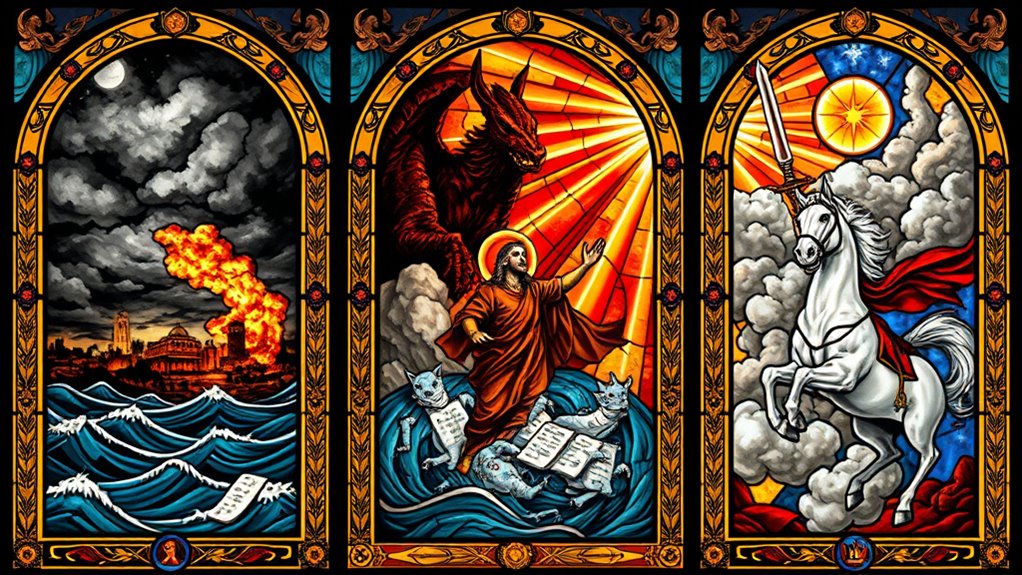
According to biblical prophecy, the Antichrist’s ascent begins amid global turmoil, emerging from what Revelation describes as a chaotic sea of nations in distress.
The Antichrist emerges from a tumultuous world, rising to power as nations struggle through unprecedented chaos and collective distress.
Revelation 13:11 depicts him rising from the earth with two horns like a lamb but speaking like a dragon. He initially presents himself as a peacemaker who brokers deals and solves crises, even appearing in Christ’s name (Matthew 24:4–5).
His power comes directly from Satan, who grants him authority, signs, and lying wonders (2 Thessalonians 2:9).
Midway through a seven-year period, he breaks his covenant with Israel and persecutes those who refuse worship, exercising authority for 42 months (Revelation 13:5).
His reign ends when Christ returns at Armageddon, defeating him decisively (Revelation 19).
The biblical narrative places these events in a context of Jerusalem and its sacred sites, highlighting how the Antichrist’s actions contrast with the significance of locations such as Golgotha, the place of the skull.