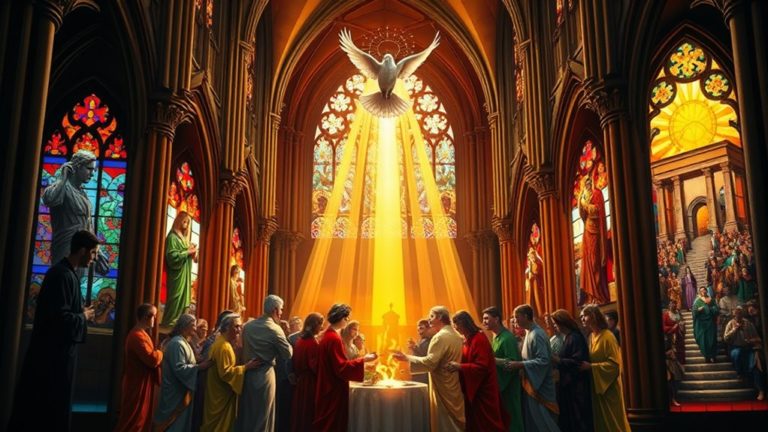

The Eucharist is considered the heart of ecological conversion because it reframes creation as gift rather than resource. Bread and wine, shaped by soil, rain, and human labor, are offered back to God at every Mass. Pope Francis’ *Laudato Si’* calls the Eucharist “the living center of the universe,” linking gratitude directly to care for the earth. Without this interior transformation, environmental action remains purely practical. Those who explore further will find how this conviction reshapes daily habits entirely.
What Ecological Conversion Means in Catholic Teaching
Ecological conversion, a term now embedded in Catholic teaching, refers to a transformed relationship with the natural world that begins not with new policies but with an interior change of heart. Originally associated with Pope John Paul II, the concept was developed further by Pope Francis in *Laudato Si’*, where it appears as a visible effect of encountering Jesus Christ.
It moves a person away from selfishness and toward genuine care for creation. Catholic teaching frames this reorientation as moral and spiritual, not merely practical.
It now functions as standard vocabulary within contemporary Catholic ecological thought. This inner transformation aligns with biblical principles of servant leadership that call Christians to humble, caring stewardship of creation.
How the Eucharist Transforms Our Relationship With Creation
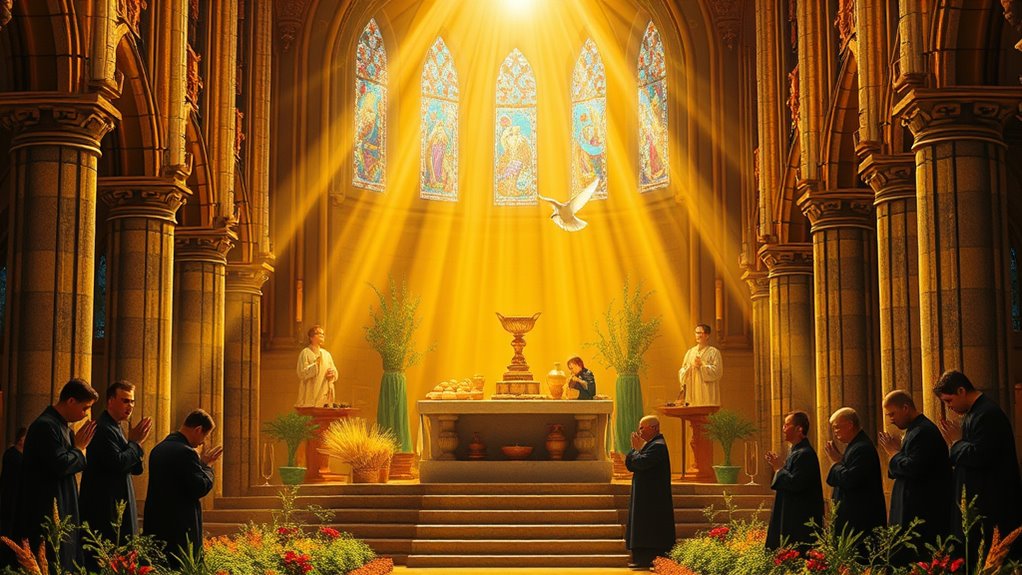
When Catholics gather for the Eucharist, they bring with them more than bread and wine—they bring the earth itself.
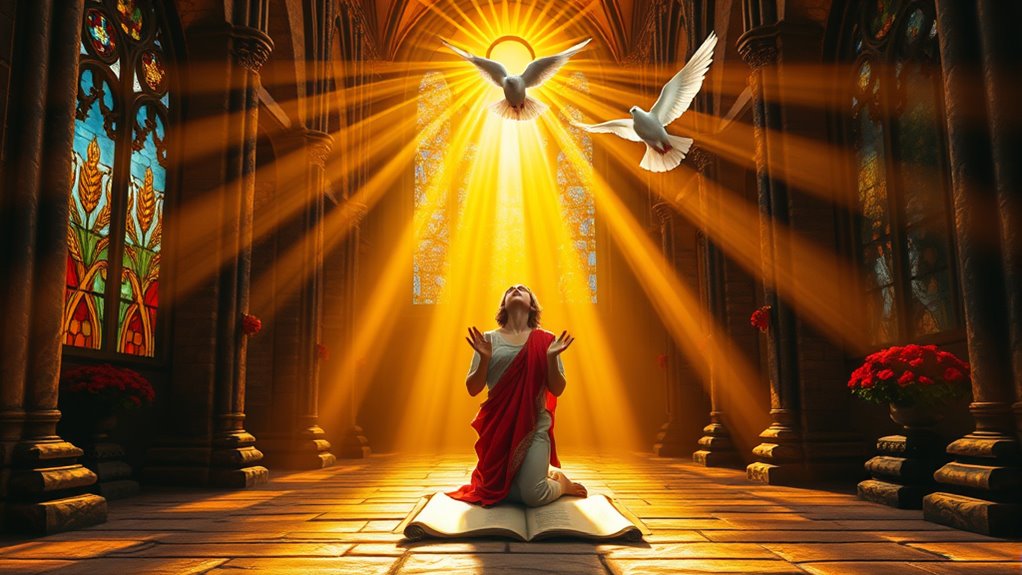
The bread comes from wheat, the wine from grapes, both shaped by soil, rain, and human labor.
Catholic teaching holds that these elements represent creation being offered back to God.
At consecration, they undergo a change described as reaching the heart of being, not merely religious symbolism.
This transformation points toward a deeper truth: that creation is not disposable but destined for transfiguration.
The Eucharist, then, reframes humanity’s relationship with the natural world as one of reverence, not exploitation. The cosmos itself was created by the Father, redeemed by the Son, and sanctified by the Holy Spirit, making every element of creation a bearer of Trinitarian presence.
According to Laudato si’, the Eucharist is the living center of the universe, an overflowing core of love and inexhaustible life that embraces and penetrates all creation, making it a profound source of light and motivation for environmental stewardship.
Worship according to the Bible emphasizes the centrality of heart, praise and obedience as the proper response to God’s creative and redemptive work.
The Eucharist as an Ecological School of Gratitude
The very name of the sacrament announces its purpose: “Eucharist” comes from the Greek word for thanksgiving.
Every Mass begins, as a result, as an act of gratitude directed toward the Father for creation, redemption, and daily sustenance.
Bread and wine, described in the liturgy as “the work of human hands,” make that gratitude concrete.
The Catechism notes that the whole of creation is presented to the Father through this sacrifice of praise.
Laudato si’ connects such worship directly to ecological conversion, suggesting that genuine thankfulness reshapes how people receive the earth — less as a possession, more as a gift.
Saint Francis of Assisi, named patron of all who study and work in ecology, understood this instinctively, responding to each creature not with economic calculus but with joy and awe.
The Catechism further teaches that the Eucharist is a sacrifice of thanksgiving for benefits received through creation, redemption, and sanctification, affirming that “Eucharist means first of all thanksgiving”.
This thanksgiving also calls believers to practical stewardship and generous giving in response to God’s gifts.
When Worship Stops Short of Ecological Conversion
Gratitude, as the previous section explored, is one of the central gifts the Eucharist offers. Yet worship can fall short when it stops there.
Theologians note that liturgy risks becoming symbolic rather than transformative when it lacks confession over ecological harm. Without repentance, a change of heart, and a challenge to consumption habits, worship can leave daily life unchanged.
The Eucharist is described as capable of restoring broken relationships between God, humanity, and nature, but only when its implications extend beyond the sanctuary. It therefore demands a lived self-control that resists disordered consumption and fosters sustainable habits.
When they do not, ecological concern remains outside the logic of prayer, sacrament, and praise. Pope Francis reminds us that all created things find their greatest exaltation in the Eucharist, making every celebration a call to recognize and protect the gifts entrusted to humanity.
Lucas Briola argues that the Eucharist calls Catholics toward “praise,” “conversion,” and “integral ecology”, forming the theological core of a genuine ecological response rooted in worship rather than partisan alignment.
Practical Habits That Flow From Eucharistic Formation
Eucharistic formation, according to theologians and recent Vatican teaching, does not remain inside the church building. It gradually shapes daily habits.
Families who pray before meals are encouraged to cook only what can reasonably be consumed, reducing food waste as a natural extension of gratitude.
Recent Vatican documents frame every purchasing decision as morally significant, making reusable bottles and washable tableware small but deliberate choices.
Shorter showers, turned-off lights, and waste composting follow the same logic.
Walking or taking public transportation replaces automatic car use.
These ordinary habits, taken together, reflect a disciplined life oriented toward sufficiency rather than excess.
This transformation of language and practice aligns with broader Christian teaching that speech and actions should build others up and reflect the power of the tongue, guiding believers toward habits that bless, heal, and honor God.