

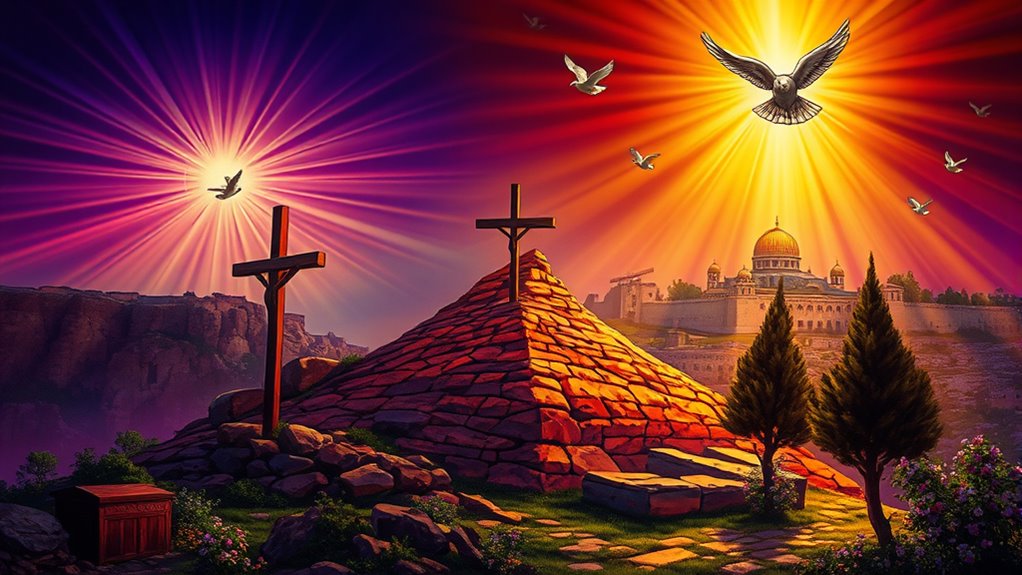
Jesus was crucified at Golgotha, “the place of the skull,” outside Jerusalem’s city walls and roughly one-third mile west of the Temple Mount. Christian tradition and many archaeologists place the site beneath the Church of the Holy Sepulchre. The crucifixion most likely took place around 30–33 CE.

Key Takeaways
- The Gospels place the crucifixion outside the city, near roads where the execution would be seen.
- The Church of the Holy Sepulchre, built in the fourth century, is considered the most probable site, though some Protestant scholars have questioned it since the nineteenth century.
- The location carries theological meaning tied to the removal of sin from the holy camp.
- The Gospels give the timing: crucifixion at the third hour and death at the ninth.
Where Was Golgotha Located?
Golgotha is an Aramaic word meaning “place of the skull.” Its Latin name is Calvary. Christians have identified this site as the place of the crucifixion for centuries, and archaeological evidence suggests the identification may well be accurate.
Scripture confirms that Jesus was crucified outside the city walls, as Jewish law prohibited executions within the holy city.
He went out, bearing his cross, to the place called “The Place of a Skull”, which is called in Hebrew, “Golgotha”, where they crucified him, and with him two others, on either side one, and Jesus in the middle.
John 19:17-18 (WEB)
John names the place and notes that two others were crucified with Jesus. Golgotha sat near major roads, where the public execution would be clearly visible. This fit the Roman practice of using crucifixion as a public punishment and deterrent.
What Does Archaeology Say About the Site?
Archaeological investigations indicate that Golgotha was part of an abandoned limestone quarry that had been converted into a garden area in the early first century. The elevated terrain resembled a skull, possibly explaining the name. Nearby stood Joseph of Arimathea’s tomb, matching the Gospel descriptions of a burial in a garden close to the crucifixion site.
Now in the place where he was crucified there was a garden. In the garden was a new tomb in which no man had ever yet been laid. Then because of the Jews’ Preparation Day (for the tomb was near at hand) they laid Jesus there.
John 19:41-42 (WEB)
The passage places the tomb in a garden near the crucifixion, which is consistent with what excavations describe.
The Church of the Holy Sepulchre was built in the fourth century under Emperor Constantine over what was believed to be Golgotha and Jesus’ tomb. Early Christian testimonies, including those from the church father Origen, linked the location to ancient traditions about Adam’s burial, creating symbolism about sin and redemption in the same place. Archaeological digs continue to reveal clues about Jerusalem’s ancient city boundaries, helping scholars understand how the site related to the walls of Jesus’ time.
Why Did the Location Outside the Walls Matter?
The location carried deep theological significance. It reflected the Mosaic Law requirement that sin offerings be removed from the holy camp, as referenced in Leviticus and later explained in Hebrews.
Therefore Jesus also, that he might sanctify the people through his own blood, suffered outside of the gate.
Hebrews 13:12 (WEB)
The writer of Hebrews presents Jesus’ suffering outside the gate as the fulfillment of that pattern. The separation from the Temple Mount emphasized his role as a distinct sacrifice, while the public execution reflected the shame associated with crucifixion. The geographical separation between Golgotha and Mount Moriah also underscores the transition from Old to New Covenant. The site embodied both the removal of sin from the holy community and the completion of God’s redemptive plan.
Many scholars place Jesus’ birth 6–4 BCE, based on Gospel and historical clues, which helps explain the dating of the crucifixion to around 30–33 CE.
Common Questions About the Crucifixion of Jesus
What Time of Day Was Jesus Crucified?
According to Mark, Jesus was crucified at the third hour, about 9 a.m. in Jewish timekeeping, which counted hours from sunrise around 6 a.m. Some scholars note apparent discrepancies with John’s Gospel and suggest different timekeeping systems were used.
How Long Did Jesus Hang on the Cross Before Dying?
Jesus hung on the cross for approximately six hours, from the third hour (9 a.m.) to the ninth hour (3 p.m.). Matthew and Luke note darkness from noon until his death. This duration fits Jewish requirements for removing a body before sunset.
Who Else Was Crucified Alongside Jesus?
Two men were crucified alongside Jesus, one on his right and one on his left, according to all four Gospels. The Greek term lestai describes them as bandits or insurgents rather than common thieves, suggesting they may have been political rebels against Roman rule. Apocryphal sources name them Gestas and Dismas, with Dismas known as the “good thief” who repented and received Jesus’ promise of paradise.
What Happened to Jesus’ Cross After the Crucifixion?
The physical cross likely remained at Golgotha, as Roman soldiers typically reused or discarded crucifixion apparatus. No biblical account says what happened to the wood. Early Christians focused on the cross’s spiritual significance, and traditions about the “True Cross” emerged centuries later without contemporary evidence.
Why Was Crucifixion Chosen as the Method of Execution?
Crucifixion served as a deterrent through prolonged, public suffering, displaying Rome’s authority to potential rebels. It was also cost-effective, since vertical posts stayed in place and only crossbeams needed transport. Romans reserved this shameful death mainly for slaves, foreigners and political dissidents.
Reflecting on the Place of the Cross
The place where Jesus died was chosen by Roman practice, yet the Gospels and Hebrews read it as part of a larger story of sacrifice outside the camp. If you visit Jerusalem or study the Gospel accounts, reading the burial and crucifixion passages alongside Hebrews 13 can show how history and meaning meet in one location.