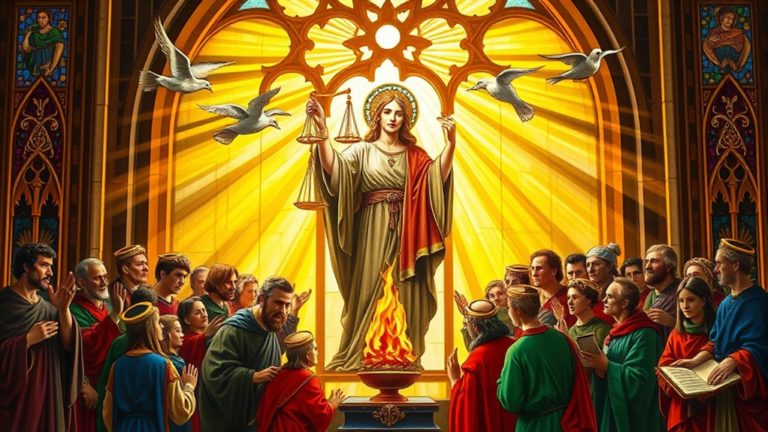





The Bible instructs believers to submit to governing authorities, as outlined in Romans 13:1-7 and 1 Peter 2:13-14, where rulers are described as God’s servants appointed to maintain order and punish wrongdoing. This submission includes paying taxes, showing respect, and obeying laws as a matter of conscience. However, Scripture also establishes a clear exception: believers must obey God rather than human authorities when government commands directly contradict divine law, as demonstrated by Daniel, the Hebrew midwives, and the apostles. The following sections explore these principles in greater detail.
Key Takeaways
- Christians should submit to governing authorities, paying taxes and showing respect, as rulers exist by God’s appointment (Romans 13:1-7).
- Believers must obey God rather than human authorities when government commands directly contradict God’s laws (Acts 5:29).
- Biblical disobedience requires accepting legal consequences, avoiding violence, and maintaining respectful conduct toward authorities.
- Democratic participation through courts, elections, and civic engagement provides alternatives to direct civil disobedience.
- Historical examples include Hebrew midwives, Daniel, and Shadrach, Meshach, and Abednego defying ungodly government commands.
When the Bible Says to Disobey Government Authority

According to biblical teaching, Christians face a duty to disobey governmental authority when those in power command actions that directly contradict God’s laws. The apostle Peter established this principle in Acts 5:29, declaring “We must obey God rather than men.”
Historical examples include the Hebrew midwives refusing Pharaoh’s order to kill newborn babies, Daniel defying a decree that prohibited prayer, and Shadrach, Meshach, and Abednego rejecting King Nebuchadnezzar’s command to worship a golden idol.
However, proper biblical disobedience requires accepting legal consequencesingwithout violence or disrespect toward authorities. In democratic systems, citizens can challenge unjust laws through courts and elections, providing alternatives to direct confrontation while maintaining both legal compliance and moral integrity.
Archaeological findings support the traditional location of Jesus’ crucifixion at the Church of the Holy Sepulchre in Jerusalem, identified with Golgotha as the place of the skull.
What Scripture Teaches About Submitting to Government

Throughout most of Christian history, believers have understood Romans 13:1-7 as the foundational biblical passage on submission to civil government.
Paul’s letter teaches that all governing authorities exist by God’s appointment, and resisting them amounts to resisting God’s established order. Rulers function as God’s servants, wielding the sword to punish wrongdoing and commend good behavior. Christians submit not merely to avoid punishment but as a matter of conscience, recognizing divine order behind human institutions.
Governing authorities serve as God’s appointed ministers, making Christian submission a matter of conscience rather than mere fear of consequences.
This submission includes paying taxes, showing respect, and obeying laws. First Peter 2:13-14 reinforces this teaching, instructing believers to subject themselves to every human authority for the Lord’s sake.
The practical outworking involves honoring officials, supporting civic order, and silencing criticism through exemplary conduct rather than through defiance or chaos. Archaeological and external sources also help confirm the historical context of New Testament teachings, including references to figures like Pontius Pilate and other confirmed historical figures.