


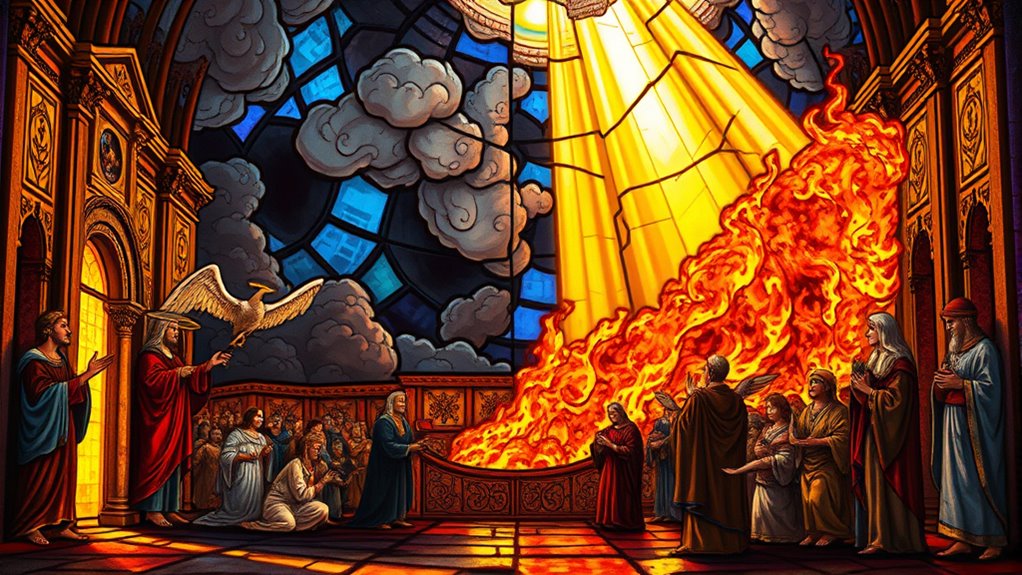
The Bible addresses sodomy through narrative, law, and prophecy. The term originates from Genesis 19, where a violent mob demands sexual access to angelic visitors in Sodom. Leviticus 18:22 prohibits male same-sex relations, and Romans 1:26–27 describes such acts as dishonorable. Yet Ezekiel 16:49 attributes Sodom’s destruction largely to pride and neglect of the poor. Most scholars conclude multiple violations contributed to judgment. The sections below explore each dimension further.
Key Takeaways
- The term “sodomy” originates from Genesis 19, where God destroyed Sodom and Gomorrah for sins including violent sexual assault and moral corruption.
- Ezekiel 16:49–50 identifies Sodom’s core failures as pride, excess wealth, and neglect of the poor, not solely sexual sin.
- Leviticus 18:22 explicitly calls male homosexual relations detestable, with Leviticus 20 prescribing the death penalty for such acts.
- Romans 1:26–27 and 1 Corinthians 6:9 describe same-sex acts as dishonorable, listing them among broader sexual sins condemned in the New Testament.
- Most biblical scholars conclude Sodom’s judgment resulted from multiple serious violations, with sexual immorality and social injustice both rooted in pride.
The Biblical Definition of Sodomy and Where It Comes From

The word “sodomy” carries a long history rooted in a single biblical story. It derives from Genesis 19, the account of Sodom and Gomorrah, and literally means “sin of Sodom.” The city’s wickedness appears as early as Genesis 13:13, where Sodom’s men are described as sinners.
The term itself, however, was not coined until the 11th century, when church scholars used it to classify certain clerical sins. In its original Christian usage, it referred specifically to homosexual anal sex. The Hebrew word translated “sodomite” in the Old Testament, Strong’s H6945, carries a different nuance, pointing toward idolatrous cult prostitution. Because the term developed after the biblical text was written, it carries interpretive weight that extends beyond any single scripture.
Webster’s Dictionary defines sodomy as sexual acts orally or anally with same-gender persons or sexual acts with animals. Because the term developed after the biblical text was written, it carries interpretive weight that extends beyond any single scripture.
Early church fathers such as St. Ambrose and Origen associated Sodom primarily with inhospitality, not sexual sin. Over time, however, Augustine and later Aquinas shifted the theological tradition toward equating sodomy with homosexual behavior, a definition that would eventually influence the creation of the modern sexual categories of “homosexual” and “heterosexual.”
What Really Happened in Sodom and Gomorrah

At the center of one of the Bible’s most dramatic accounts, Genesis 19 describes two angels arriving in Sodom as guests of a man named Lot. A mob quickly surrounded Lot’s house, demanding access to the visitors. Lot offered his daughters instead, but the crowd refused. The angels struck the men blind, and God subsequently destroyed Sodom, Gomorrah, and surrounding cities with burning sulfur and fire.
The sins involved were not limited to one act. Ezekiel 16:49–50 identifies arrogance, excess, and neglect of the poor as central failures. Jude 1:7 references sexual immorality. Genesis 19 itself depicts violent assault and forced rape as the mob’s intent. Scholars continue debating which sin was primary, though most conclude multiple serious violations contributed to the cities’ destruction. A similar pattern of mob violence appears in Judges 19, where a crowd in Gibeah threatened gang rape of a male guest, suggesting such acts reflected aggression and humiliation rather than sexual orientation.
The historian Josephus attributed Sodom’s downfall to a combination of pride, injustice, and hatred of strangers, alongside what he described as Sodomitical practices, suggesting the ancient understanding of the city’s guilt was never reduced to a single offense.
How Leviticus and the New Testament Define Sexual Sin

Leviticus 18 sets out one of the clearest frameworks for sexual ethics found anywhere in the Old Testament, listing prohibited relations that include incest, adultery, homosexuality, and bestiality.
Verse 22 states plainly that sexual relations between men are detestable, while Leviticus 20 prescribes the death penalty for the same act. These prohibitions were designed to keep Israel from becoming unclean before God.
The New Covenant largely continues this framework. Romans 1:26–27 describes same-sex acts as dishonorable passions, and 1 Corinthians 6:9 lists homosexual behavior among broader sexual sins. The Greek term arsenokoitai used in 1 Corinthians 6:9 is widely understood to derive directly from the Leviticus prohibition, combining the words for man and bed.
Jesus extended the definition further in Matthew 5:27–28, identifying lust itself as sinful. Across both covenants, sexual ethics are grounded not in cultural preference but in God’s nature and purposes for human sexuality. Marriage itself is compared to Christ and the church in Ephesians 5, making the sexual covenant between husband and wife a reflection of the gospel.
Was Sodom Destroyed for Sexual Sin or Social Injustice?

Few questions in biblical study have generated more debate than why God destroyed Sodom. Scholars have long examined two primary passages: Genesis 19 and Ezekiel 16:49. Genesis 19 describes men demanding sexual access to Lot’s angelic visitors, suggesting violent sexual sin drove God’s judgment. Ezekiel, however, charges Sodom with arrogance, excess, and neglect of the poor. Some interpreters treat these accounts as contradictory, but most evidence suggests both reflect the same broader pattern.
Pride appeared to fuel multiple failures simultaneously, producing exploitation of the weak alongside sexual violence. Jude 1:7 further identifies “strange flesh” as a component of Sodom’s judgment. Taken together, the biblical record points toward all-encompassing wickedness, where sexual sin and social injustice shared a common root in unchecked self-centeredness.
In Genesis 18:20–21, God declared the outcry against Sodom great and its sin very grave, framing the city’s mistreatment of others as the direct cause and divine rationale for the investigation and eventual judgment that followed.
Ezekiel 16:50 pairs closely with verse 49, adding that Sodom did an abomination before God, language the Levitical tradition consistently associates with grave sexual transgressions rather than social failures alone.