

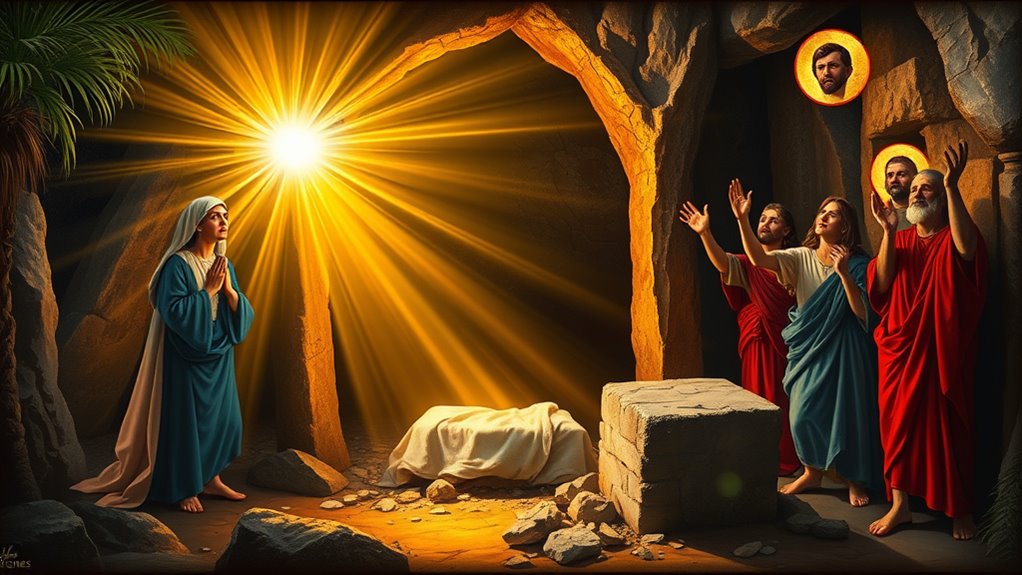
The resurrection warrants trust because the tomb where Jesus was buried stood empty three days after his crucifixion, a fact even his opponents acknowledged by accusing disciples of theft. An early creed dating to approximately AD 36 records appearances to Peter, the twelve apostles, and over five hundred witnesses at once. These eyewitnesses transformed from fearful followers into bold preachers willing to face martyrdom for what they insisted they had seen. Scholarly consensus rates the crucifixion as near-certain and the appearances as highly probable, while the publicly known tomb location in Jerusalem made fabrication difficult. The convergence of these historical details continues to invite examination.
Why would an event from nearly two thousand years ago continue to shape the beliefs of billions today? The answer lies in a collection of historical details that scholars across religious and secular lines regard as remarkably well-attested. Jesus of Nazareth was crucified under Pontius Pilate in the first century, a fact considered historically certain by experts. Non-Christian sources including Josephus, Tacitus, Lucian, and Maimonides corroborate the execution, and Roman crucifixion practices left no doubt about death.
What happened next forms the foundation of Christianity. Joseph of Arimathea, a member of the Jewish Sanhedrin, buried Jesus in a tomb, a detail preserved in an early creed found in 1 Corinthians 15 dating to approximately AD 36, within five years of the events. This timeline rules out legendary embellishment, as myths require generations to develop. The creed lists Jesus’s death, burial, resurrection on the third day, and appearances to Cephas, the twelve apostles, over five hundred people at once, and James. Paul, writing years later, noted many witnesses remained alive and available for verification.
The tomb was discovered empty on Sunday morning by women followers, a detail that enhances credibility since ancient cultures dismissed female testimony. The location was publicly known in Jerusalem, where resurrection preaching began immediately. Jewish authorities accused disciples of stealing the body, an admission that the tomb was indeed empty. Guards had been posted at the sealed entrance, yet the body vanished.
Disciples who had fled in fear transformed into bold preachers willing to face martyrdom. Their sincere conviction stemmed from experiences they interpreted as encounters with the risen Jesus. Multiple gospel accounts provide distinct details while agreeing on core facts. Scholarly consensus rates the crucifixion as near-certain, the empty tomb as highly probable, and the appearances as near-certain. N.T. Wright notes Christianity represented a radical mutation of Second Temple Judaism, explainable only by something extraordinary. These converging lines of evidence present a case that continues inviting examination nearly two millennia later. The Bible teaches that death entered the world through sin, yet through Christ believers are promised resurrection and eternal life, showing death is not the final word.