


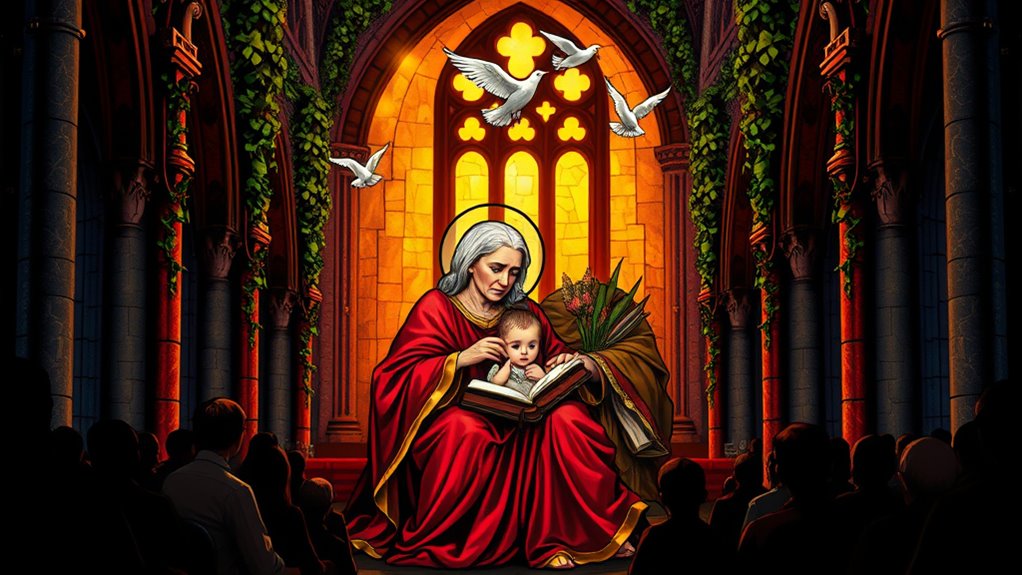
Age segregation in churches quietly fragments the body rather than uniting it, and researchers link segregated youth programs to two-thirds of young people eventually leaving the faith. Older members carry decades of lived experience — financial wisdom, relational counsel, modeled humility — that peer-based programs cannot replicate. Nearly 800 churches have already abandoned segregated models after examining the evidence. Pairing church grandmas with little children through consistent, weekly mentoring relationships may be among the simplest repairs available to a congregation willing to explore further.
Why Age Segregation Is Quietly Killing Your Church’s Faith?
Age segregation in churches has become so common that most congregations rarely question it, yet researchers and pastors increasingly point to it as a quiet source of institutional damage. Intergenerational ministry models, by contrast, intentionally pair older and younger believers for mutual discipleship.
Ken Ham links segregated youth programs directly to the two-thirds of young people who leave church entirely. Proverbs 13:20 warns that concentrated foolishness among peers spreads and ultimately destroys.
The documentary *Divided* examines how age-graded Sunday school replaced biblical discipleship with a model borrowed from public education. Nearly 800 churches have since abandoned segregated programs. The pattern, scholars note, fragments church unity rather than building one body moving together across generations.
Scripture itself presents no command, demonstration, or legitimizing principle for comprehensive age-segregated discipleship. 2 Timothy 3:16–17 affirms that the Bible is fully sufficient to equip the church, leaving no scriptural foundation for modern age-divided ministry structures. Christianity Today and critics like Tim Challies called the film propaganda and dangerous, yet national outlets such as the Washington Post and USA Today acknowledged its central claim that segregated youth ministry is unbiblical and damaging.
What Do Older Adults Offer That Youth Programs Never Can?
Mentoring across generations offers something peer-based youth programs structurally cannot: decades of lived experience translated into practical guidance. Older adults carry accumulated knowledge in financial management, time management, and household skills that no curriculum easily replicates. Their professional careers provide career advice rooted in real industry experience. They have navigated life transitions, relationships, and personal hardship, offering counsel shaped by genuine stakes. Such mentoring also embodies servant leadership ideals by modeling humility, care, and stewardship across generations.
Programs like Foster Grandparent, serving 300,000 at-risk children annually through 30,000 senior volunteers, demonstrate this value at scale. Youth gain improved communication skills, self-esteem, and confidence in adult interactions — outcomes peer programs rarely produce with comparable consistency. Despite this proven impact, seniors remain undervalued and underutilized, even as growing numbers live longer, healthier lives with more capacity to contribute.
Organizations such as the U.S. Dream Academy work to close this gap by connecting retirees with children impacted by parental incarceration, asking only one hour per week during the school year to provide consistent, caring mentorship across grades two through twelve.
What Does the Bible Command About Passing Faith Across Generations?
Throughout Scripture, the obligation to pass faith across generations appears not as a suggestion but as a direct command embedded in covenant and law. Women in Scripture exemplify this transmission in both public and domestic spheres, showing how grandmothers and mothers mentor children across generations.
Three biblical mandates make this clear:
- Deuteronomy 6:7 instructs parents to teach God’s words constantly—at home, traveling, bedtime, and morning.
- Psalm 78:4 forbids concealing God’s works from children, commanding each generation to declare His strength.
- 2 Timothy 1:5 documents faith traveling from grandmother Lois through mother Eunice to Timothy.
God structured His covenants across generations deliberately.
Faith was never meant to stop with its current holder. Joshua’s generation modeled this well, yet the generation that followed knew neither the Lord.
The desired outcome of this transmission was a next generation that would set hope in God, remember His works, and keep His commandments.
How Can Church Members Mentor Children and Teenagers Today?
How church members translate biblical commands into actual relationships with young people is, for many congregations, both a pressing question and a practical challenge.
Practical answers exist. Mentors can offer weekly one-hour sessions combining conversation, prayer, and worship. Pre-practice gatherings allow space for questions and spiritual guidance. Older members can provide transportation, attend events, and assist with practical service roles. Assigning youth meaningful tasks — escorting visitors, helping elderly members, managing supplies — builds genuine usefulness. Research suggests children engaged in ministry during preteen years show markedly higher adult leadership rates, making early, consistent investment a measurable strategy rather than mere sentiment. Churches that model faithful stewardship in relationships and resources reinforce the spiritual formation these mentorships aim to nurture.
Waiting lists for children’s ministry teams can be channeled into monthly training events that sample ministry skills and prepare children for future openings, ensuring no child is simply left behind. Monthly training events also create natural entry points for parents, drawing families into cooperative participation alongside their children.
Identifying the right child to mentor begins not with classroom favorites but with a God connection between mentor and child, a sense of spiritual prompting, shared gifts, or the child’s own initiative in seeking out a trusted adult for help.
Simple Ways to End Age Segregation in Your Church
Structured mentoring programs offer one path toward closing the distance between generations, but the broader pattern of age segregation in many churches runs deeper than any single program can address. The Bible models multi-generational community in worship and service, showing the value of shared gatherings for mutual growth.
Several practical shifts can help:
- Mix small groups by age rather than defaulting to age-graded classes for Bible study, service projects, and fellowship.
- Pair prayer partners across generations, connecting youth ministries with senior adults for ongoing, mutual support.
- Integrate testimonies into regular services, featuring voices from multiple age groups to build natural connections over time.
These changes work gradually, reshaping church culture through consistent, ordinary practice. Churches can also organize an annual family mission trip that brings multiple generations together through shared service and spiritual work. The early church modeled this kind of integration naturally, with believers sharing possessions and meeting daily in homes and temple courts with glad and sincere hearts.