
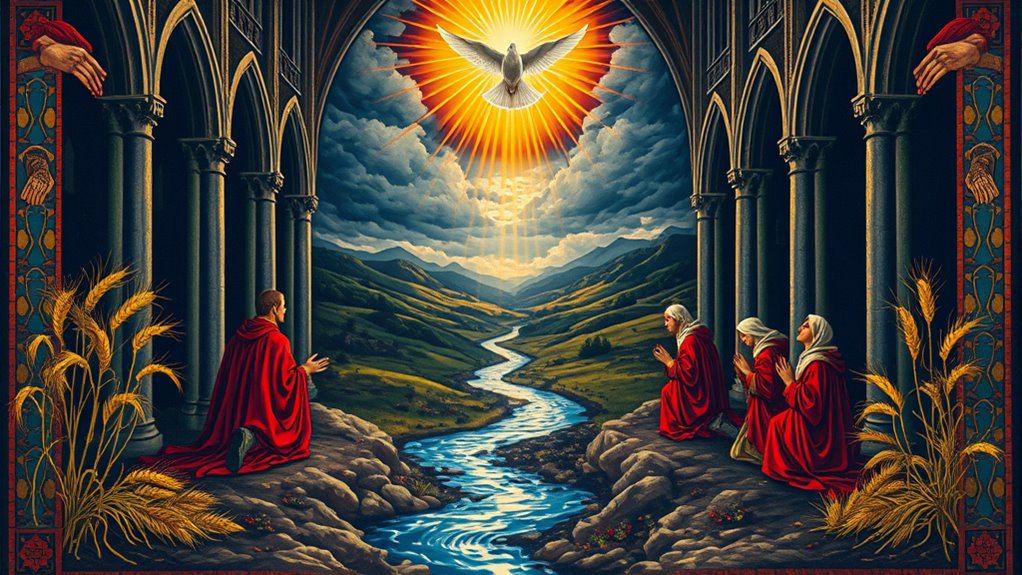
A better theology of place starts with particulars, not platitudes, because broad, universal language quietly erases the specific histories that give sacred ground its meaning. Generic descriptions flatten what once carried distinct identity—battlefield, burial ground, or cathedral—replacing concrete narratives with phrases that could apply anywhere. Scripture itself anchors place in specifics: Moses at Horeb, Jacob naming Bethel, Shiloh as Israel’s gathering center. Those who explore further will find practical ways to inhabit place theologically rather than merely describe it.
Why Generic Language Betrays the Theology of Place
When sacred spaces are described in broad, universal terms, something essential about them tends to disappear.
When sacred spaces are described in broad, universal terms, something essential about them tends to disappear.
Abstract language detaches a place from its historical context, replacing specific narratives with phrases that could apply anywhere.
A battlefield, a burial ground, a cathedral—each carries particular details that generic terminology quietly erases.
Universal terms obscure unique identities, flattening what once held distinct meaning.
Platitudinous language does not simply fail to inspire; it actively fails the ground itself.
A theology of place that relies on vague abstractions cannot honestly reckon with the specific histories, communities, and stories that made those spaces sacred in the first place.
Thoughtful civic engagement calls Christians to let care for the poor and concern for the common good shape how we remember and steward sacred places.
Faces, Words, and Postures: What Makes Ground Sacred
Sacred ground, according to both ancient texts and contemporary faith traditions, is not defined by architectural grandeur or geographic uniqueness but by the specific encounters, declarations, and gestures that mark it as distinct. Moses removed his sandals at Horeb because God declared the ground holy, not because the terrain was exceptional.
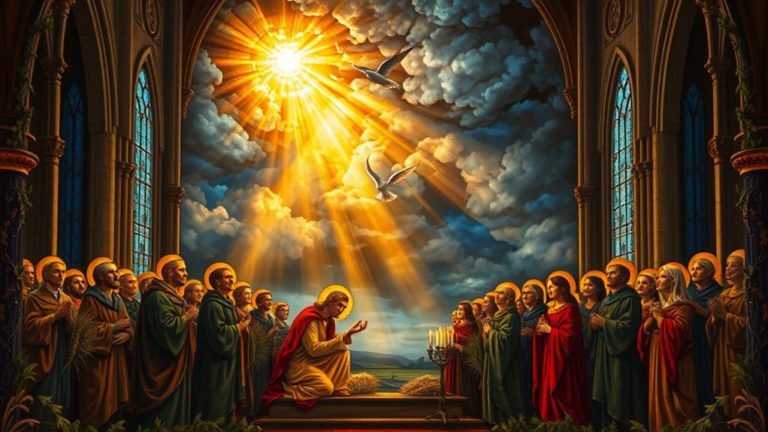
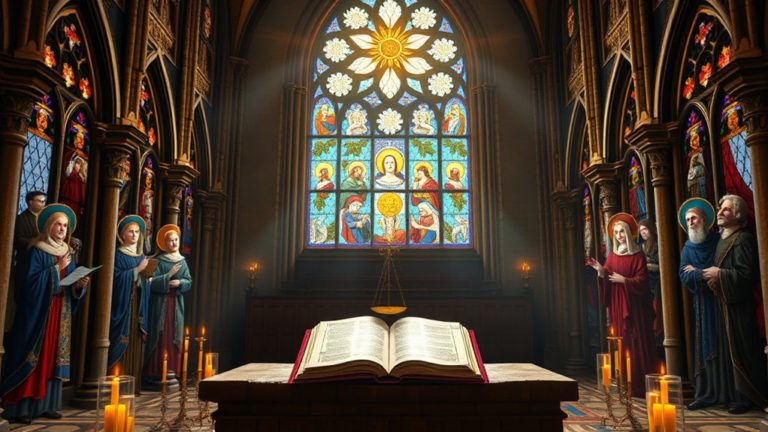
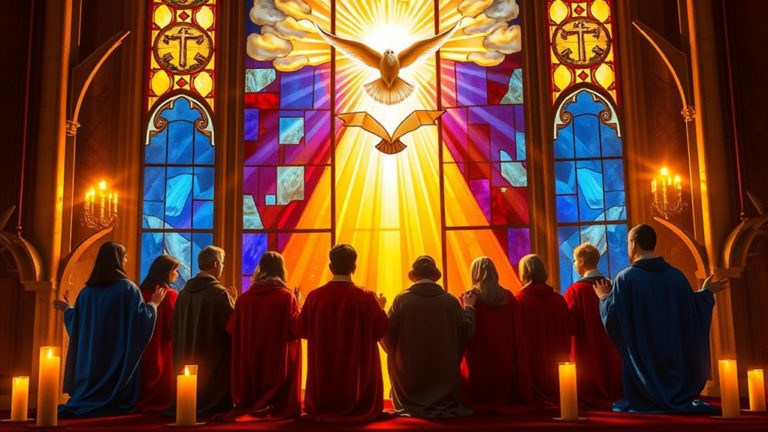
Jacob named Bethel after dreaming of divine presence. Hebrews 9 describes worship spaces defined by spoken regulations. Physical postures reinforce these distinctions: kneeling, raised hands, and bowed heads signal that a moment differs from ordinary time.
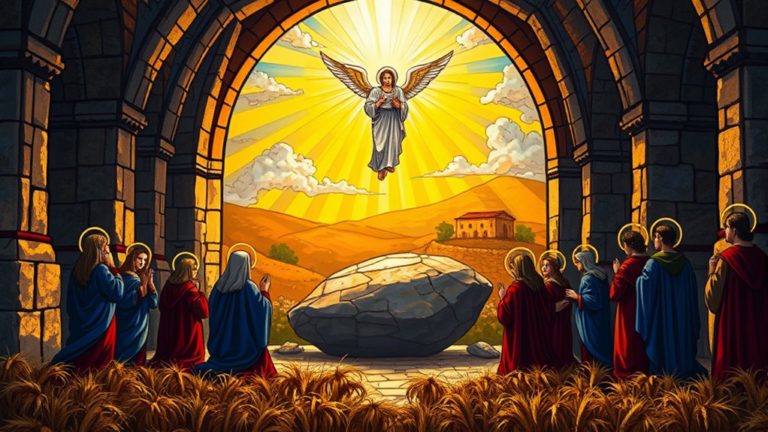
Sacredness, these sources suggest, arrives through particulars — a voice, a face, a gesture. Isaiah’s vision extended this logic outward, describing God’s temple as a holy house of prayer to which all nations would be gathered. At Shiloh, the whole congregation of Israel assembled and set up the tent of meeting, marking that location as the center of communal worship and divine encounter. Angels, as depicted in Scripture, often attend these moments as created spiritual beings who serve God and minister to people.
What Does the Bible Actually Say About Place?
Rooted in two distinct languages, the Bible’s vocabulary for place carries more weight than casual reading might suggest.
The Hebrew word *maqom* describes location with purpose, not empty geography, and frequently points toward sites of worship or assembly.
The Greek *topos* marks specific regions within a narrative, often signaling boundaries of promised lands or exile zones.
Scripture also distinguishes between holy places and general ones, based on divine presence.
Together, these terms suggest that biblical authors understood place as active rather than passive, a setting where identity, covenant, and community were shaped by what God chose to do there. The Father’s house in John 14:2 even frames heaven itself as a prepared dwelling place, extending this theology into eternity.
Mount Sinai stands as one of the most concentrated examples of this pattern, where God descended to its summit and established covenantal laws governing Israel, binding divine presence to a specific location in ways that shaped an entire nation’s identity, while ancient cosmologies that described a structured firmament can illuminate how biblical writers pictured divine ordering of space.
How Colonialism Fractured the Church’s Theology of Place
Before colonialism reshaped the global church, many African communities held deeply local theologies in which land, ancestry, and spiritual identity were tightly bound together.
Colonial missions disrupted this by equating Christianity with European cultural norms, effectively dismissing indigenous beliefs as inferior.
Postcolonial theologian Robert J.C. Young observed that colonialism embedded hierarchical structures that persisted within church institutions.
African Christians were gradually alienated from their heritage, creating a painful divide between faith and cultural identity.
That fracture still shapes how biblical texts are interpreted across West Africa today, influencing younger generations’ declining interest in institutional Christianity.
Missionaries further compounded this harm by actively working to eradicate indigenous distinctiveness, severing communities from the spiritual and cultural practices that had long anchored their sense of place and belonging.
Scholars like Musa W. Dube have argued that colonialism converted people into Western cultural forms of Christianity, obscuring the gospel’s universality and suppressing the full range of human faith expression across diverse cultural contexts.
This history helps explain contemporary debates over the Bible’s teachings on immigrants and strangers and how those texts are applied in different cultural settings.
How to Inhabit Place Theologically in Everyday Life
The fracture that colonialism left in the church’s theology of place did not resolve itself simply by naming it. Healing requires practice.
Naming the wound is not the same as healing it. Repair demands something more embodied than acknowledgment.
Theologians studying place-based faith suggest that inhabiting a location theologically begins with attentiveness to its particulars—local rivers, soil conditions, neighborhood rhythms, and seasonal changes. This attentiveness echoes biblical rhythms of work and rest rooted in creation.
Repeated visits deepen familiarity beyond surface knowledge.
Silence creates space to receive what a place communicates without imposing outside assumptions.
Slowing down reveals architectural details and community patterns easily missed in hurried movement.
Long-term commitment builds stability.
Together, these disciplines move theology from abstract generalization toward something grounded, specific, and honest. Place itself can function as an active agent, shaping and constraining those who inhabit it as powerfully as any human presence.
Craig Bartholomew argues that place requires God’s co-inhabitation to be fully itself, making every act of Christian placemaking an inherently theological undertaking.