
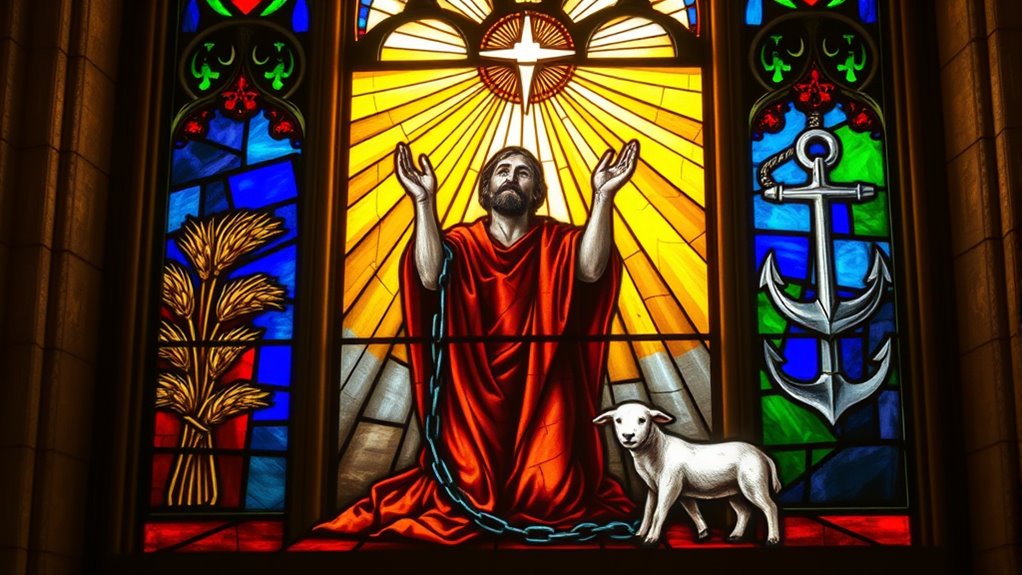
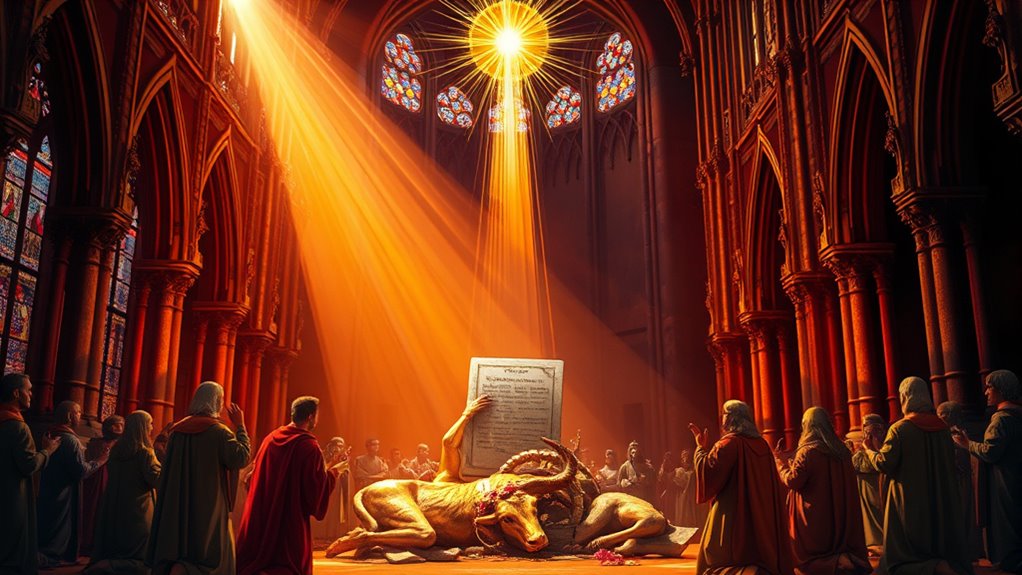
The Bible defines idolatry as placing anything created in the position that belongs to God alone. In Exodus 20:3–5, Israel is commanded to worship no other gods and make no carved images. The New Testament expands this inward, with Paul linking covetousness directly to idolatry in Colossians 3:5. Idols can be statues, ambitions, money, or status—anything replacing God. Those curious about how this played out historically, and why it still matters, will find the full picture ahead.
Key Takeaways
- The Bible defines idolatry as placing anything—person, object, or desire—where only God belongs, replacing Him as the ultimate priority.
- The Ten Commandments explicitly prohibit worshipping other gods or carved images, describing God as jealous over exclusive devotion.
- Paul expands idolatry beyond physical statues, directly linking covetousness and internal misplaced desires to idolatrous behavior.
- Israel’s history demonstrates real national consequences for idolatry, including Assyrian conquest in 722 BC and Babylonian exile in 586 BC.
- Modern idols—money, status, self-reliance, and pleasure—still apply, as Scripture treats idolatry as an ongoing spiritual problem.
What Does Idolatry Actually Mean in the Bible?

In the Old Scripture, this primarily meant honoring statues, images, or pagan deities in place of Yahweh.
In ancient Israel, idolatry meant bowing to carved images or foreign gods instead of Yahweh.
Even unauthorized worship of Yahweh through physical images was considered idolatrous by some traditions.
The New Testament expands this definition considerably.
Paul’s letters, for instance, connect covetousness directly with idolatry, suggesting that internal desires can function as false gods.
The central issue, across both testaments, is replacement — placing a created thing where only God belongs.
This includes physical objects, rival deities, and intangible priorities such as ambition or security.
Biblical idolatry, accordingly, describes both an outward practice and an inward condition of misplaced devotion. Koine Greek became the language of the New Testament writings, which helped shape how early Christian teachings about idolatry were communicated across the Roman Empire.
Paul frames this condition as a tragic exchange, where humanity exchanged the glory of God for images of created things.
Idolatry took many forms across the ancient world, including fetishism, nature worship, and hero worship of ancestors, each representing a distinct way humanity redirected reverence away from the living God.
What Do the Ten Commandments Say About False Gods?

The Ten Commandments open with two directives aimed directly at false gods and their images, and both appear in Exodus 20 as part of the covenant God established with Israel after leading the people out of Egypt.
Exodus 20:3 states plainly that no other gods should be placed before the LORD.
Exodus 20:4–5 follows by prohibiting carved images and any act of bowing before them.
Scholars note these as separate commands: one targeting invisible rival deities, the other targeting visible objects used as substitutes for God.
Deuteronomy 5:7–9 repeats the same structure in a renewal setting.
The commands are framed by God’s self-identification as Israel’s deliverer, meaning loyalty was expected not as obligation alone, but as a response to demonstrated faithfulness.
God is described as jealous in Exodus 20:5, demanding exclusive allegiance and warning that punishment would extend to the third and fourth generation of those who rejected him.
Exodus 22:20 extends the prohibition further, stating that whoever sacrifices to any god other than the LORD must be destroyed.
Catholic teaching also emphasizes authority from both Scripture and Sacred Tradition in interpreting these commandments.
How Did Idolatry Destroy Nations in the Old Testament?

Commands written into covenant law carried real consequences, and the Old Agreement records what happened when those commands were ignored at a national level.
The northern kingdom of Israel adopted Jeroboam’s golden calves at Bethel and Dan, treating idol worship as an acceptable alternative to faithful covenant life.
Second Kings 17 directly links that choice to the Assyrian conquest of 722 BC, when Israel was removed from the land entirely.
Judah followed the same pattern, and Babylon destroyed Jerusalem in 586 BC, ending temple worship and national independence.
Deuteronomy had already warned that Canaan’s nations were removed for identical reasons.
The recurring pattern was straightforward: leadership-sponsored idolatry spread through entire populations, produced moral decay, and ultimately left nations without the protection they had abandoned.
Second Kings 17 records that Israel burned their sons and daughters as offerings and practiced divination, detailing how idolatry escalated into child sacrifice and occult involvement before the exile came.
Prophetic texts also record that on the day of the Lord, the idols of the nations would themselves be destroyed and rendered powerless.
This pattern reflects how communal unfaithfulness contrasted with the covenantal call to worship the one true God, consistent with the biblical emphasis on monotheistic worship.
Does Biblical Idolatry Still Apply Today?

Whether a warning given thousands of years ago still carries practical weight is a reasonable question, and Scripture’s own answer is consistent.
The Bible treats idolatry not as an ancient cultural problem but as an ongoing spiritual one.
Exodus 20:3–5 remains foundational, and the New Testament reinforces rather than retires that standard.
Paul connects idolatry with covetousness in Colossians 3:5, moving the category inward.
First John 5:21 closes with a direct reminder for believers to guard against idols.
Modern expressions shift the forms while keeping the same core dynamic: money, status, self-reliance, and personal pleasure can each occupy the place meant for God alone.
The idol changes shape — wealth, status, comfort — but always claims the throne meant for God alone.
Ancient idol worship followed a deliberate pattern of crafting an image, offering sacrifices, and expecting the god to deliver what the worshiper wanted.
Pew Research Center estimates that about 28% of the world’s population adheres to religions that predominantly practice idol worship, making this far from a resolved issue.
The underlying call across both covenants stays the same — undivided worship directed toward God. A number of ancient and modern interpretations also show how language and cultural context shape our understanding of idolatry, especially when terms like khûg or kura influence translation and metaphor.