
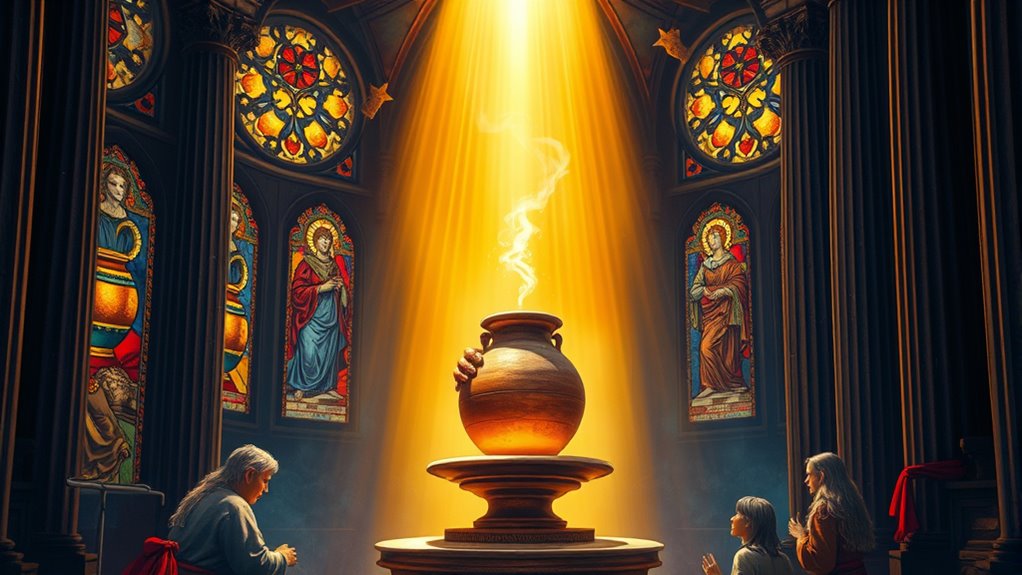


The Bible presents timing as belonging entirely to God, not to human urgency or planning. Galatians 4:4 describes Jesus arriving at “the fullness of time,” while Habakkuk 2:3 confirms that God’s appointed moments will not fail, even when delayed. Daniel 2:21 adds that God “changes times and seasons” according to His purposes. Waiting, Scripture suggests, is not passive—Isaiah 40:31 connects it to renewed strength. Those who explore further will find practical signs for recognizing when God’s timing is actively at work.
Key Takeaways
- God’s timing is sovereign and cannot be rushed, as Jesus arrived exactly when “the fullness of time had come” (Galatians 4:4).
- Divine appointments, described by the Hebrew word *moed*, are fixed by God and cannot be altered by human planning or urgency.
- God controls all seasons, times, and boundaries of nations, holding every purpose within His created order (Daniel 2:21).
- Recognizing God’s timing involves observable signs: persistent peace, open doors, and alignment with Scripture across multiple passages.
- Waiting on God’s timing produces renewed strength, perseverance, and hope rather than frustration (Isaiah 40:31, Romans 5:3–4).
Why God’s Timing Cannot Be Controlled or Rushed

Throughout Scripture, God’s timing is presented not as flexible or subject to human influence, but as fixed and purposeful.
Galatians 4:4 describes Jesus arriving “when the fullness of the time had come,” signaling a moment determined by God rather than human planning.
Habakkuk 2:3 reinforces this, stating that the vision “awaits an appointed time” and will not fail, even when it appears delayed.
Second Peter 3:8–9 separates divine timing from human expectations entirely, explaining that God does not measure slowness the way people do.
Scripture consistently links impatience with frustration, while patience is connected to trust.
The biblical pattern makes clear that fulfillment arrives when God determines the season is right, not when human urgency attempts to move it forward.
When Saul offered the sacrifice at Gilgal rather than waiting for Samuel, his rushing ahead of God demonstrated the cost of allowing urgency to override obedience to God’s appointed order.
The Hebrew term moed refers to specific appointments set by God, anchoring sacred events to a divine timetable that operates entirely outside of human control or revision.
Hebrew and Aramaic influences on Old Testament language reflect the historical settings in which many of these divinely appointed times were recorded.
God Holds Every Season in His Hands

Genesis 1:14 connects the heavenly lights with signs, seasons, days, and years, framing seasonal order as part of creation itself.
Psalm 104:19 adds that the moon was appointed specifically for seasons.
Beyond nature, Daniel 2:21 states that God changes times and seasons and removes and sets up kings.
Acts 17:26 extends this further, teaching that God determined the appointed boundaries of nations.
Ecclesiastes 3:1 frames human experience similarly, stating that every purpose under heaven carries its own season.
Across agriculture, history, and personal life, the Bible consistently portrays each season as purposefully timed and sustained by God’s ongoing authority. Within those seasons, Ecclesiastes 3 lists paired contrasts of actions, ranging from planting and uprooting to weeping and laughing, showing the full scope of human experience within God’s design.
God has made everything fitting in its time, yet he has placed eternity in human hearts so that people cannot fully discover his work from beginning to end.
Ancient observers also connected biblical descriptions to the Earth’s shape and celestial behavior, noting curved shadows during lunar eclipses as evidence consistent with a sphere.
The Biblical Signs That God’s Timing Is at Work

Recognizing when God’s timing is at work is something Scripture approaches through observable signs rather than guesswork. Several markers appear consistently across biblical teaching.
Peace that persists under pressure, described in Philippians 4:7 as guarding the heart and mind, is one indicator.
Open and closed doors function as another, as seen in Acts 16:6–10, where Paul’s mission was redirected by the Spirit toward Macedonia.
Repeated alignment with Scripture across multiple passages strengthens confidence further.
Providential circumstances, including the unusual convergence of people, resources, and opportunity, suggest ordered steps rather than coincidence. For many believers, the name Jesus serves as a reminder that such providence is tied to God’s saving work.
Finally, fruit that advances God’s purposes rather than personal ambition signals right timing.
Together, these signs form a pattern, not a single isolated event, pointing toward movement within God’s appointed season. Waiting seasons are not idle stretches but periods where faith is refined, as James 1:2–4 teaches that the testing of faith produces perseverance. Seeking counsel from trusted believers also provides clarity, as Proverbs 11:14 affirms that safety comes through counselors when discerning the right path forward.
How to Trust God’s Timing When the Wait Is Hard

Waiting on God can feel like one of the harder demands Scripture places on believers, particularly when circumstances offer little reassurance and outcomes remain unclear.
Psalm 27:14 encourages strength and courage during that season, treating patience as a practice rather than a passive state.
Isaiah 40:31 connects waiting directly with renewed strength, suggesting delay carries productive purpose.
Romans 8:28 offers additional grounding, affirming that God works all things for good for those who love him. Catholics also understand this assurance within a sacramental life that sustains faith through the Eucharist.
Practically, Scripture points toward prayer, consistent obedience, and meditation on God’s promises as tools that sustain trust when timelines stretch.
James 1:12 reinforces this, linking faithful endurance under trial with promised reward.
The biblical portrait is consistent: waiting is where trust is tested, shaped, and ultimately deepened. Micah 7:7 captures this posture directly, urging believers to watch for the Lord and wait with confidence, assured that God will hear.
Romans 5:3-4 traces a progression worth noting, teaching that tribulation produces perseverance, perseverance produces character, and character produces hope through endurance.