
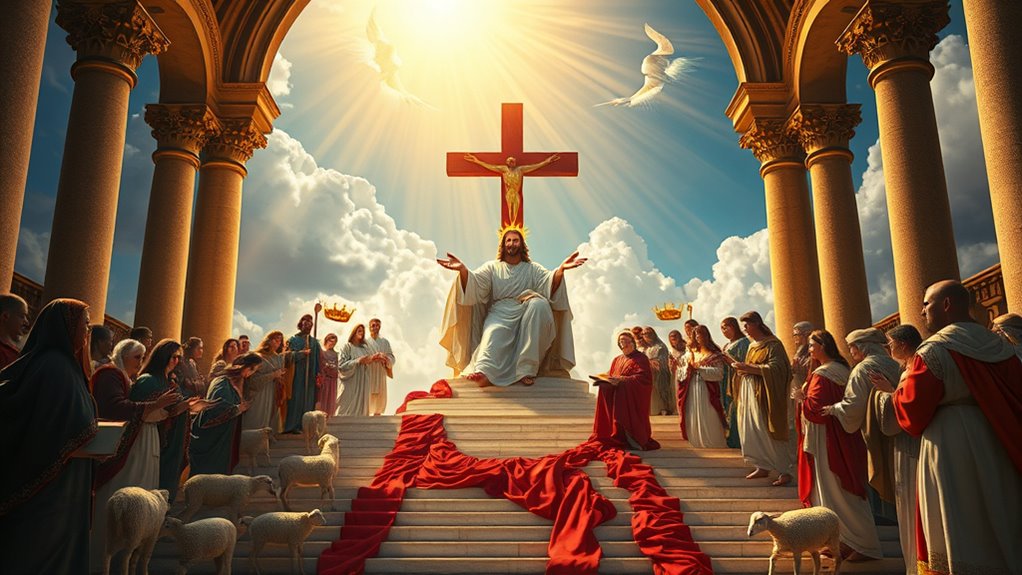

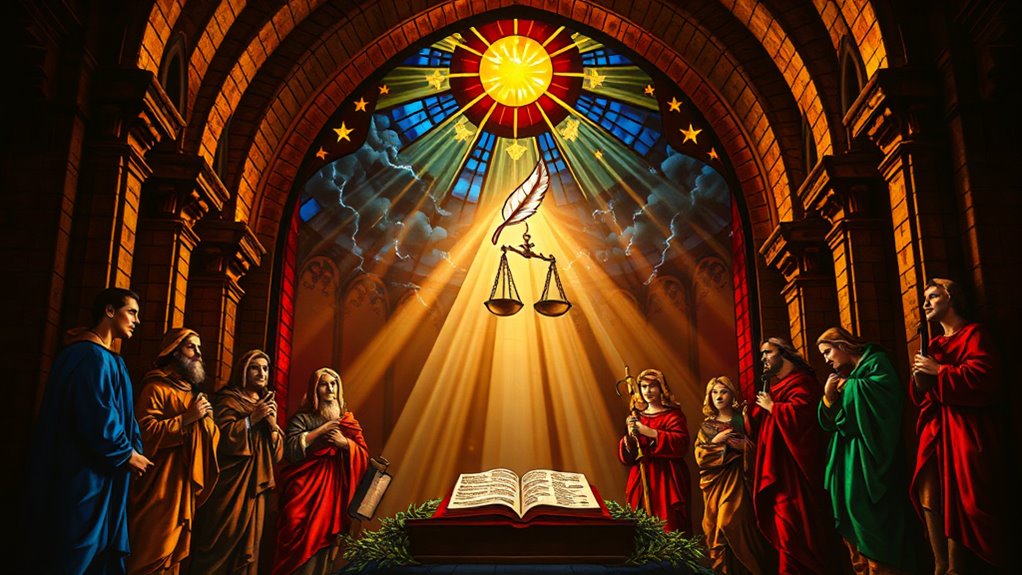
The Declaration of Independence is religious in tone but not explicitly Christian. It refers to God four times, yet never names Jesus Christ, cites Scripture, or states Christian doctrine. Thomas Jefferson, a deist, drafted it in June 1776, and Congress favored natural-law language broad enough for Christians and deists alike. Whether that makes it a Christian document remains contested.
Key Takeaways
- The text uses four God-related phrases but contains no reference to Jesus, the Bible, or Christian doctrine.
- The wording was chosen to unite a diverse coalition, not to state a creed.
- Supporters of the “Christian document” view point to the Creator language and the idea of rights from a divine source.
- Most historians describe the Declaration’s religion as generic theism shaped by Enlightenment thought.
What Does the Declaration of Independence Actually Say About Religion?
The Declaration of Independence contains religious language, but it is broader and less specific than many assume. It refers to “Nature’s God,” a “Creator,” the “Supreme Judge of the world,” and “divine Providence.” These phrases carry real religious weight, but none of them names Jesus Christ, cites the Bible, or establishes a Christian framework.
The rights described in the second paragraph originate in a Creator, not in government. The text reflects natural theology and civic morality rather than Christian doctrine, which makes its religious content genuine but deliberately nonsectarian. The actual writing was delegated to Thomas Jefferson, who drafted it between June 11 and June 28, 1776.
The signers concluded with a mutual pledge of lives, fortunes, and sacred honor, grounding their separation from Britain in both moral conviction and collective personal sacrifice.
Why Did the Founders Leave Christianity Out of the Declaration?
Knowing what the Declaration says raises a next question: why did the founders write it that way? Several reasons stand out:
- The document needed broad coalition support from Christians, deists, and other believers.
- Explicit Christianity risked favoring one denomination over another in a colony system already divided by sectarian conflict.
- Natural-law reasoning fit the political argument better than biblical authority.
Congressional editing reinforced this direction. Delegates chose language that grounded independence in civil rights rather than church authority. The final text affirms a generic theism that delegates across differing religious traditions could accept.
The Constitution reflects the same impulse. It contains no specific religious reference and explicitly forbids religious tests for officeholders, so no single faith tradition could claim legal authority over the new government. This approach also fits Enlightenment and biblically influenced principles that emphasize the common good as a guide for civic order.
What Is the Case for Calling It a Christian Document?
The case rests primarily on the text itself. Supporters argue that the four references to God (“the Laws of Nature and of Nature’s God,” “their Creator,” “the Supreme Judge of the world,” and “divine Providence”) reflect a theistic foundation, not secular neutrality.
The phrase “endowed by their Creator” is often treated as the strongest evidence. Advocates connect the Declaration’s rights language to Christian ideas about human dignity rooted in creation, arguing that unalienable rights imply a divine source rather than a governmental one. Genesis expresses that underlying idea of human dignity:
God created man in his own image. In God’s image he created him; male and female he created them.
Genesis 1:27 (WEB)
This passage shows why many Christians hear echoes of their own faith in the Declaration’s language, even though the document itself never cites it.
David Barton of WallBuilders claims the Declaration “formed all of the principles” of Christianity into the American form of government. A related study encourages participants to examine the Declaration’s “continuing impact on contemporary Christians” and the original intent behind its references to a higher power.
Why Do Historians Hesitate to Call It a Christian Document?
Many Americans hold deep convictions about the religious character of the Declaration, but historians generally resist labeling it a Christian document. Three considerations anchor that position:
- The document never names Jesus Christ, quotes Scripture, or references Christian theology.
- Its religious language, such as “Creator” and “Nature’s God,” reflects broad Enlightenment philosophy.
- Its purpose was political, not doctrinal.
Historian David Armitage describes it primarily as a foreign-policy statement justifying separation, not a confession of faith. Many historians also note the influence of Enlightenment ideas on the Founders’ language and framework.
Jefferson’s original draft contained only one deistic reference, “the laws of nature & nature’s god,” which suggests the document’s religious character was minimal and philosophically broad from the start. Jefferson himself rejected biblical miracles and Jesus’ divinity, believing instead in a distant creator god. That belief matches the document’s generic theistic language rather than any specifically Christian confession.
Jefferson also steered the opening toward human political drama with the phrase “when in the course of human events,” deliberately moving away from Winthrop’s providential model, in which God’s care was understood to be present everywhere at all times.
What the Evidence Tells Us About the Declaration’s Religious Identity
Taken as a whole, the evidence points toward a document that is religious in tone but not Christian in explicit content. It names a Creator, divine Providence, and a Supreme Judge, yet no church, no Scripture, and no Christian doctrine. Jefferson chose broad, natural-law language suited to a diverse coalition, and historians describe the framework as generic theism.
The religious phrasing served a civic purpose: grounding rights in a moral order above government. The document reflects a religiously informed worldview that is open to many believers without claiming a specifically Christian foundation. The Constitution contains none of this religious language, which underscores how cautiously the founders treated explicit religion in their foundational texts.
Common Questions About the Declaration and Christianity
Did the Constitution include religious language?
No. It contains no specific religion reference and forbids religious tests for officeholders. The founders aimed to prevent any single faith tradition from claiming legal authority over the new government.
Why did Jefferson not mention Jesus?
Jefferson rejected biblical miracles and Jesus’ divinity, believing in a distant creator god. His wording also suited a coalition of Christians, deists, and other believers.
Reading the Declaration With Fair Eyes
The Declaration is best read as a political document with real but nonsectarian religious roots. Christians can appreciate its Creator language while recognizing that the text itself does not claim a Christian identity. Reading the document alongside the arguments of both supporters and historians gives the fairest picture.