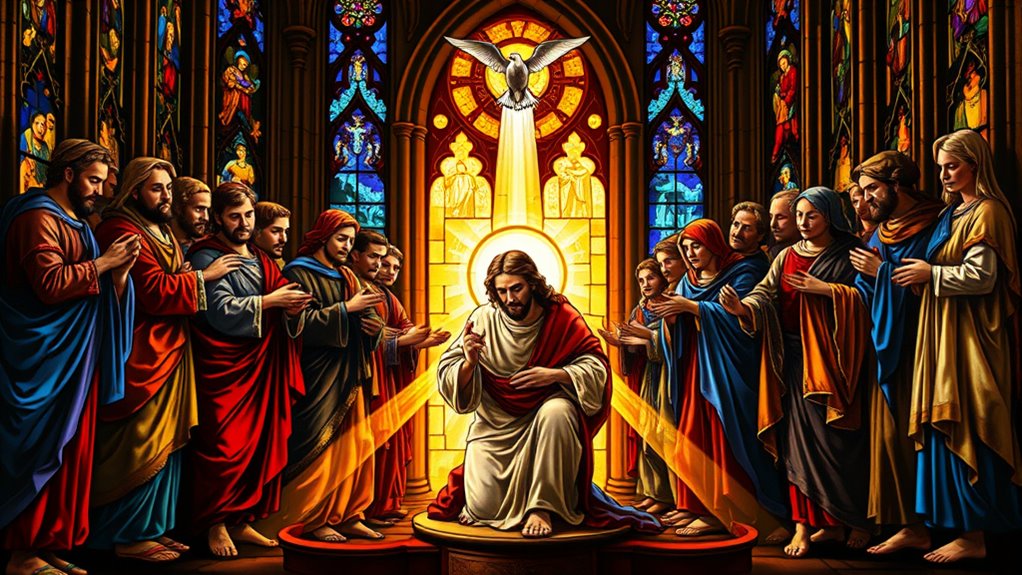


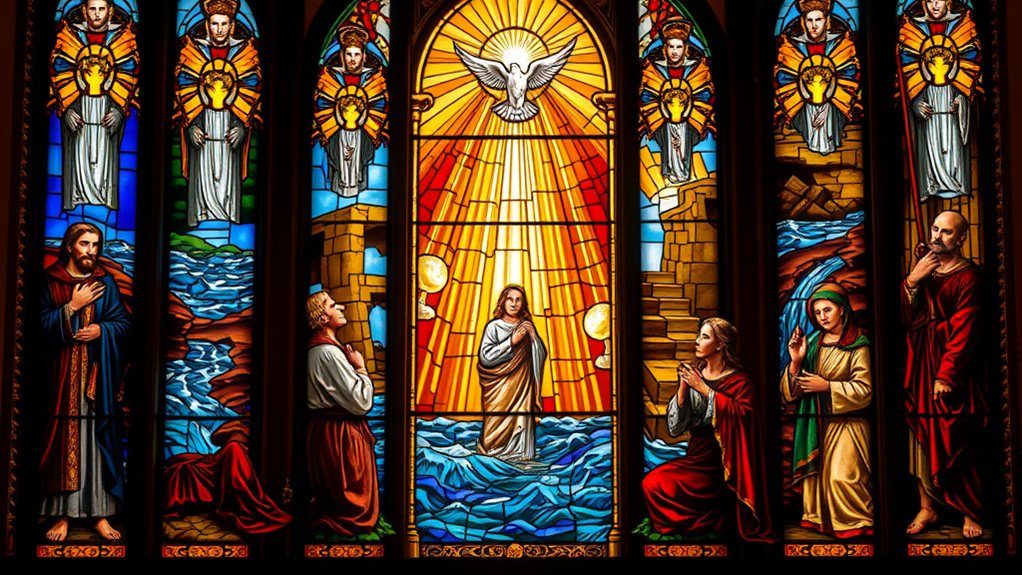
Baptism is a public act of repentance and faith, not a standalone ceremony. In Matthew 28:19–20, Jesus places it inside his command to make disciples. Acts 2:38 links baptism and forgiveness of sins, and Romans 6:3–4 presents it as a picture of the believer’s death and resurrection with Christ. Traditions differ on exactly how baptism relates to forgiveness.
Key Takeaways
- Jesus commanded baptism as part of making disciples, which ties it to teaching and obedience rather than empty ritual.
- In the New Testament, repentance and faith come before baptism, and baptism outwardly expresses that inner change.
- Baptism pictures death, burial and resurrection with Christ and marks the start of a new way of life.
- Christian traditions differ on whether baptism conveys forgiveness or confirms forgiveness already received by faith.
- Acts shows new believers baptized promptly after they heard and believed.
What Did Jesus Actually Command About Baptism?

The clearest command comes in Matthew 28:19–20, widely known as the Great Commission.
Jesus came to them and spoke to them, saying, “All authority has been given to me in heaven and on earth. Go and make disciples of all nations, baptizing them in the name of the Father and of the Son and of the Holy Spirit, teaching them to observe all things that I commanded you. Behold, I am with you always, even to the end of the age.” Amen.
Matthew 28:18-20 (WEB)
Here Jesus tells his disciples to make disciples of all nations, baptize them in the name of the Father, the Son and the Holy Spirit, and teach them to obey. Baptism sits inside a larger disciple-making task, joined to teaching and formation rather than standing alone as a ceremony. The command rests on Jesus’ own authority, declared in Matthew 28:18, not on later church tradition.
Mark 16:15–16 supports this picture by pairing baptism with belief as part of the gospel response. Luke 24:44–49 adds that repentance and remission of sins are to be preached among all nations, beginning at Jerusalem. For new believers, baptism marks first steps of obedience in a lifelong journey of following Christ. The Great Commission’s mention of the Father, Son and Spirit is also tied to Christian teaching about the Father and the Son.
Repentance and Faith Come Before Baptism
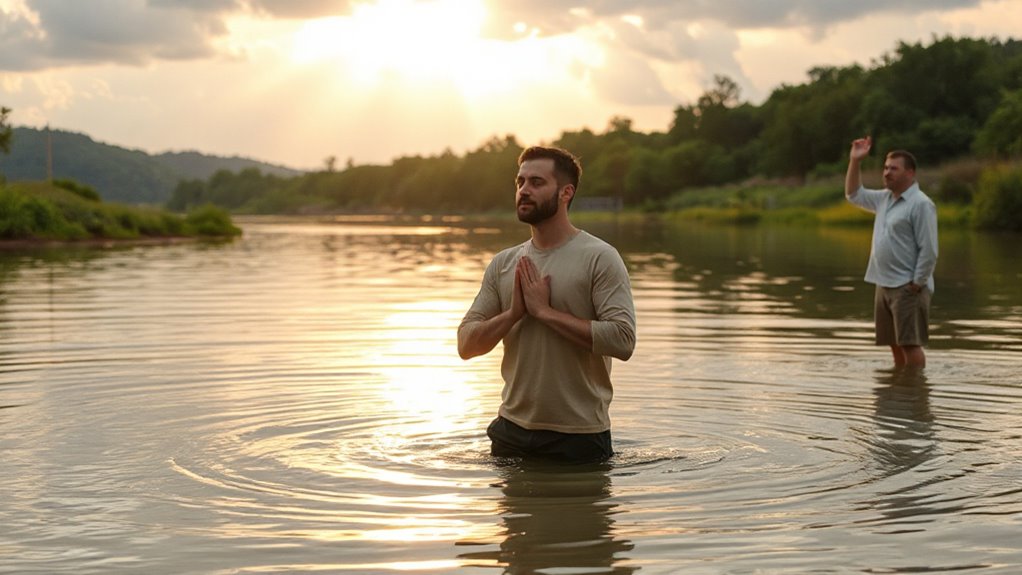
In the New Testament, repentance and faith consistently come first. Repentance means turning away from sin and self-rule toward God, and faith means trusting God through Jesus Christ. Mark 1:15 pairs them in a single command.
and saying, “The time is fulfilled, and God’s Kingdom is at hand! Repent, and believe in the Good News.”
Mark 1:15 (WEB)
Acts 20:21 similarly joins “repentance toward God” with “faith in our Lord Jesus Christ” as the core of apostolic preaching. Acts 2:38 then places baptism after repentance, not as a replacement for it. Baptism follows a changed heart; it does not substitute for one.
Scripture presents repentance and faith as inseparable, forming the inward foundation that baptism outwardly expresses. Acts 26:20 adds that genuine repentance shows itself in works befitting repentance. Repentance is not merely an outward decision but an inward transformation, described as a renewal of the mind, in which God replaces the former way of thinking and living with a spirit oriented toward him. Disciplines like daily Bible reading can help sustain that change over time.
Why Baptism Uses the Picture of Dying and Coming Back to Life

Baptism draws on the imagery of death and resurrection because the New Testament connects it to what happened to Jesus. Romans 6:3–4 says that baptism into Christ is baptism into his death, and that believers are buried with him through it.
Or don’t you know that all we who were baptized into Christ Jesus were baptized into his death? We were buried therefore with him through baptism into death, that just as Christ was raised from the dead through the glory of the Father, so we also might walk in newness of life.
Romans 6:3-4 (WEB)
The symbolism is direct: going under the water mirrors burial, and rising out mirrors resurrection. Colossians 2:12 reinforces this, joining burial and rising and grounding both in God’s power that raised Jesus. The same passage connects baptism to the forgiveness of transgressions and the cancellation of the bond with legal claims, nailed to the cross through Christ.
The pattern carries practical meaning too. Romans 6:4 states the purpose plainly: that believers may walk in newness of life. Something genuinely ends and something genuinely begins in the person who is baptized, who is then called to count themselves dead to sin but alive to God in Christ Jesus. The New Testament centers these events on Jesus’ death at Golgotha, outside Jerusalem’s ancient walls.
Does Baptism Forgive Sins or Just Symbolize Forgiveness?
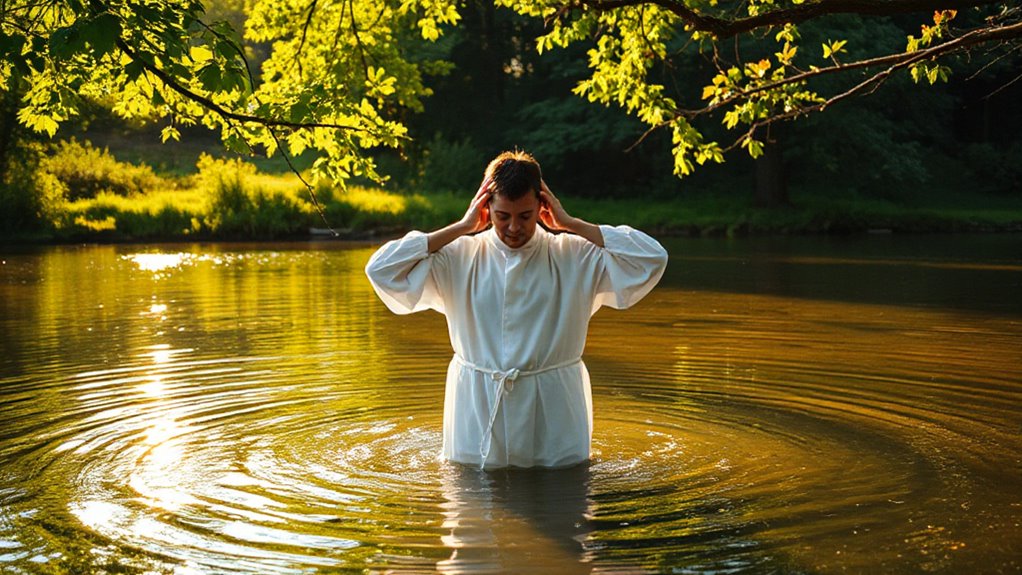
The death-and-resurrection imagery raises a practical question: does the act itself accomplish something, or does it only picture what faith has already received? Christian traditions divide here.
Acts 2:38 links baptism directly to forgiveness of sins, and Acts 22:16 uses “wash away your sins” language.
Now why do you wait? Arise, be baptized, and wash away your sins, calling on the name of the Lord.’
Acts 22:16 (WEB)
Catholic and some other traditions read these passages as teaching that forgiveness is genuinely conveyed in the act. Catholics also count baptism among the seven sacraments that mediate grace.
Other traditions argue that faith brings forgiveness first, and baptism publicly confirms what Christ’s sacrifice already granted. They point to Ephesians 2:8–9 and Acts 10:43 in support.
Both sides agree that the New Testament never treats baptism casually. It remains closely bound to repentance, faith and the beginning of new life in Christ. Hebrews 8:12 affirms that God shows mercy by remembering sins no more. Many Christians add that the water is a symbol, and that actual cleansing depends on Christ’s shed blood.
How Acts Shows Baptism Following Repentance and Faith Every Time

Across its conversion accounts, Acts presents a consistent sequence: repentance and faith come first, and baptism follows as the immediate next step. In Acts 2, Peter’s preaching drew 3,000 people into a repentance sequence that concluded with same-day baptism. In Samaria, belief preceded baptism for both men and women. The Ethiopian eunuch confessed faith before Philip baptized him at the roadside.
Cornelius’s household received the Spirit mid-sermon, and Peter ordered baptism shortly after. Lydia, the Philippian jailer and Crispus each followed the same path: hear, believe, then be baptized. Acts never reverses this order, and the pattern reflects immediate obedience to apostolic preaching as the natural outward response to inward faith.
Peter connected baptism to forgiveness of sins and the receipt of the Holy Spirit in Acts 2:38. In the next verse he declared that the promise extends to children, to those far off, and to all whom the Lord our God will call. This practice took shape while early Christian teaching was being written down, between roughly 45-100 AD.
Common Questions About Baptism
Does baptism replace repentance?
No. In the passages above, baptism follows repentance and faith and expresses them outwardly. Acts 2:38 places baptism after repentance, not in its place.
Is baptism only for adults?
The article’s passages do not settle this, and traditions differ. Acts 2:39 says the promise extends to children and to those far off, while the conversion accounts in Acts describe people who first heard and believed.
Living Out Your Baptism
Baptism points beyond the water to a life of ongoing obedience and new beginnings. If you are considering it, start with repentance and faith, and talk with your own church about how it understands what baptism does.