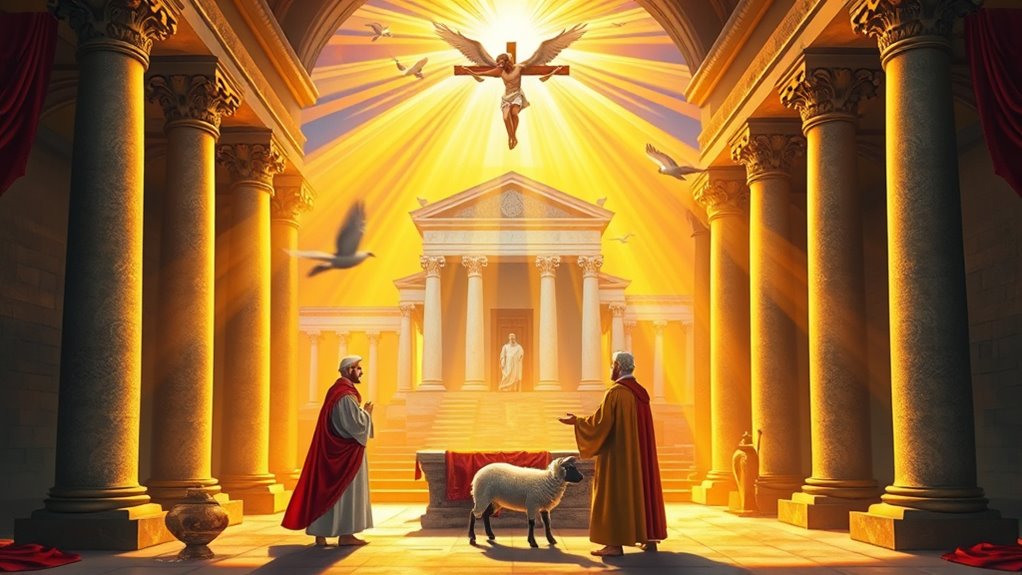
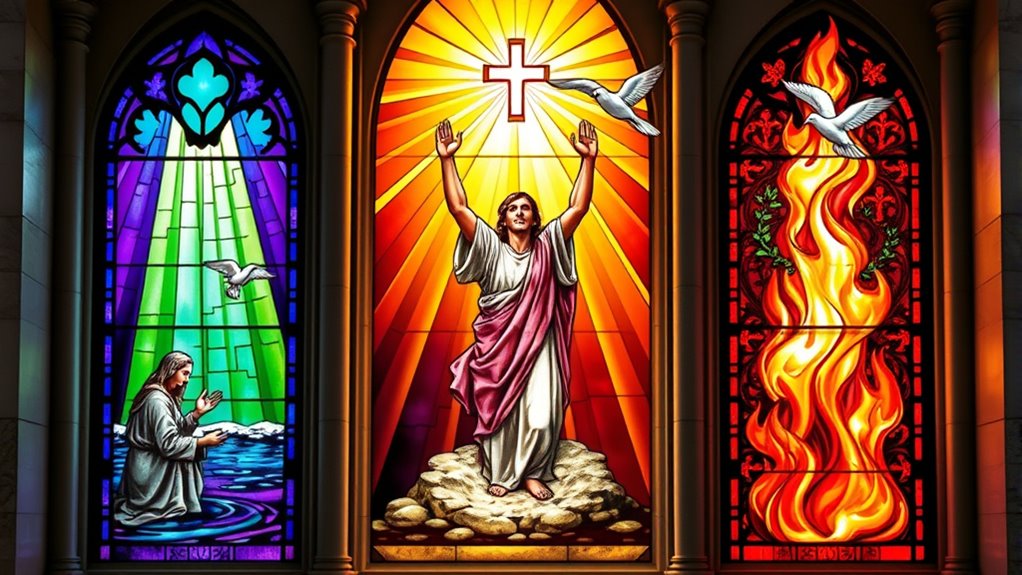
The Bible teaches that all people have sinned and fall short of God’s glory, creating a barrier that human effort cannot bridge. Salvation comes through faith in Jesus Christ, who died on the cross and rose again to pay the penalty for sin. Ephesians 2:8-9 emphasizes that salvation is God’s gift received through grace, not earned by works. Genuine faith includes trusting Christ alone for salvation, which naturally produces good works as evidence rather than as a means of earning righteousness. The sections ahead explore these foundational truths in greater detail.
Key Takeaways
- All humanity has sinned and falls short of God’s glory, creating an impassable barrier requiring divine intervention.
- Salvation comes through faith in Jesus Christ’s death and resurrection, received as God’s gracious gift, not earned.
- Good works cannot save; God requires sinless perfection, which only Christ achieved on humanity’s behalf.
- Genuine saving faith includes trusting Christ alone, naturally producing good works as evidence, not as payment.
- Repentance turns from sin to God; baptism symbolizes spiritual rebirth and accompanies authentic faith in Christ.
Why All People Need Salvation From Sin

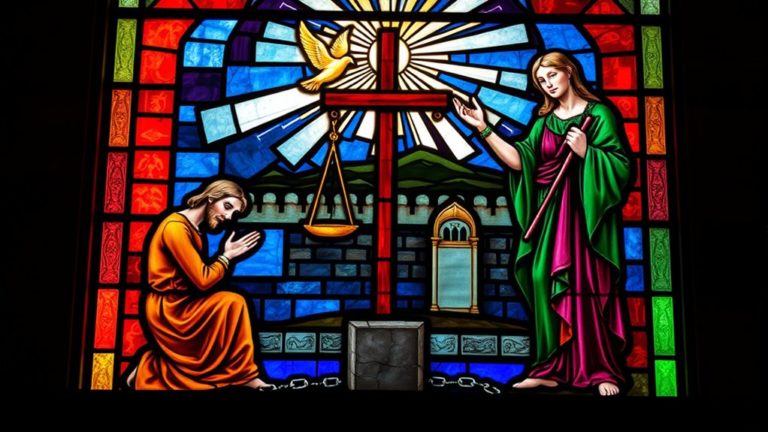
The recognition of human sinfulness stands as the foundation for understanding salvation’s necessity. Scripture declares in Romans 3:23 that all humans have sinned and fall short of God’s glory, establishing a universal condition without exception. This fallen nature renders every person guilty, corrupt, and condemned before God’s holiness.
Sin creates an impassable barrier separating humanity from spiritual blessings, leaving the whole world accountable to divine justice. The penalty extends beyond temporal consequences to eternal condemnation, as God’s infinite holiness makes the punishment inexhaustible. Human effort cannot bridge this gap or satisfy the broken law’s demands. Even external morality fails without complete love for God, leaving sinners helpless against sin’s enslaving power and in desperate need of divine intervention. Early biblical writings were composed over many centuries and languages, reflecting diverse human authorship and historical context, including evidence from archaeological discoveries that supports the Bible’s historical backdrop.
How Faith in Jesus Saves You From Eternal Death

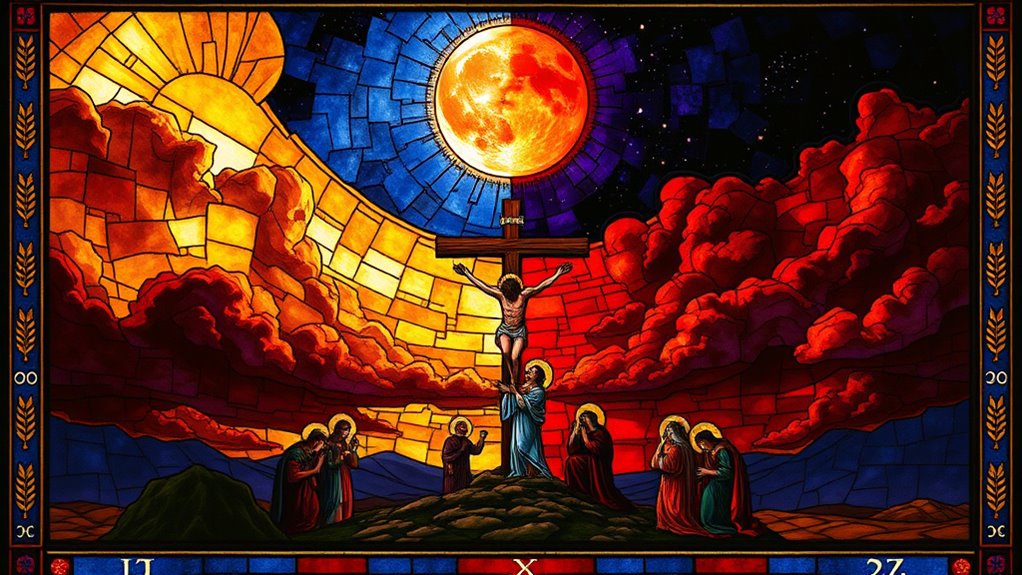
How does faith function as the mechanism through which God rescues individuals from eternal death? Scripture presents faith as trust in specific historical realities: Jesus died on the cross, bearing punishment for sin, and God raised Him three days later.
Romans 10:9 explains that declaring Jesus as Lord and believing in His resurrection saves a person. This faith receives God’s grace as a gift, not through personal merit, according to Ephesians 2:8–9.
When Jesus declared “It is finished” before His death, He signaled complete payment for humanity’s sins. The resurrection validated this payment’s sufficiency.
John 3:16 promises that belief in Christ grants eternal life rather than perishing, defining salvation as knowing God through Jesus and receiving the indwelling Holy Spirit forever.
Christians understand this within the framework of the Trinity, affirming Jesus’ divinity and distinct personhood as the Son of God shared divine essence in the one God.
Why Good Works Cannot Earn Your Way to Heaven

Scripture addresses a central question about salvation: whether moral behavior and virtuous actions can secure a person’s entrance into heaven. Ephesians 2:8–9 states that salvation occurs through grace, not works, because righteous deeds fall short of God’s glory according to Romans 3:20 and Isaiah 64:6.
The Bible teaches that God demands sinless perfection for entry, a standard no human achieves. James 2:10 holds all guilty for breaking even one commandment, while Revelation 21:27 bars anything impure from heaven.
Romans 6:23 specifies that the wages of sin is death, not works. Instead, eternal life comes as a gift through Christ.
Good works follow salvation rather than cause it, serving as evidence of genuine faith but contributing nothing to the declaration of righteousness itself.
The Catholic Bible contains 73 books, including several deuterocanonical books, which are part of the canon affirmed by the Church.
What Saving Faith Actually Means in the Bible

According to biblical teaching, saving faith involves more than acknowledging that God exists or agreeing with historical facts about Jesus. Christian theologians describe three essential components: knowledge of the gospel message, intellectual assent that this message is true, and personal trust in Christ alone for salvation.
The apostle Paul emphasizes faith seventeen times in Romans 4, contrasting it with human works. Ephesians 2:8-9 states that salvation comes through faith as God’s gift, not through human effort.
This faith differs from what demons possess, who believe God exists but lack obedience, as James 2:19 notes. Genuine saving faith produces works that demonstrate its reality, though these works do not themselves save. Faith works through love, as Galatians 5:6 explains.
Beginners may find it helpful to start with the Gospels and use a readable translation to build understanding and consistency in reading.
Do You Need Baptism and Repentance to Be Saved?

Understanding what faith requires naturally leads to questions about other elements frequently mentioned alongside it in Scripture.
Repentance appears essential throughout the Bible, with Acts 3:19 stating that repenting and turning to God results in sins being wiped out. Second Corinthians 7:10 describes godly sorrow producing repentance that leads to salvation.
Baptism’s role proves more debated. Mark 16:16 and Acts 2:38 link baptism directly with salvation, while Ephesians 2:8-9 emphasizes grace through faith alone. First Corinthians 1:17 shows Paul separating baptism from the core gospel message.
Many scholars view baptism as an outward demonstration of inward faith, symbolizing death to sin and resurrection to new life. The practice consistently accompanies genuine belief in Acts, suggesting essential importance even if interpretations differ on absolute necessity. The New Testament writings were composed between 45-100 AD and reflect diverse early Christian views on topics like baptism and repentance.