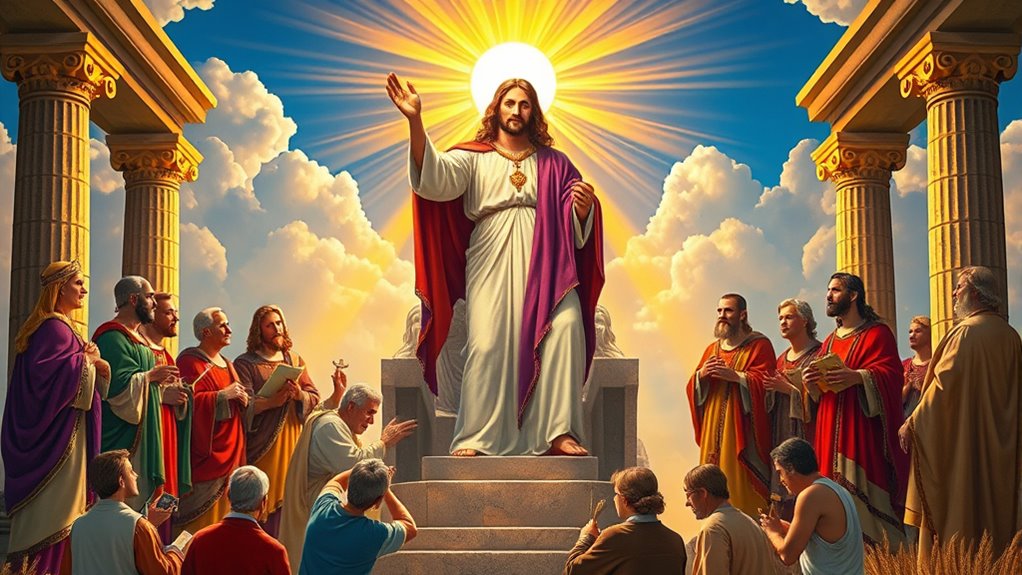
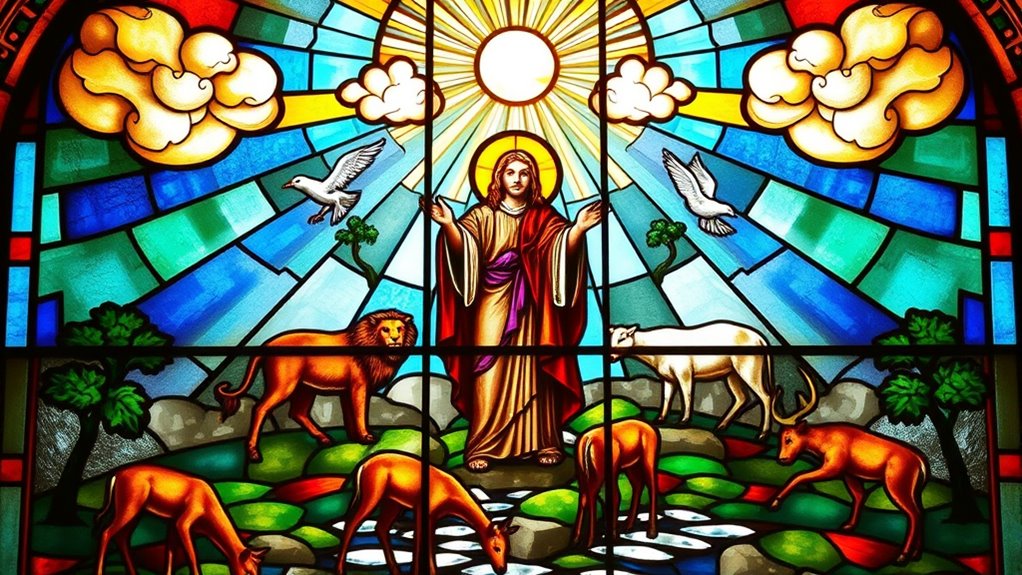
The Bible does not directly answer whether animals go to heaven, though it provides suggestive clues. Hebrew terms like *nephesh* (soul) and *ruach* (spirit) apply to both humans and animals in Genesis and Ecclesiastes, while prophetic passages in Isaiah and Revelation depict animals in restored creation and heavenly visions. Theologians remain divided, with some like Thomas Aquinas denying animals eternal souls, while others like Scot McKnight expect pets on the new earth. Further exploration reveals how scripture’s language, imagery, and theological frameworks inform this enduring question.
Key Takeaways
- The Bible uses nephesh (breath of life) for both humans and animals, but reserves God’s image exclusively for humans.
- Isaiah and Revelation depict animals in God’s restored creation, including peaceful coexistence and creatures praising God in heaven.
- Traditional theology argues animals lack eternal souls, though some suggest God might include beloved pets for human happiness.
- God’s covenant with animals after the flood and prophetic visions affirm their significance in divine purposes and future restoration.
- Scripture remains unclear on individual animal afterlife, focusing instead on cosmic renewal where animals inhabit the New Earth.
Do Animals and Pets Have Souls According to the Bible?

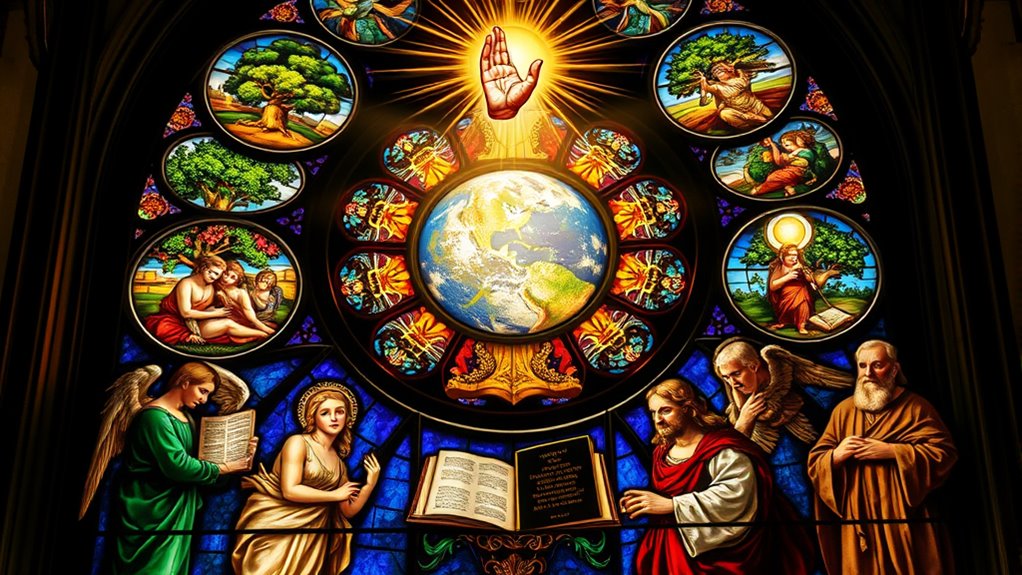
The question of whether animals possess souls has stirred quiet debate among biblical scholars for centuries, with no single verse offering a definitive answer. The Hebrew term *nephesh*, often translated as “soul,” appears in passages describing both humans and animals. Genesis 1:30 and 7:15 use *nephesh* for creatures with the breath of life, suggesting animals share this quality.
However, Genesis 1:26-27 reserves the image of God exclusively for humans, marking a theological boundary. The word *ruach*, meaning spirit, also applies to animals in Ecclesiastes 3:21, though the verse questions whether animal spirits ascend or return to earth. Interpretations hinge on definitions: if soul means mind, will, and emotions, animals qualify; if it denotes an eternal, redeemable spirit, they do not. Jesus was ethnically Jewish and lived within first-century Jewish religious practices, which shapes how many interpret scripture about life, death, and the soul Jewish identity.
What the Bible Actually Says About Animals in Heaven
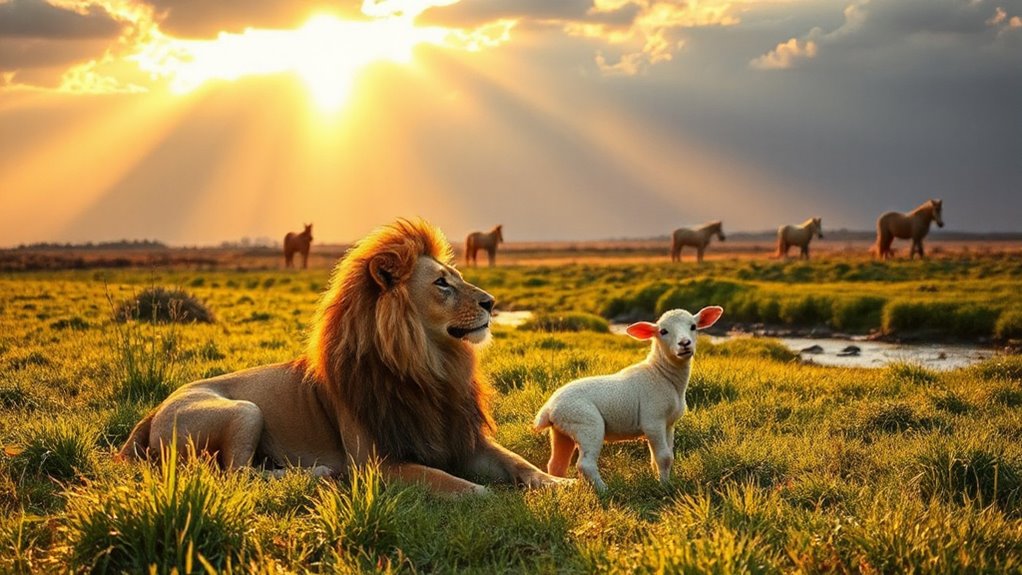
While determining whether animals possess souls remains open to interpretation, Scripture does offer several passages that place animals within God’s redemptive vision, though none state outright that pets or wild creatures enter heaven as humans understand it.
Scripture places animals within God’s redemptive vision, though their eternal destiny remains open to interpretation.
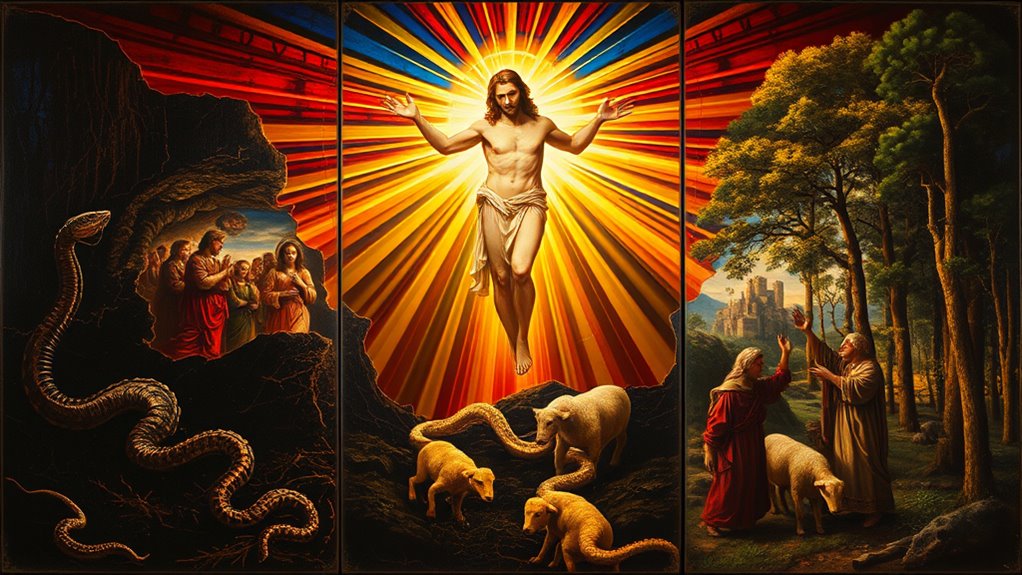
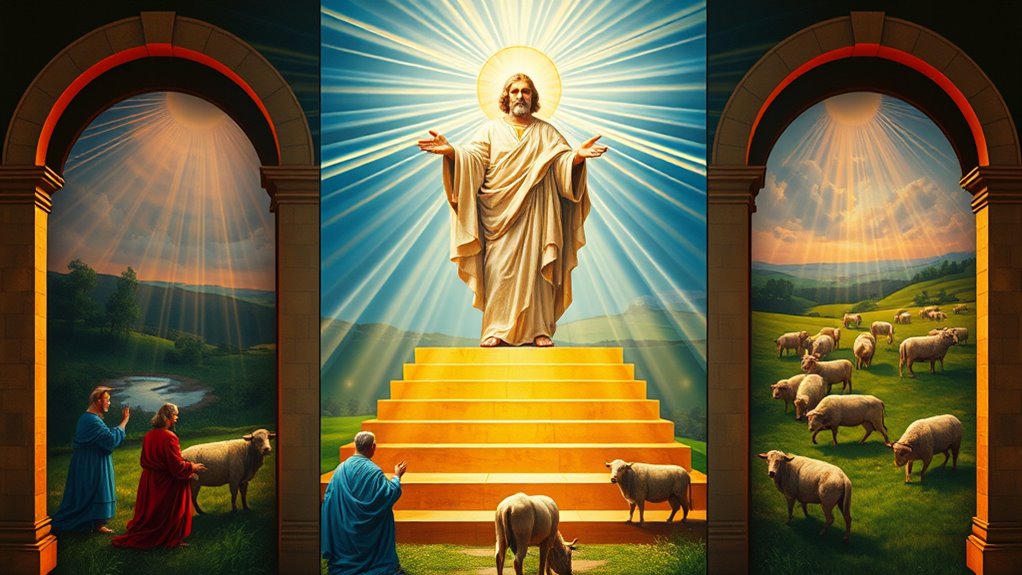
Isaiah 11:6-9 depicts wolves dwelling with lambs and lions eating straw like oxen on God’s holy mountain, suggesting animals participate in future restoration. Revelation 5:13 describes every creature in heaven, on earth, under the earth, and in the sea praising the Lamb, indicating animals join universal worship.
White horses appear repeatedly in heavenly visions throughout Revelation, and Elijah ascended to heaven in a chariot pulled by horses.
Genesis 9:9-10 establishes God’s covenant with every living creature after the flood, affirming animals hold significance within divine purposes.
The location of Jesus’ crucifixion at Golgotha, now marked by the Church of the Holy Sepulchre, underscores how sacred sites outside the city walls were part of God’s unfolding redemptive history, connecting the Christian story to place of the skull and the broader biblical narrative.
Will Animals Be in Heaven’s Millennial Kingdom and New Earth?
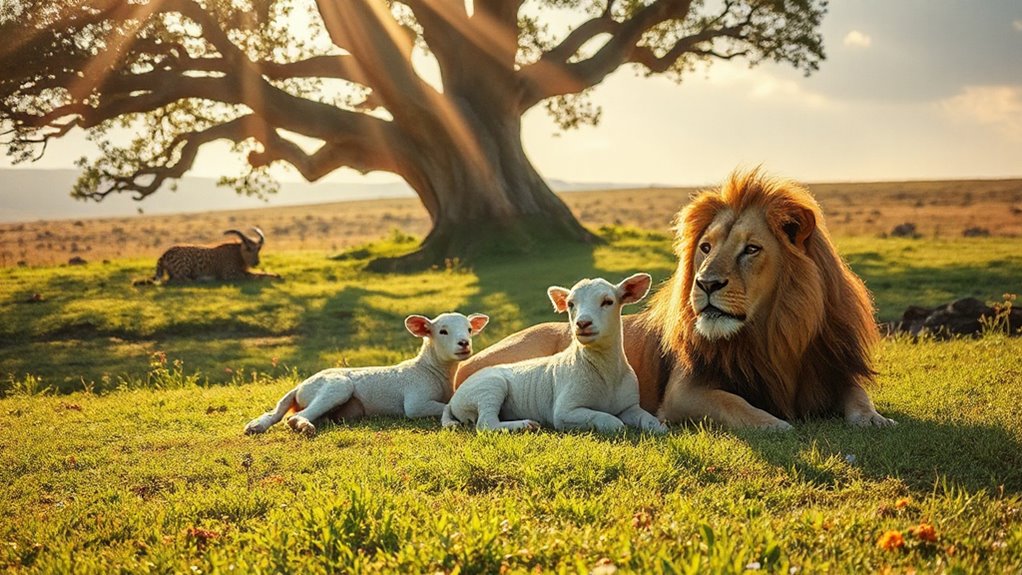
Beyond the question of whether individual pets will rejoin their owners, Scripture addresses a broader inquiry: whether animals will populate God’s future kingdom at all.
Isaiah 11:6-7 describes a transformed world where predators and prey coexist peacefully—wolves dwelling with lambs, leopards lying down with goats. Lions will eat straw like oxen, their nature fundamentally changed. This vision applies to Christ’s millennial reign, a thousand-year period when the curse affecting creation will be partially lifted.
Isaiah 65:25 extends this promise beyond the millennium to the New Earth, explicitly stating animals will inhabit the restored creation.
Revelation depicts horses in heaven carrying celestial armies, suggesting animals serve functional purposes in eternity. The pattern recalls Eden before sin corrupted the natural order.
Christian tradition has long connected Bethlehem and themes of sacrificial animals to portrayals of Christ as the Lamb of God, reinforcing the biblical link between animals and redemptive purpose.
What Christian Theologians Believe About Pets in Heaven

While Scripture offers glimpses of animals in God’s restored creation, Christian theologians disagree sharply on whether individual pets will inhabit heaven.
Franciscan theologian Ron Bolster argues animals cannot enter heaven because only humans bear God’s image.
Father Daniel Maria Klimek cites Thomas Aquinas, who taught that animals lack eternal souls. Yet Klimek notes some priests and popes suggest God might allow beloved pets in heaven if necessary for human happiness.
Philosopher Peter Kreeft references Psalm 36:6, which speaks of God saving both humans and animals.
Reformed pastor John Piper maintains a qualitative distinction between image-bearing humans and animals but speculates God could raise specific pets if essential for full joy.
Scholar Scot McKnight expects the new earth to include wildlife and pets, enriching human delight.
Theological views on this issue often interact with broader doctrines such as the Doctrine of the Trinity, which shapes how theologians understand personhood and the destiny of created beings.