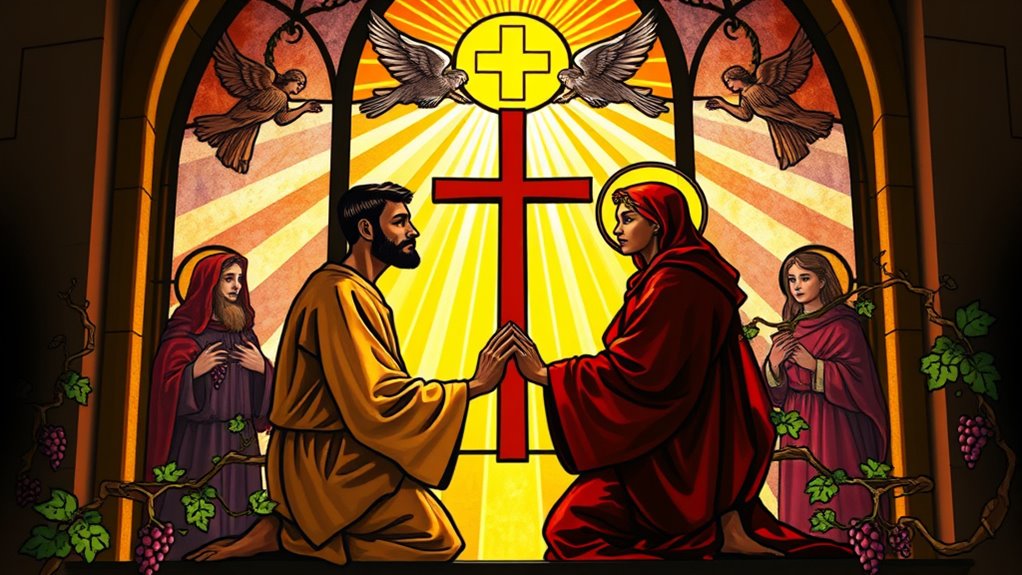

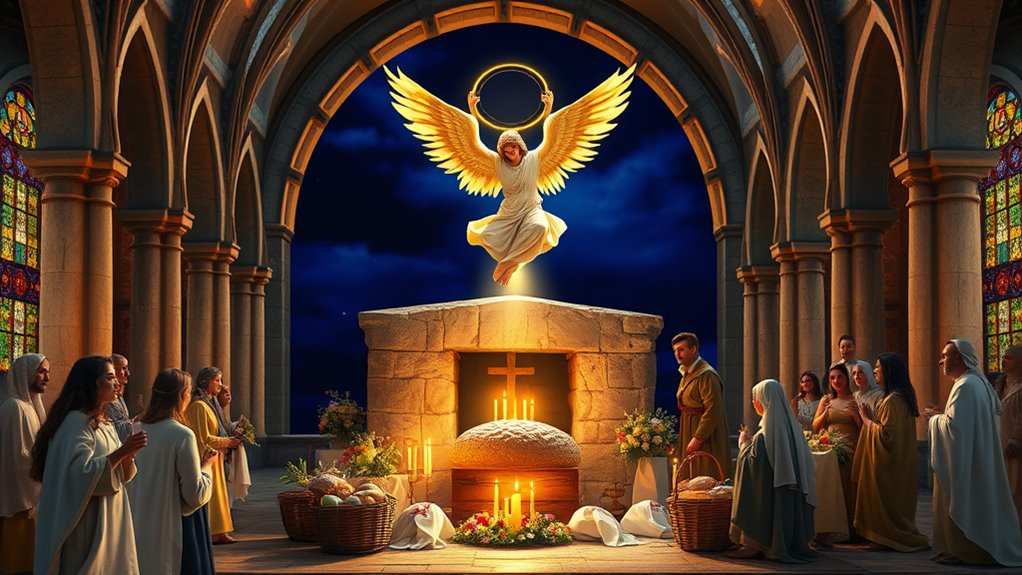
Easter Monday carries the name “Monday of the Angel” because, in Matthew 28:5–7, an angel was the first to announce Christ’s Resurrection to the women at the empty tomb. St. John Paul II explained that the news was too overwhelming for any human to proclaim first, so heaven sent its own messenger. Italy calls it “Day of the Angel,” reflecting the same Gospel moment. The reasons behind the name reveal something deeper about the Church’s understanding of that morning.
What Is ‘Monday of the Angel’ and Why Does It Have Two Names?
Easter Monday carries a name in Catholic tradition that many outside the faith may not immediately recognize: “Monday of the Angel.” The title refers directly to the biblical account in Matthew 28:5–7, where an angel appears at the empty tomb and announces Christ’s resurrection to a group of women who had come to mourn.
In Italian contexts, the day is also called “Day of the Angel,” a slight variation carrying the same meaning. Both names point to the same source: the angel’s role as the one who first declared the resurrection aloud, making the announcement official within the Gospel narrative. The day is also referred to as “Little Easter” in many countries across Europe and South America.
Easter Monday is not, however, listed among the Catholic holy days of obligation under the Code of Canon Law, distinguishing it from feasts such as Christmas, Epiphany, and the Assumption of Mary. The observance often emphasizes worship and Scripture as central practices tied to the resurrection.
The Gospel Moment That Gave Easter Monday Its Name
At the center of Easter Monday‘s traditional name is a single scene from the Gospel of Matthew, one that has shaped how the Catholic Church understands the day.
In Matthew 28:5-7, an angel greets the women who arrived at Jesus’ empty tomb. He tells them not to fear, confirms Jesus has risen as he promised, and directs them to inform the disciples.
He also reveals that Jesus is traveling ahead to Galilee. This brief exchange, combining announcement, invitation, and instruction, became the defining Gospel moment from which the name “Monday of the Angel” directly originates.
In the Western Church, Easter Monday holds a specific liturgical position as the second day of both Eastertide and the Octave of Easter.
Easter Monday is also known as “Little Easter”, a term drawn from popular tradition to describe it as a secondary celebration that extends the joy of Easter Sunday throughout the Octave.
Angels in Scripture are described as created spiritual beings who serve God and often deliver messages, which helps explain the emphasis on the angelic announcement at the tomb.
Why the Resurrection Had to Be Announced by an Angel, Not a Human?
The Gospel scene at the tomb raises a question worth examining: why was an angel, and not a human being, the one to announce that Christ had risen?
St. John Paul II offered a clear theological answer: the Resurrection was too shocking, too incredible for any human voice to carry first. No human dared pronounce it. The truth itself demanded a superior witness. An angel, unburdened by fear or doubt, could speak with the credibility the moment required. Heaven, in effect, sent its own messenger because the news was simply too large for human words to hold.
Easter Monday falls on the second day of the Octave of Easter, an eight-day liturgical period that begins on Easter Sunday and concludes the following Sunday, keeping the focus on the resurrection of Jesus Christ. This confident expectation of resurrection is rooted in God’s promises and not mere wishful thinking.
What the Eight Days After Easter Actually Celebrate?
Eight days stretch from Easter Sunday to the Second Sunday of Easter, forming what the Catholic Church calls the Easter Octave — a period treated not as a sequence of ordinary days but as one continuous solemnity. This extended celebration underscores the communal purpose of gathering for worship and mutual encouragement.
Each day carries the rank of a Solemnity of the Lord, the second-highest liturgical designation in the Church’s calendar. Rather than marking eight separate celebrations, the octave functions as a single extended feast, prolonging Easter Sunday’s joy across the entire span. Early Christians came to call Sunday the Eighth Day, a poetic designation signifying movement beyond the seven-day created order into eternity and new creation.
Daily Mass features Gospel readings drawn exclusively from Resurrection accounts, with the sequence *Victimae paschali laudes* sung before each Gospel throughout the week. The octave culminates in Divine Mercy Sunday, historically known as *dominica in albis* — the day the newly baptized laid aside their white baptismal garments.
How Catholic Families and Nations Mark Angel Monday?
Across Catholic households and nations, Easter Monday — sometimes called “Angel Monday” in folk tradition — extends the Resurrection celebration into a second day of shared meals, community rituals, and family gathering.
In Ireland, priests bless homes on Easter Sunday, carrying that sacred momentum forward. Families share ham, lamb, and deviled eggs alongside blessed breads marked with crosses. Easter baskets, covered in cloths resembling Christ’s burial shroud, remain present at tables.
Extended family gathers for afternoon meals, continuing what Mass began. Spring decorations, park visits, and family photographs mark the day as both religious observance and communal renewal. Some families also attend ecumenical Holy Week services, experiencing differing symbols, homilies, and music across denominations as part of their broader Easter observance. Many Catholic families begin the Divine Mercy Novena on Good Friday, carrying its nine days of prayer through the Easter season. The history of Christian seasonal observance shows that non-biblical traditions often shape how feast days are celebrated in local practice.