Three relics are venerated as St. Joseph’s possessions today: a colorful cloak housed at Rome’s Basilica of Sant’Anastasia for over 1,600 years, a gray belt preserved in Joinville, France since 1254, and a wooden staff kept at multiple European sites. St. Jerome reportedly brought the cloak from the Holy Land in the fourth century. No church claims Joseph’s bodily remains, with some theologians holding he was assumed into heaven body and soul. The basilica displays the cloak publicly twice yearly on March 19 and May 1, following Vatican authentication protocols requiring Latin documentation sealed with wax and unbroken red thread. The full story behind these artifacts reveals layers of legend and devotion.
What Relics of St. Joseph Are Claimed to Exist Today?
Unlike many saints whose tombs attract millions of pilgrims, St. Joseph left behind no mortal remains. No shrine worldwide claims his body. Pious belief holds he was assumed into heaven with his soul, a view supported by saints including Frances de Sales and Bernardine of Siena. Pope John XXIII affirmed this belief in 1960.
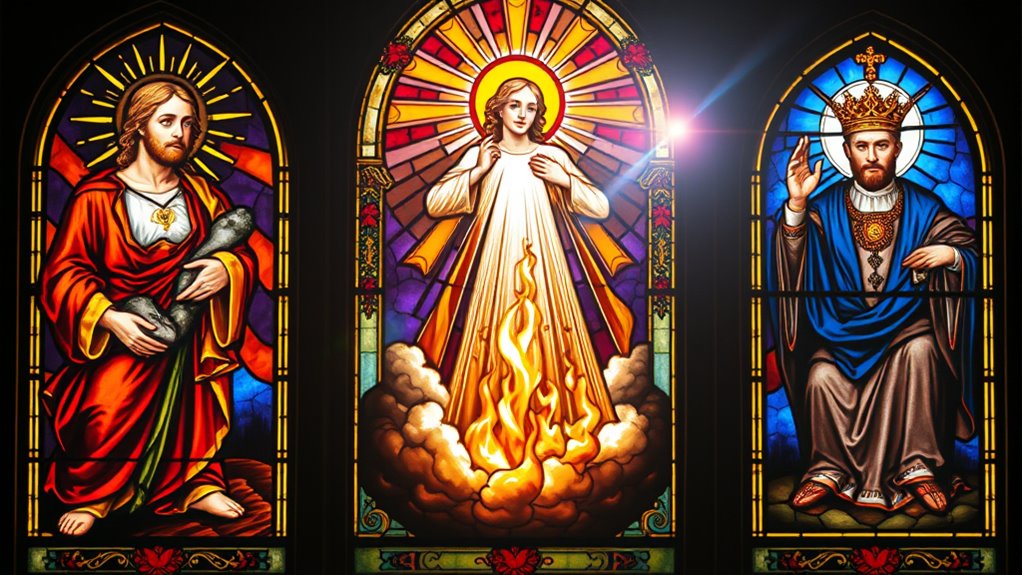
In place of bodily remains, three relics fill the void: a colorful cloak housed in Rome’s Basilica of Sant’Anastasia for over 1,600 years, a gray belt preserved in Joinville, France since 1254, and a staff venerated across multiple European sites.
This tradition of relics reflects the broader role of covenantal promises and material symbols in Christian and biblical remembrance practices.
The Legend Behind St. Joseph’s Cloak: Trading It for Wood
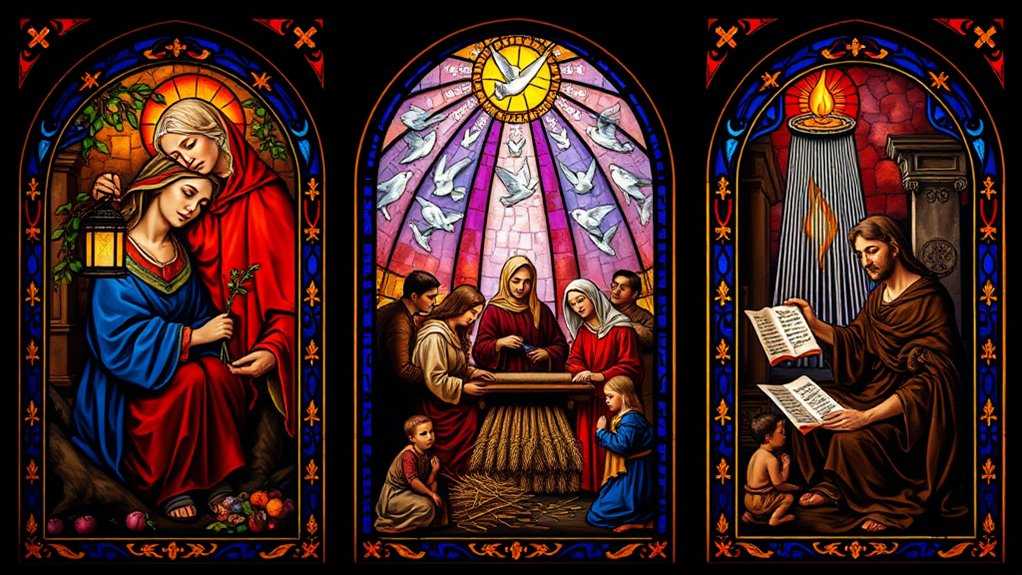
Among the three principal relics attributed to St. Joseph, his cloak carries a distinctive legend. According to tradition, the carpenter needed lumber from Mount Hebron but lacked sufficient funds. The Virgin Mary suggested offering their wedding mantle as collateral to the vendor, a hesitant man named Ishmael.
After accepting the cloak, Ishmael experienced miraculous healings: his painful eye ulcers vanished, his wife’s disposition softened, and even his sickly cow recovered. Grateful for these blessings, Ishmael canceled Joseph’s debt and offered free lumber for life. Joseph chose to leave the meaningful mantle with Ishmael permanently. This tradition, like many surrounding relics, is not found explicitly in Scripture but developed in later Christian tradition and devotional writings.
Where Have Joseph’s Relics Been Kept for 1,600 Years?
For more than sixteen centuries, St. Joseph’s cloak has remained at the Basilica of Sant’Anastasia on Rome’s Palatine Hill. St. Jerome brought the relic from the Holy Land in the fourth century, establishing the basilica as its permanent custodian. The mantle rests in a seventeenth-century reliquary alongside a portion of the Virgin Mary’s veil.
Vatican protocols require authentication for all relics through documentation written in Latin, sealed with wax bearing church authority crests, and secured with unbroken red thread. The basilica displays both relics twice yearly on March 19 and May 1 for public veneration. The Church teaches that Scripture is inspired and authoritative, intended for teaching and guidance, and this teaching about Scripture undergirds how relics and traditions are interpreted.
How Did Rome’s Basilica Become Keeper of Joseph’s Relics?
During the early fourth century, as Christianity shifted from persecution to imperial acceptance, the Basilica of Sant’Anastasia emerged on Rome’s Palatine Hill at a site previously associated with pagan worship. The church became one of Rome’s original parishes, known as titulus Sanctae Anastasiae.
According to tradition, St. Jerome brought St. Joseph’s cloak to Rome during this period, accompanied by a veil belonging to the Blessed Virgin Mary. The basilica received custody of both relics, which it safeguarded for over sixteen centuries. Key elements of this transfer include:
- Jerome’s fourth-century journey from the Holy Land
- Placement in a seventeenth-century reliquary
- Hidden preservation until public exposure in 2020
Scholars note that ancient interpretive frameworks, such as the concept of the firmament, can help explain how early Christians understood sacred objects within a divinely ordered cosmos.
Why No Church Claims to Have St. Joseph’s Body
While countless churches throughout Christendom preserve relics of apostles, martyrs, and saints whose remains were documented, translated, and authenticated across centuries, no ecclesiastical institution has ever claimed possession of St. Joseph’s body.
Canon law requires bishops to obtain Dicastery approval before extracting or translating relics, and significant body parts demand sealed preservation with Roman Pontiff authorization. Yet no records document Joseph’s burial site or any subsequent transfer of remains.
Instead, veneration centers on contact relics—his cloak at Rome’s Basilica of Sant’Anastasia, plus belt and staff—objects sanctified through proximity to his body rather than bodily remains themselves. A number of biblical and historical sources also highlight the varied roles women in Scripture held, including leadership and ministry, which helps contextualize veneration practices around holy persons and objects like Joseph’s relics; see women in Scripture.
How Joseph’s Relics Are Venerated on His Feast Day
On the Solemnity of St. Joseph each March 19, the Basilica of St. Anastasia near the Vatican holds a solemn procession featuring relics attributed to the foster father of Jesus. The holy cloak and belt, housed there since the fourth century, are brought out for public veneration alongside a veil associated with the Virgin Mary.
The veneration practices include:
- A 30-day Holy Cloak Novena recalling Joseph’s three decades raising Jesus
- Processions through Roman churches during special jubilee years
- Display of the blossoming staff tied to legends of Joseph’s selection as Mary’s husband
This exposure affirms Catholic teaching honoring relics with duliaveneration. Churches also encourage practical acts of compassion and service as a living expression of that devotion, reflecting compassion and service.
Did Joseph Rise to Heaven? What This Means for His Relics
Throughout the centuries, a striking theological opinion has persisted among Catholic saints and scholars: St. Joseph was assumed body and soul into heaven. St. Francis de Sales stated “no doubt exists” about Joseph’s bodily presence in heaven, while St. Bernardine preached Jesus assumed Joseph on Resurrection day.
This belief rests partly on Scripture mentioning saints’ bodies rising with Christ and appearing in Jerusalem. Notably, no authenticated bodily relics of Joseph exist on earth.
If Joseph indeed rose bodily, venerated items like his cloak, belt, and staff would represent contact relics rather than remains, fundamentally changing their nature and meaning.
Scholars link this discussion to broader biblical themes of war and peace and divine action across Testaments.