
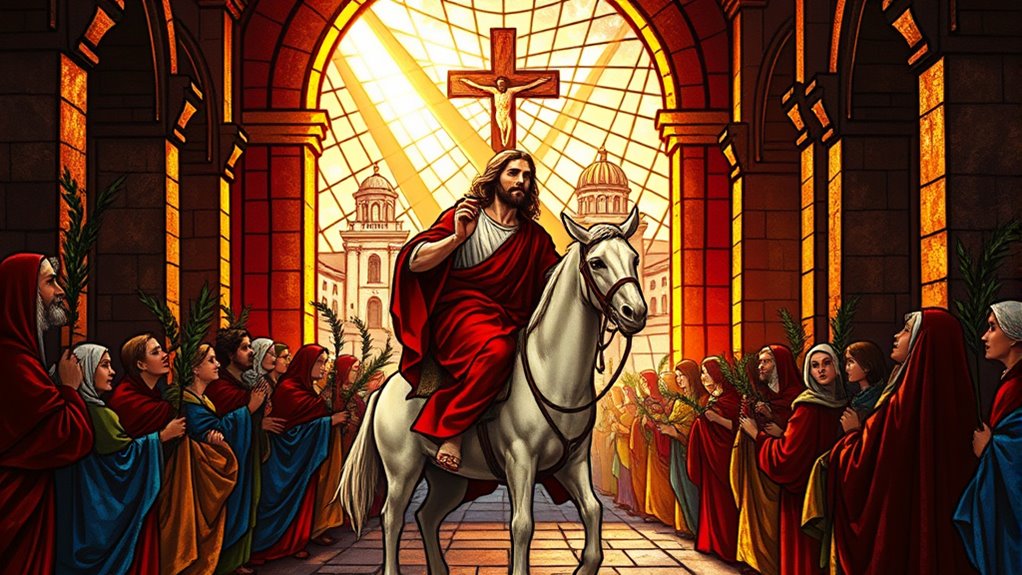
Palm Sunday commemorates Jesus’ entry into Jerusalem one week before his crucifixion, an event recorded across all four Gospels. Crowds lined the road from the Mount of Olives, laying garments and palm branches before him while shouting “Hosanna.” Jesus arrived not on a warhorse but on a young donkey, fulfilling Zechariah 9:9 and signaling a kingship defined by humility rather than force. The details behind this moment reveal far more than a single day’s celebration.
What Happened on the First Palm Sunday?
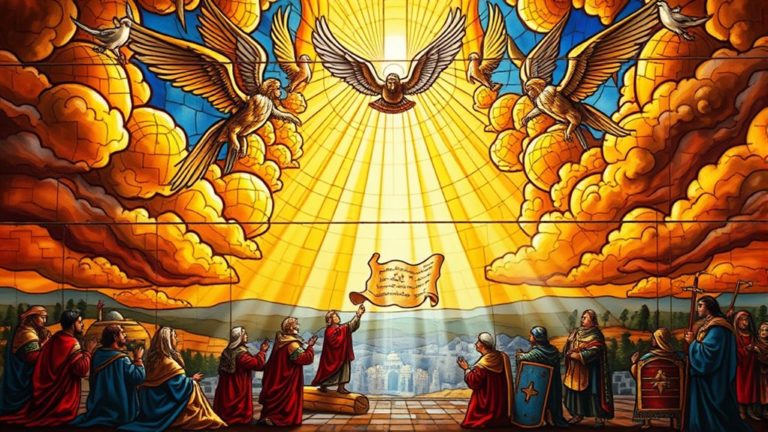
The story of the first Palm Sunday begins on the outskirts of Jerusalem, as Jesus descended from the Mount of Olives toward the city. Crowds gathered along the road, laying garments and branches before him as a sign of honor.
They called out “Hosanna” and “Blessed be the King that cometh in the name of the Lord,” recognizing Jesus as the promised Messiah. The event appears in all four canonical Gospels: Matthew 21:1–11, Mark 11:1–11, Luke 19:28–44, and John 12:12–19.
It was a moment of public recognition, arriving just one week before the crucifixion. As recorded in Luke 19:41, Jesus wept over Jerusalem, a moment known as Flevit super illam, foreshadowing the suffering that lay ahead.
Jesus’s entry into Jerusalem on a donkey’s foal fulfilled the ancient prophecy recorded in Zechariah 9:9, pointing to his identity as the long-awaited Messiah. The Gospels present this scene as both fulfillment of prophecy and a teaching moment about Scripture’s messianic purpose and authority.
Why Jesus Rode a Donkey Into Jerusalem?
Among the details that stood out to observers that day was Jesus’ choice of transportation: a young donkey, or colt, that had never been ridden.
Zechariah 9:9 had predicted this exact scene five centuries earlier. Jesus sent disciples ahead to retrieve the animal, instructing them to say, “The Lord needs it,” if questioned. His choice carried clear meaning:
- It fulfilled an ancient messianic prophecy recorded in all four Gospels
- It rejected the warhorse imagery associated with conquering kings
- It signaled peace rather than military liberation from Rome
- It redefined kingship through humility rather than force
In the Old Testament, donkeys were tied to agricultural life and imagery of peace, contrasting sharply with horses, which signaled war and conquest. Crowds lining the highway shouted “Hosanna to the Son of David”, a cry rooted in the Hebrew hoshiah na, meaning “Save us,” reflecting their deep but often misunderstood hopes for political deliverance. A related ancient motif about the created world’s structure, the firmament dome appears in biblical cosmology and helps explain how people of that era pictured divine order.
What Palm Branches Symbolized During Jesus’ Entry?
Just as Jesus’ choice of a donkey carried deliberate meaning, so did the branches the crowd placed in his path. Palm branches carried deep historical weight in Jewish culture. Since the Maccabees era, they symbolized Jewish nationalism and victory over enemies. Leviticus 23:40 commanded their use during the Feast of Tabernacles, connecting them to God’s deliverance. The crowd’s cry and actions also tied into long-standing covenantal promises about Israel’s destiny rooted in the patriarchal narratives.
When crowds waved palms while shouting “Hosanna to the Son of David,” they were declaring Jesus both King and promised Messiah. Revelation 7:9 later echoes this image, showing redeemed multitudes holding palms before God’s throne, confirming what that Jerusalem crowd had instinctively proclaimed. Palm trees require thirty years to mature, mirroring the Jewish requirement for a High Priest and the age at which Jesus began His ministry, making the palms a quiet declaration of His priestly worthiness.
The Hebrew word for palm is tamar, a name shared by four distinct women recorded throughout the Old Testament.
When Did Palm Sunday Become Part of Holy Week?
From its biblical roots, Palm Sunday gradually took shape as a formal liturgical observance in both Western and Eastern Christianity. The Gospels provided the timeline; the Church built the structure around it. The day’s themes of public acclaim and imminent judgment echo broader biblical end-times motifs found throughout Scripture.
Four milestones mark this shift:
- Gospel accounts established the event’s place one week before resurrection.
- Early Christians recognized it as Holy Week’s opening commemoration.
- Western tradition formalized it as Lent’s final Sunday before Easter.
- Eastern Christianity positioned it after Great Lent’s conclusion.
Today, Palm Sunday anchors Holy Week annually, with 2026’s observance beginning March 29. Holy Week remembers the important events of Christ’s final days, death, and resurrection. The eight-day period spans from Palm Sunday through Easter Sunday, encompassing the Last Supper, crucifixion, and resurrection.
What Palm Sunday Means for the Rest of Holy Week?
Palm Sunday does more than open Holy Week — it establishes the framework through which every subsequent day carries meaning. The triumphal entry sets an intentional trajectory: Monday brings the temple cleansing, Thursday holds the Last Supper and betrayal, and Friday carries the crucifixion.
Each event unfolds as a direct consequence of Jesus entering Jerusalem publicly and identifying himself as the promised Messiah. The crowds’ misunderstanding — expecting political liberation rather than sacrifice — deepens the week’s tension. The same crowd that celebrated his arrival on Sunday would call for his crucifixion by Friday.
Palm Sunday fundamentally previews the entire Passion narrative, positioning resurrection Sunday not as a surprise, but as the fulfillment of everything the entry quietly promised. As Jesus approached Jerusalem, he wept over the city for its failure to recognize the time of God’s coming, a grief that shadows every moment of the week to follow. Gathering in community for worship during Holy Week continues the biblical pattern of communal worship and fellowship.