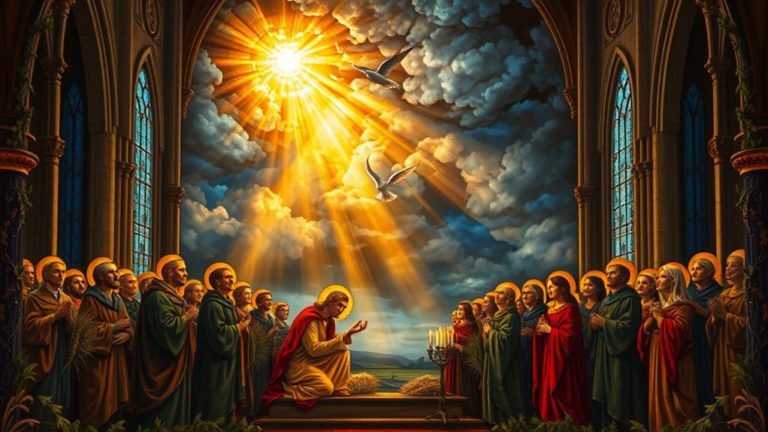
Ann Teresa O’Neill, whose recovery from acute lymphocytic leukemia as a young child became the miracle behind Elizabeth Ann Seton’s 1975 canonization, died at 78. Baltimore doctors called her condition hopeless in 1951. After her family carried her to Emmitsburg and placed her on Seton’s tomb during Holy Week, her blood counts normalized and bone marrow tests showed no remaining leukemia. The Church accepted the recovery as scientifically inexplicable in 1959. Her full story holds more.
The Baltimore Girl Whose Leukemia Diagnosis Doctors Called Hopeless
Ann Teresa O’Neill was four years old when doctors in Baltimore diagnosed her with acute lymphatic leukemia in 1951 and told her family there was no hope for her survival. The illness, also called acute lymphocytic leukemia, was considered incurable at the time.
Her condition deteriorated quickly, and she developed chickenpox during the crisis period, further complicating her care. Doctors offered the family no realistic path forward.
O’Neill had been born on Oct. 7, 1947, to William Richard O’Neill and Felixena Phelps O’Neill. Her illness would soon set in motion a sequence of events that drew national Catholic attention. Her mother, Felixena, began praying for saints’ intercession on her daughter’s behalf. A Daughter of Charity, Sister Mary Alice Fowler, told Felixena about Mother Seton, leading the family to bring Ann Teresa to Emmitsburg, where she was placed on Mother Seton’s tomb. The story later highlighted Scripture’s role in spiritual guidance and the belief that sacred texts can offer comfort and direction.
How Mother Seton’s Tomb Became the Site of an Unexplained Recovery
When Ann Teresa O’Neill’s condition worsened during Holy Week, her family turned not to another hospital but to a tomb.
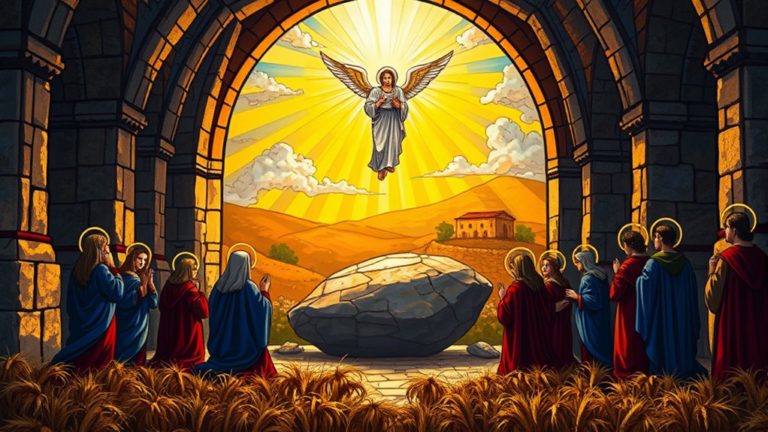
Her parents brought her from Baltimore to Emmitsburg, Maryland, where they laid her directly on the tomb of Mother Elizabeth Ann Seton.
Her parents carried her to Emmitsburg, laying her upon the tomb of Mother Elizabeth Ann Seton.
They also visited the room where Seton had lived and died.
After the family returned to St. Agnes Hospital, O’Neill’s blood counts reportedly normalized.
Follow-up bone marrow tests showed no remaining leukemia.
Medical and Church authorities later reviewed the case and judged the recovery scientifically inexplicable.
The Church accepted it as a miracle, supporting Seton’s canonization in 1975. She was canonized by Pope Paul VI on September 14, 1975, outside Saint Peter’s Basilica in Rome.
O’Neill, who had been born in Baltimore on October 7, 1947, attended the canonization as a grown woman and mother.
Observers have contrasted this event with biblical cautions about presumptuous practices and emphasized the church’s careful investigation.
Why Doctors and the Church Called Her Recovery Scientifically Inexplicable
What made O’Neill’s recovery so difficult to explain was the medical landscape of the early 1950s. Acute lymphoblastic leukemia in young children was considered fatal, with no treatment known to produce lasting remission.
Dr. Milton S. Sachs, a leukemia specialist consulted in the case, noted that spontaneous remissions occurred in roughly 1% or fewer of his patients. More striking, O’Neill’s subsequent bone marrow tests, including aspirates in January 1956 and March 1957, returned normal results.
The Church, after thorough medical review, concluded the recovery fell outside scientific explanation and accepted it as miraculous in 1959. O’Neill’s cure was later formally recognized when Mother Seton was canonized on September 14, 1975, under Pope Saint Paul VI. This distinction made Seton the first native-born American to receive the honor of canonization.
Many believers point to Scripture’s emphasis on God’s compassion and the role of faith and prayer in healing, noting that communities often combine spiritual care with practical medical treatment.
The Miracle That Made Elizabeth Ann Seton America’s First Native-Born Saint
The recovery of Ann Teresa O’Neill from acute lymphatic leukemia, accepted by the Sacred Congregation of Rites in 1959, became one of the key miracles supporting Elizabeth Ann Seton’s path to sainthood.
On September 14, 1975, Pope Paul VI canonized Seton in St. Peter’s Square, making her the first native-born saint of the United States.
Vatican praise described Seton as “wholly American,” acknowledging the historic milestone.
The O’Neill cure helped establish Seton’s reputation as an intercessor associated with healing children.
Her canonization, arriving during the American bicentennial era, was recognized as a defining moment in American Catholic history. Generous giving and charitable works were central themes in Seton’s legacy and the communities she founded.
Seton had been beatified on March 17, 1963 by Pope John XXIII, more than a decade before her canonization was finalized.
Seton founded the Sisters of Charity of St. Josephs, the first sisterhood in the United States, on July 31, 1809, serving as its first superior under the title of Mother.
How O’Neill Spent Decades as a Living Witness to the Seton Miracle
For more than seventy years, Ann Teresa O’Neill lived with a story that never quite let her go.
As the child whose recovery from leukemia helped confirm Elizabeth Ann Seton’s first official miracle, she became a recognizable figure in Catholic life, particularly in Easton, Maryland.
Rob Judge noted that she spent those decades “answering questions about a miracle.”
She attended Seton’s beatification at age 13 and her canonization at 27, appearing at both ceremonies as a visible witness.
In later interviews, O’Neill said the miracle was “just part of my life,” a quiet acknowledgment that the healing had shaped her without defining her entirely.
Scripture’s emphasis on caring for the body as God’s temple encourages believers to prioritize stewardship of health in their lives.