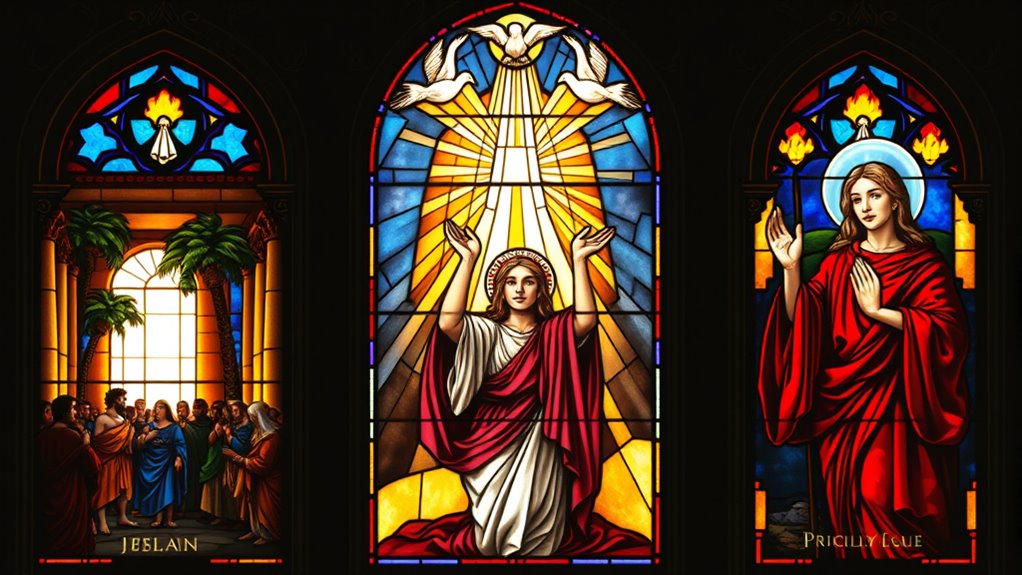
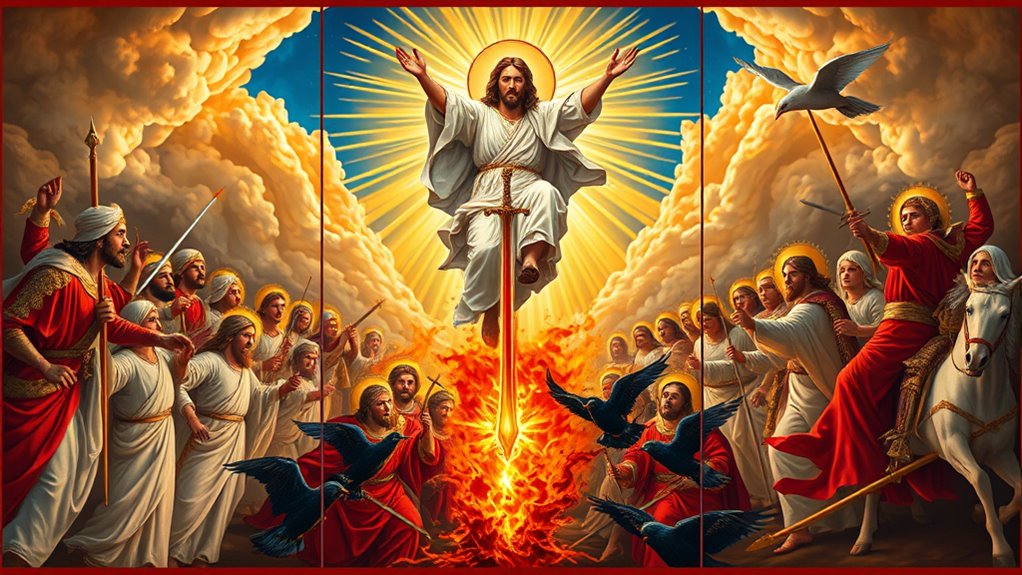
Revelation describes the Antichrist as a beast with seven heads and ten horns who receives power from Satan and demands worship from all nations. This figure speaks blasphemy against God, wages war against believers, and rules for forty-two months alongside a false prophet who performs deceptive signs. Christ defeats the Antichrist by casting him alive into the lake of fire, demonstrating God’s ultimate authority through a swift, decisive victory. The text below explores these prophetic details and their theological significance more thoroughly.
Key Takeaways
- The Beast from the Sea, often identified as Antichrist, receives power from Satan and rules over all nations for 42 months.
- He blasphemes God, demands worship, wages war against believers, and works with a False Prophet performing deceptive signs.
- One of his seven heads suffers a fatal wound that miraculously heals, causing the whole world to marvel and follow him.
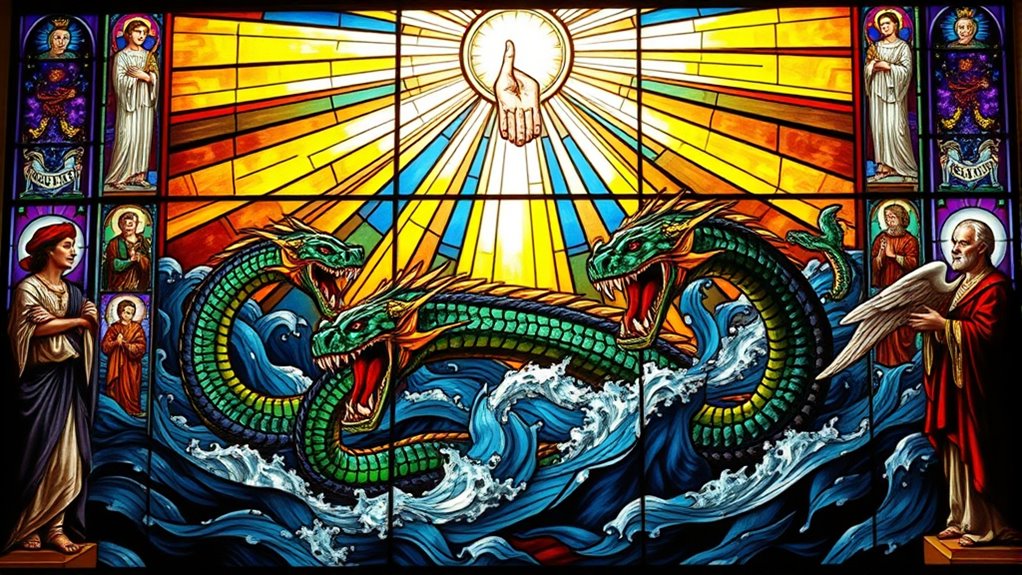
- His authority is described using vivid symbolic imagery: ten horns, seven heads, resembling a leopard with bear’s feet and lion’s mouth.
- Christ defeats him decisively, casting both Beast and False Prophet alive into the lake of fire when heaven opens.
How Revelation Describes the Antichrist

The book of Revelation presents the Antichrist through vivid, symbolic imagery that has captivated readers for centuries.
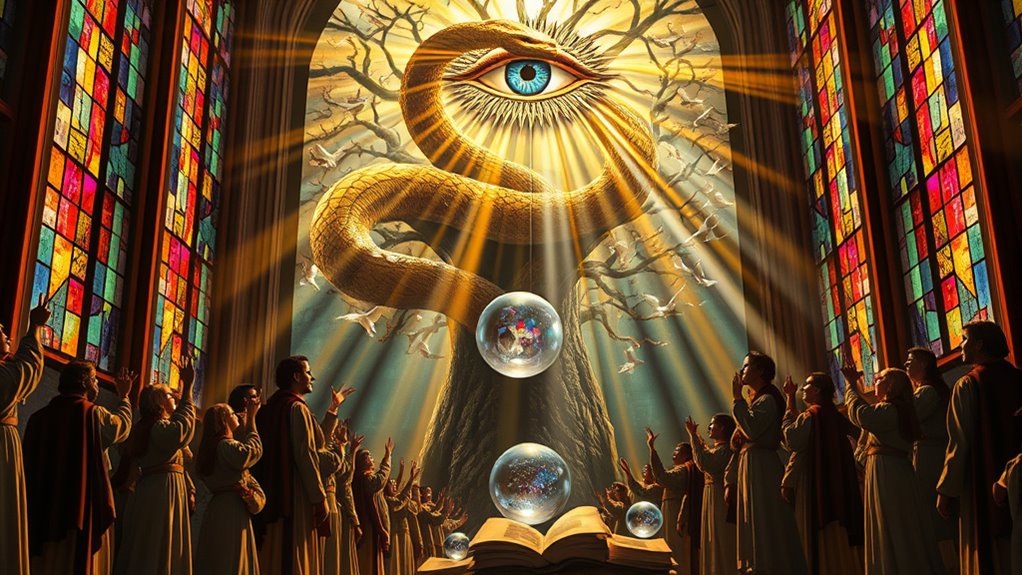
Revelation 13:1 describes a beast rising from the sea with ten horns, seven heads, and ten crowns, resembling a leopard with bear’s feet and a lion’s mouth. The dragon, identified as Satan, grants this figure power and authority over every tribe, tongue, and nation for 42 months.
One head receives a fatal wound that heals, causing worldwide wonder.
The text portrays this figure speaking blasphemy against God for 42 months, demanding worship, and waging war against the saints.
Empowered by Satan, the Antichrist works alongside a false prophet who performs deceptive signs, forming an unholy trinity opposing God’s people.
The description’s setting and imagery connect to Jerusalem’s broader religious geography, including sites like the Church of the Holy Sepulchre and Golgotha, which shaped early Christian symbolism.
The Antichrist’s Defeat in Revelation
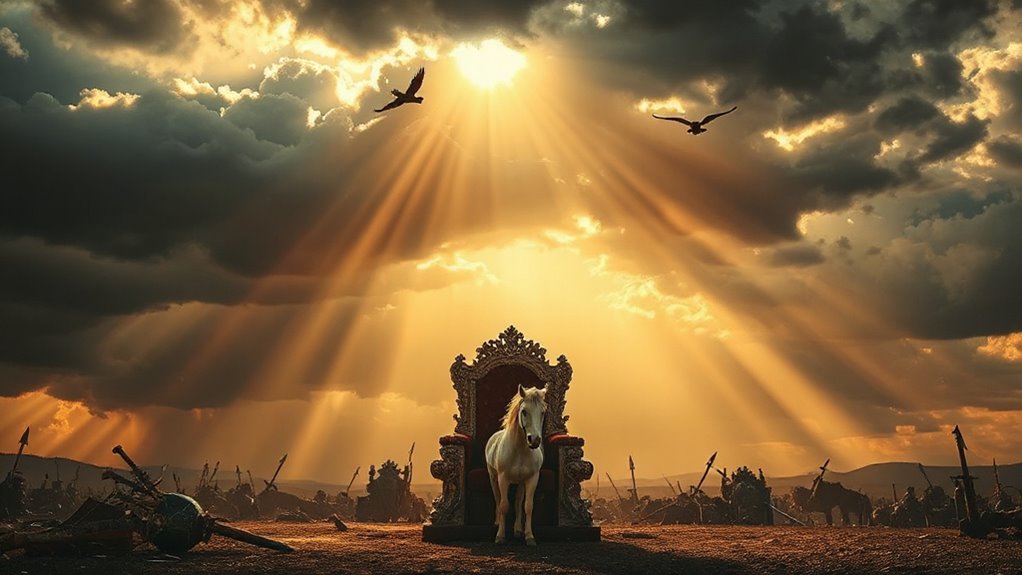
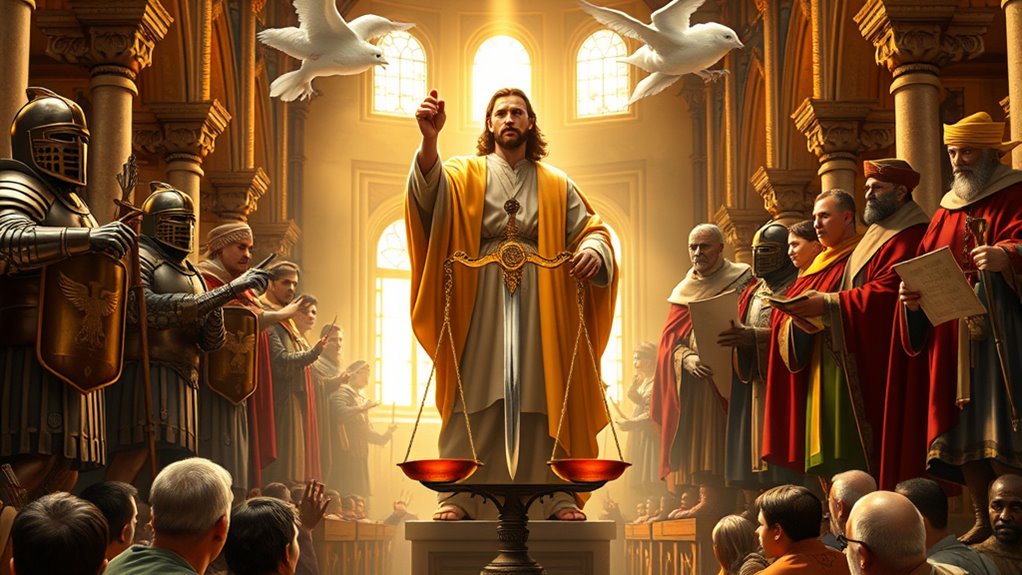
Revelation’s climactic confrontation between Christ and the Antichrist unfolds not as a prolonged military campaign but as a swift, decisive divine intervention that underscores God’s ultimate sovereignty.
When heaven opens, Christ appears on a white horse as “Faithful and True,” accompanied by heavenly armies dressed in fine linen.
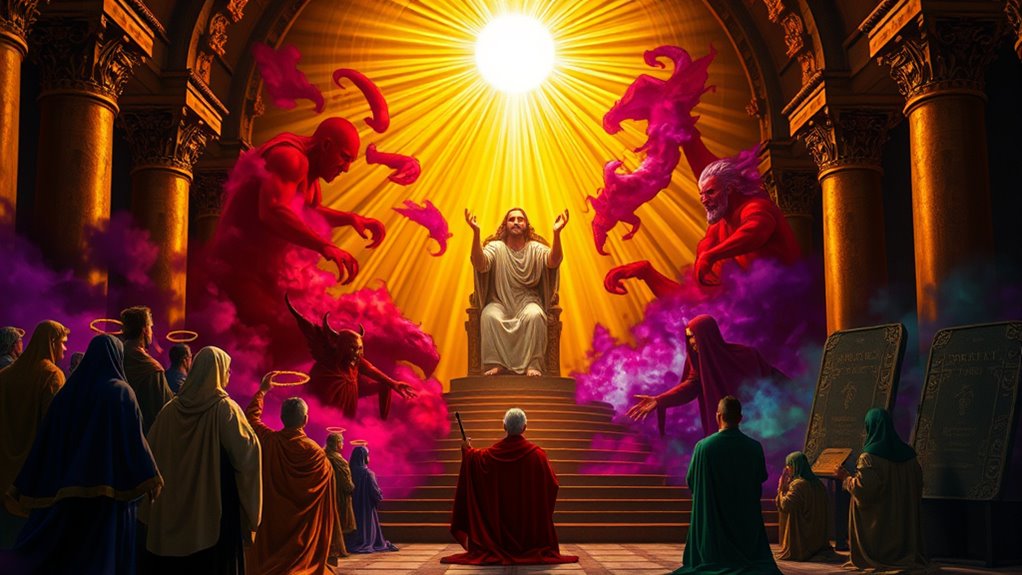
The Beast gathers earth’s kings and their forces for battle, yet no actual combat occurs. Instead, the Beast and False Prophet are captured immediately and thrown alive into the lake of fire, where they face eternal torment.
Christ defeats the remaining armies with a sword proceeding from His mouth, representing His authoritative word. Birds consume the fallen, fulfilling angelic prophecy.
This predetermined victory concludes the Antichrist’s forty-two months of global dominance, demonstrating that divine judgment requires no struggle. A key theological point is that Jesus is both fully divine and fully human, a truth affirmed by the doctrine of the two natures united in one Person.